

Tech stocks bounced back early Friday, a day after the Nasdaq-100's steepest one-day drop since March 16, 2020, during the pandemic crash. Around 9:50 a.m. Eastern, the Nasdaq Composite was up 2.0% at 24,806, and the Nasdaq-100 was up 2.5% at 27,288.
On Thursday the Nasdaq-100, made up of the 100 largest nonfinancial companies listed on Nasdaq, fell 6.36% to 26,629.81. The broader Composite lost 5.52% to close at 24,315, its biggest drop since April 4, 2025.
Edit USA's Thursday market report has the S&P 500 and Dow closes.
How far tech stocks are from their highs

Both indexes set their record closes on Oct. 6, the Composite at 27,599.89 and the Nasdaq-100 at 31,224.69, and by Thursday's close the Composite was 11.9% below that peak while the Nasdaq-100 was down 14.7%.
A drop of 10% or more from a recent peak is what investors call a correction. Even after Friday's early bounce, both indexes were still more than 10% below their records.
The year is still positive. The Composite ended 2025 at 23,241.99, so even after Thursday it was up about 4.6% for 2026. Index levels leave out dividends and fund fees, so a retirement account that tracks one of these indexes will move a little differently.
Bond yields and the jobs report
The 10-year Treasury yield closed Thursday at 4.84%, down from 4.90% Wednesday and 5.05% on Oct. 28. The 2-year yield fell more, to 4.46% from 4.58%.
Then came the Labor Department's October jobs report, released at 8:30 a.m. Eastern Friday, an hour before stocks opened. It was stronger than September's. Employers added 165,000 jobs, the unemployment rate slipped to 4.1% from 4.2%, and the Bureau of Labor Statistics raised its estimates for August and September by a combined 84,000 jobs. Average hourly pay rose to $38.00, 3.1% more than a year earlier.
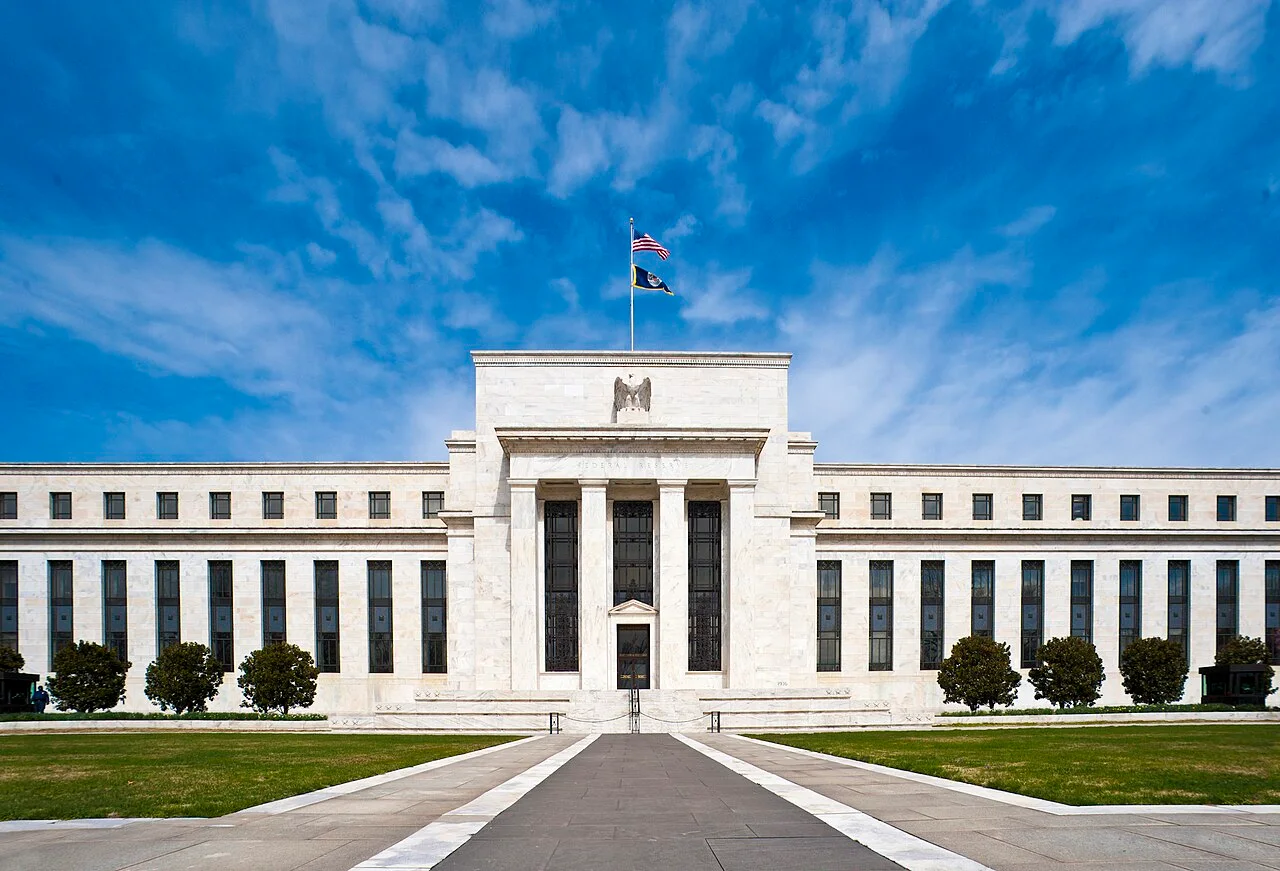
The Federal Reserve holds its next rate meeting Dec. 8 and 9. At its Oct. 28 meeting it kept its benchmark rate at 3.75% to 4%, and two of the 12 voters, Lisa Cook and Beth Hammack, wanted a quarter-point increase instead.