
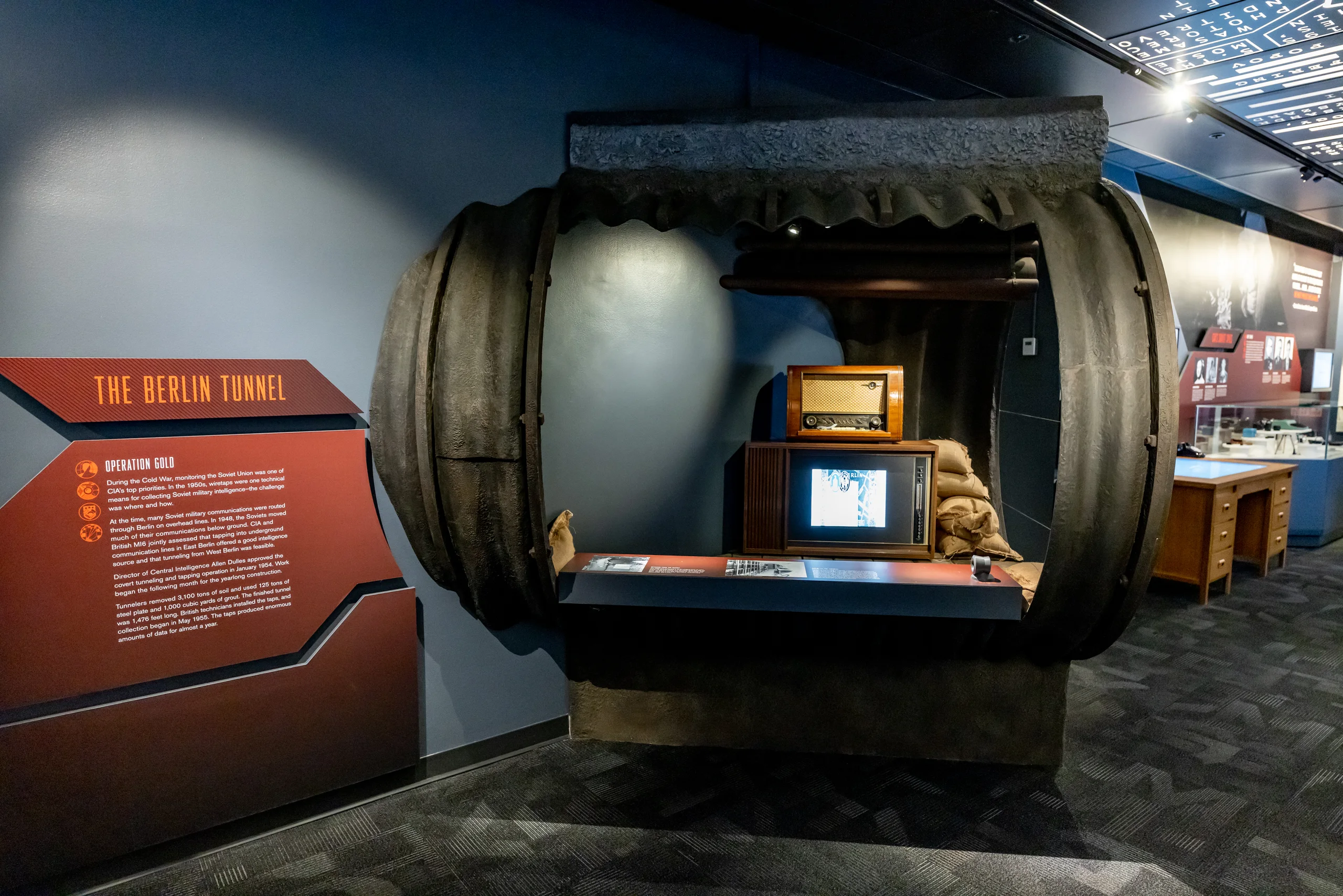
Before the CIA's engineers started digging beneath Berlin, George Blake had already told the Soviets what they intended to build.
The British intelligence officer had access to the plans for a tunnel that would run from the American sector into the Soviet sector and tap military communications cables. His Soviet handlers received a secret they could have used to stop the operation before it collected a conversation. Instead, the excavation went ahead. For almost a year, American and British personnel recorded the traffic moving through the cables above them.
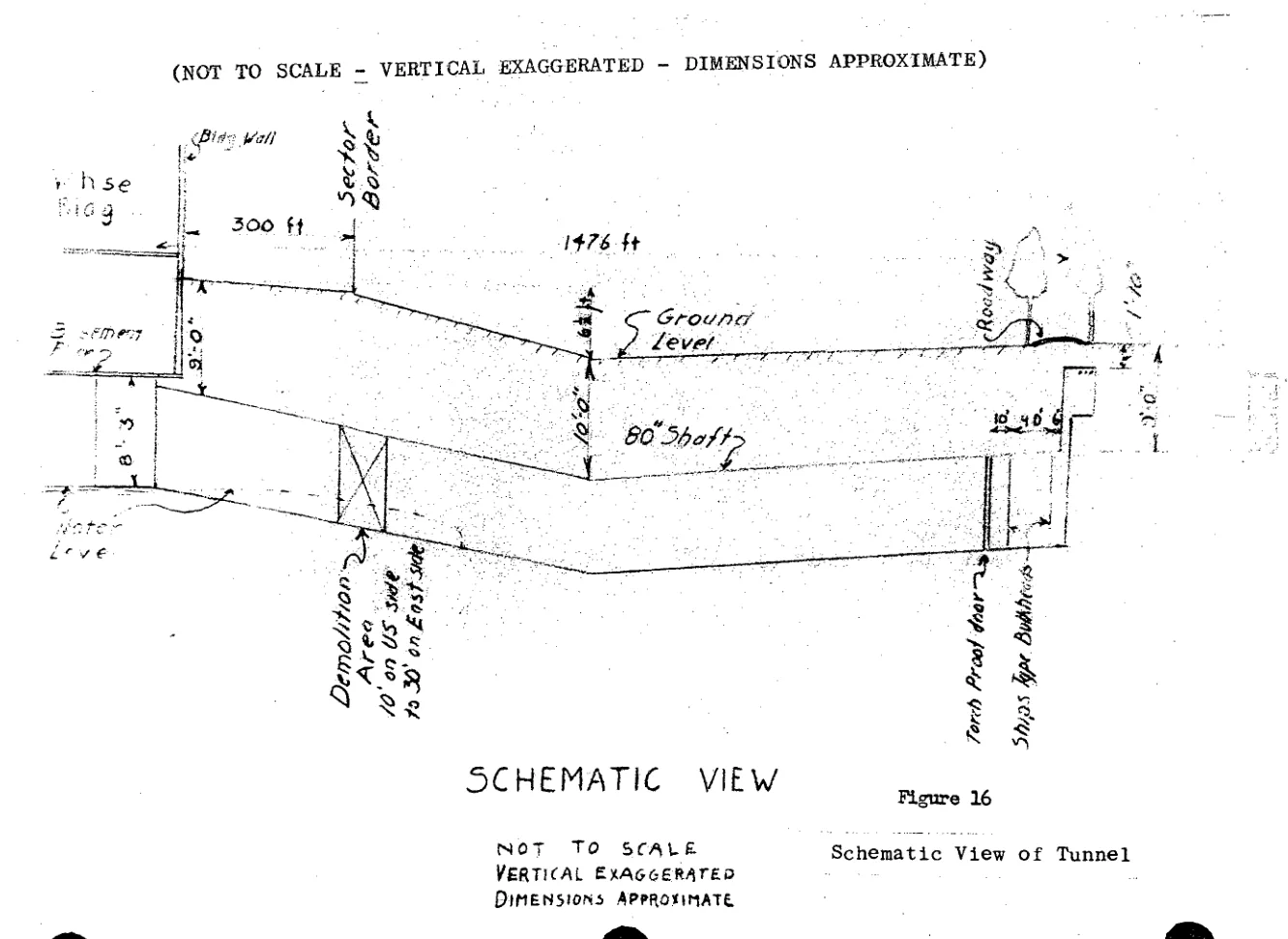
The tunnel stretched 1,476 feet. Its construction required hiding thousands of tons of soil, steering through sand and groundwater, and reaching cables beneath a road without alerting the people using it. The CIA and Britain's Secret Intelligence Service, or SIS, assembled a substantial operation around it, including processing centers in Washington and London.
Blake remained inside SIS while all of this happened. When the tunnel was exposed in April 1956, his betrayal was still unknown to his employers. They would discover it five years later.
Operation GOLD left the United States with an awkward intelligence success: a technically accomplished surveillance operation, compromised during planning, that nevertheless produced information the CIA considered valuable. Its declassified records also preserve disagreements about how much the Soviets knew and how they used that knowledge.
The cables beneath a divided city
In the early 1950s, American intelligence officers were trying to learn about Soviet forces in Europe as Moscow moved military communications from radio onto landlines. Radio signals could be intercepted at a distance. Underground cables required access much closer to the source.
Berlin offered that access. Soviet and East German communications passed through a city divided into occupation sectors. Western officers could establish a base on their side of the boundary, close to cables carrying traffic on the other.
According to the CIA's 1968 internal history of the operation, an agent network penetrated the East Berlin postal and telecommunications organization. By March 1952, the Americans had enough technical information to identify important Soviet circuits. Before committing to permanent access, they obtained short recordings from a target line.
One early result was a student teletypist practicing on the keyboard. The content offered little intelligence, but the recording helped establish that the technique worked. The remaining problem was to keep a tap in place.
The British brought experience from cable-tapping tunnels in Vienna. The Americans would secure a site, construct the buildings and drive the main tunnel. British specialists would build the final shaft, install the taps and deliver the signals for recording. Telegraph material would go to Washington; telephone conversations would be processed in London.
The chosen starting point was in Rudow, in the American sector. The target lay across the boundary in the Soviet sector. This was years before the Berlin Wall went up in 1961, but the construction still had to escape the attention of East German guards watching the area.
A warehouse with room for the dirt
CIA Director Allen Dulles approved the operation in January 1954. Concealing the excavation required a building that could plausibly accommodate equipment and personnel. It also required somewhere to put roughly 3,000 tons of excavated soil.
Hauling it away risked drawing attention to a site whose real purpose depended on secrecy. The planners settled on a warehouse with a large basement. Local engineers were told they were constructing an experimental building, partly above ground and partly below it, with a ramp for forklift trucks. The basement would become the hiding place for the tunnel's excess soil.
The compound included living and dining facilities and a separate building for three diesel generators. An overt electronic-intelligence mission helped explain the site's equipment and security. Soviet and East German observers could see that something was happening there without being shown what lay beneath it.
The Army supplied tunneling expertise. Lt. Col. Leslie M. Gross led the engineering work, and his team rehearsed construction in a mock tunnel before taking on Berlin. Steel tunnel sections and other sensitive equipment had to be transported into the city. The CIA history describes double crating and drop tests designed to keep a damaged shipment from exposing its contents.
Then the ground contradicted the plans. Water appeared about 16 feet down, although the permanent water table had been expected at 32 feet. The engineers attributed it to water trapped above a layer of clay. They installed pumps and continued, leaving less earth over the tunnel than originally intended.
Lookouts watched the guards' patrols. When the guards passed overhead, tunneling stopped.
Reaching the road from below
Berlin's sandy soil threatened to fall into the excavation. The engineers worked behind a protective shield fitted with horizontal blinds. As they removed sand, hydraulic jacks pushed the shield forward and workers bolted steel sections into place behind it.
Five sections made a ring about six feet across. Successive rings formed the tunnel. Grout filled the space outside the lining to reduce the risk that the ground would settle and reveal a depression at the surface.
Inside, a modified electric forklift pulled trailers carrying soil back toward the warehouse. Air-conditioning equipment supplied cool air to the working face. The completed tunnel sloped down and then up again toward the cables. Its length made surveying difficult: the engineers had to reach a narrow target without the normal freedom to measure the ground above them.
The CIA history records an attempted solution involving a baseball. Personnel organized a game hoping to hit a ball into the East German sector, where an object of known size might help with surveying. The guards kept returning it. The engineers ultimately reached the target without that reference point.
The main tunnel was completed on February 28, 1955. British specialists then constructed the shaft and chamber beneath the cables. They worked close below a road carrying heavy vehicles, so the chamber had to support the traffic overhead. Insulation reduced the drumlike effect of a hollow space under the roadway.
Moisture posed another threat. Technicians sometimes had to suspend work while the air-conditioning system removed humidity from the chamber. Damaging a cable could bring repair crews to the exact place the operation needed them to avoid.
The CIA history dates the three cable taps to May 11, May 21 and August 2, 1955. Collection expanded as each became available.
The secret Blake carried to Moscow
Blake had been captured in Korea while serving with British intelligence. After his return, he continued working for SIS while secretly supplying information to the Soviet Union. The tunnel plans were among the secrets he betrayed.
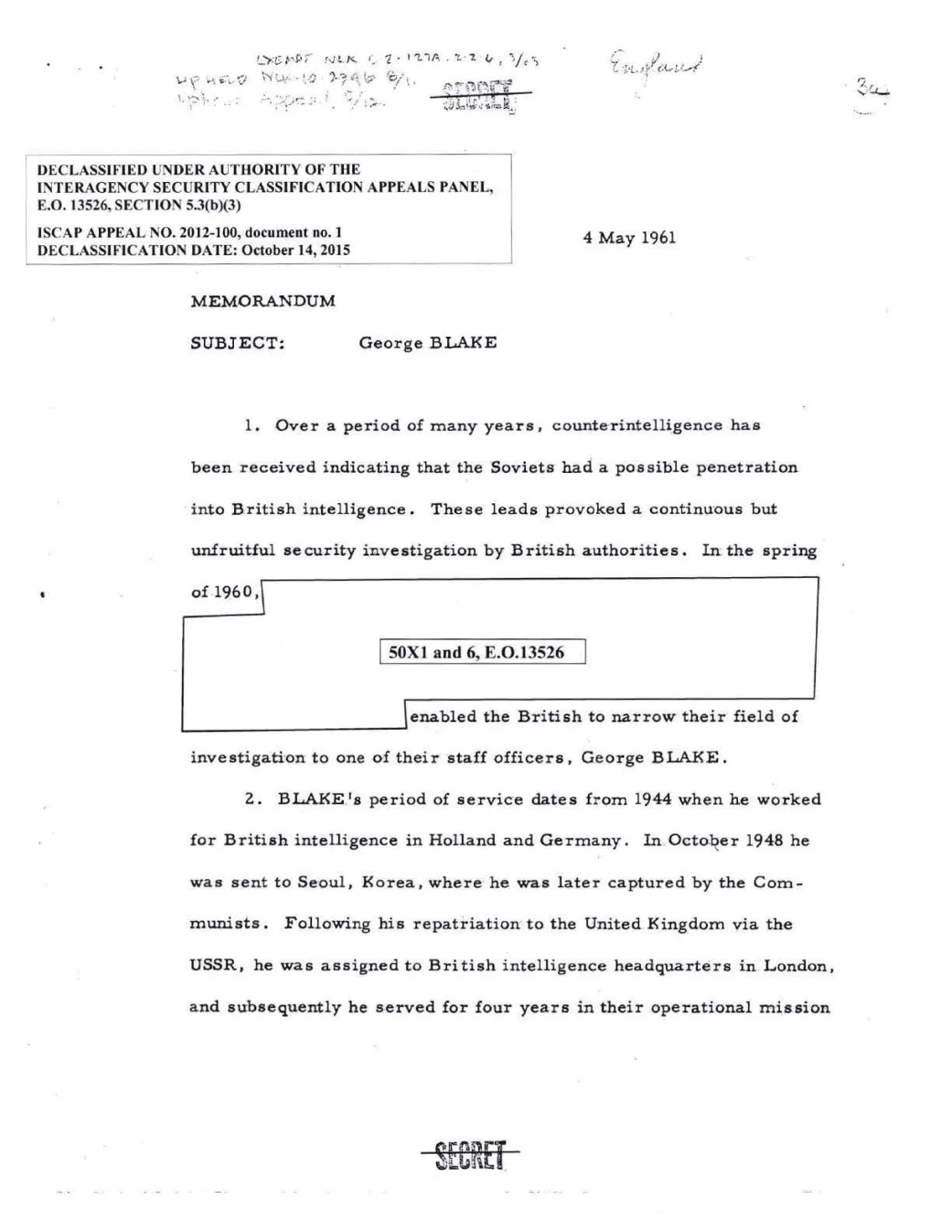
A May 4, 1961, memorandum preserved by the National Archives records his admission that he passed technical papers to the Soviets. Those papers identified the cables to be tapped, the intended method and the proposed tunnel route. The document was declassified in 2015 with portions still withheld.
The KGB faced a choice. Stopping the tunnel immediately might expose the existence of a source with access to the planning. Allowing it to operate preserved Blake's position inside British intelligence, at the cost of leaving Soviet communications vulnerable.
The CIA's present-day account says protecting Blake explains why the KGB let construction and interception continue. It describes the eventual discovery as arranged to avoid compromising him. The older internal history is less definite about Soviet motives, acknowledging that the American side did not know the exact reasoning behind the decisions.
Knowledge held by the KGB also did not necessarily reach every Soviet military officer using the cables. That helps explain how advance warning and genuine intercepted information could coexist. It does not establish that every conversation the Americans recorded was candid or useful.
British authorities uncovered Blake's espionage in 1961. A British government history dates his sentencing to May of that year. He received 42 years in prison and escaped from Wormwood Scrubs in October 1966, eventually reaching Moscow.
For the tunnel's participants, the discovery of his betrayal forced a reassessment of recordings they had already spent years processing.
The tapes went to Washington and London
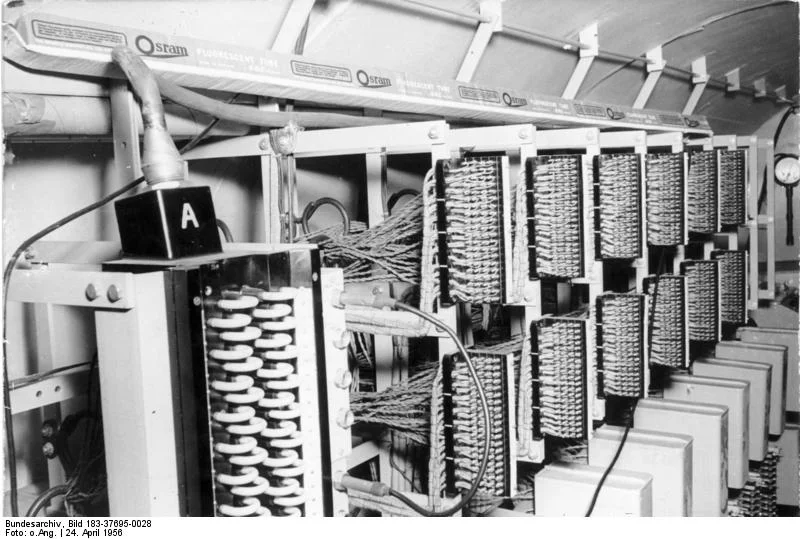
Signals from beneath the road traveled back to the compound, where recording equipment accumulated reels faster than analysts could finish exploiting them. The work continued around the clock and across several locations.
The Army Intelligence Center's history, written by historian Lori S. Stewart, describes a small processing team in Berlin that checked urgent material and watched communications relevant to the operation's own security. One member was 22-year-old Army Cpl. Eugene Kregg, later known as Eugene Kovalenko, a Russian linguist recruited after language training.
His work was part of a much larger translation and analysis effort. Telephone tapes went to London. Telegraph recordings went to Washington, where personnel extracted messages and worked through the backlog. The CIA's internal accounting puts staffing at peak levels of 317 in the London processing center and 350 in Washington.
The technical opportunity extended beyond listening to spoken conversations. In a declassified history published by the National Security Agency, historian David A. Hatch describes a flaw in Soviet teleprinter equipment that enabled exploitation of encrypted traffic. His account argues that Blake apparently knew about the telephone taps without understanding that additional vulnerability.
Hatch distinguishes the largely routine telephone material from the more valuable intelligence recovered from teleprinter traffic. He also describes rivalry between the CIA and NSA: the CIA did not tell the newer communications-intelligence agency about the operation until it was already collecting. The document carries a disclaimer that its views are the author's, rather than an official NSA judgment.
Rain, repair crews and a public discovery
Heavy rain in April 1956 caused failures in Berlin's cable network. Soviet and East German technicians worked to restore communications, including lines used by senior officers. The repair work moved toward the tapped section.
In the early hours of April 22 in Berlin, the tunnel was exposed. The American side could follow parts of the response through the communications it was still intercepting. Its August 1956 assessment, reproduced in the later CIA history, initially concluded that defective cables and rain had caused an accidental discovery. The analysts writing it did not yet know about Blake.
Later accounts connect the exposure to the KGB's prior knowledge and its need to protect him. The repair log records technicians working on damaged lines, but cannot establish who elsewhere knew about the tunnel or directed the response.
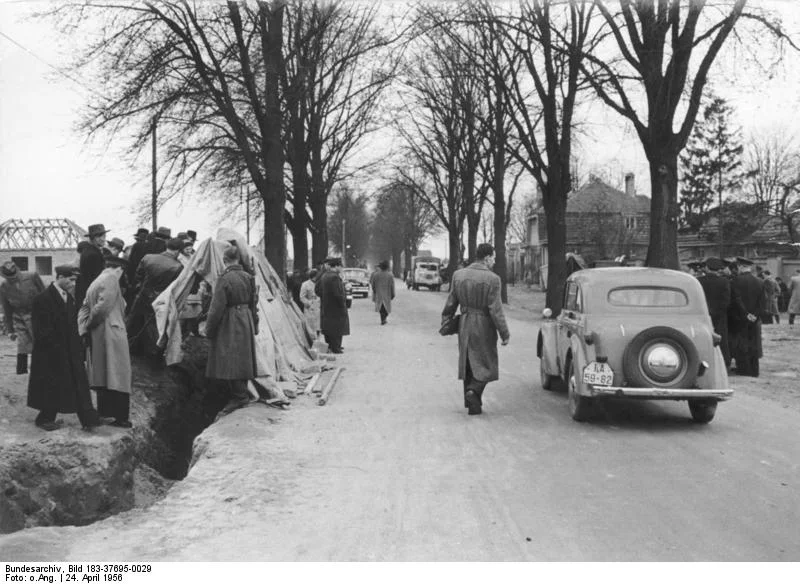
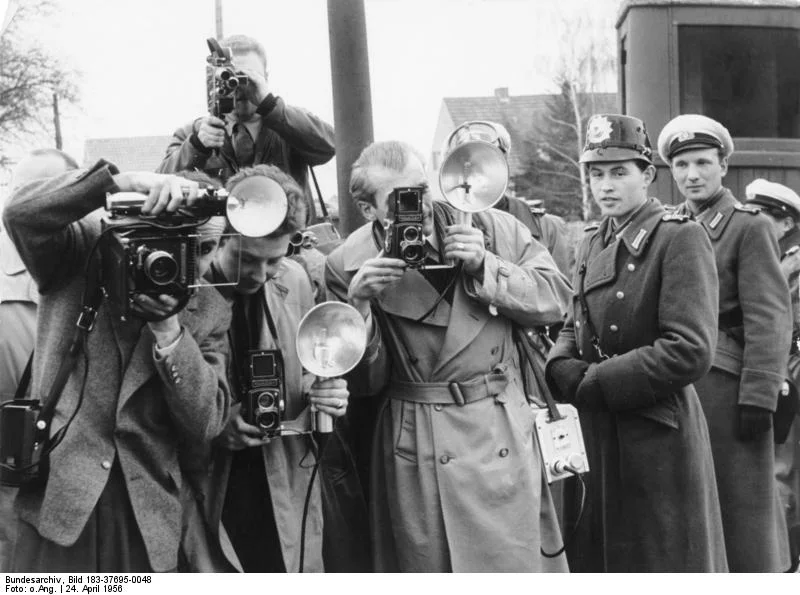
Soviet authorities invited journalists to inspect the installation. Photographs show exposed equipment, the chamber and photographers examining the site. What had depended on hiding under a road became a public display of Western espionage.
The CIA later portrayed the publicity as an unexpected advantage, arguing that observers admired the engineering even as Soviet officials condemned the intrusion. Its 1968 history reproduced favorable newspaper coverage alongside the account of the operation. Blake's role remained hidden while the public argued over the exposed tunnel.
What remained after the listening stopped
The CIA history records about 50,000 reels of magnetic tape and a total project cost of $6.7 million. Processing the backlog continued until September 30, 1958, more than two years after the tunnel closed. The effort produced 1,750 reports, along with translated messages and conversations.
The agency credited the intercepts with identifying Soviet military units and installations, clarifying force organization and revealing information about Soviet atomic-energy personnel. Its 1968 history says it had found no evidence that the Soviets fed deliberate deception through the tapped cables. Hatch's later account still notes doubts within the intelligence community about the operation's value.
Blake's warning deprived the Americans of the secrecy they believed they possessed. The surviving reports nevertheless describe intelligence obtained from the intercepted traffic. The dispute concerns the value of that information and the consequences of Soviet foreknowledge, alongside the documented success in reaching and recording the cables.
The steel outlasted the operation. Berlin's Allied Museum recovered a section in 1997. Another find in a forest near Pasewalk in 2012 revealed pieces removed from the eastern side after the exposure. East German army engineers had reused tunnel sections as shelters and command posts for exercises.
By December 2012, museum staff were salvaging those sections. Steel fabricated for an American and British listening operation had spent decades serving a different army before entering a museum collection.


