
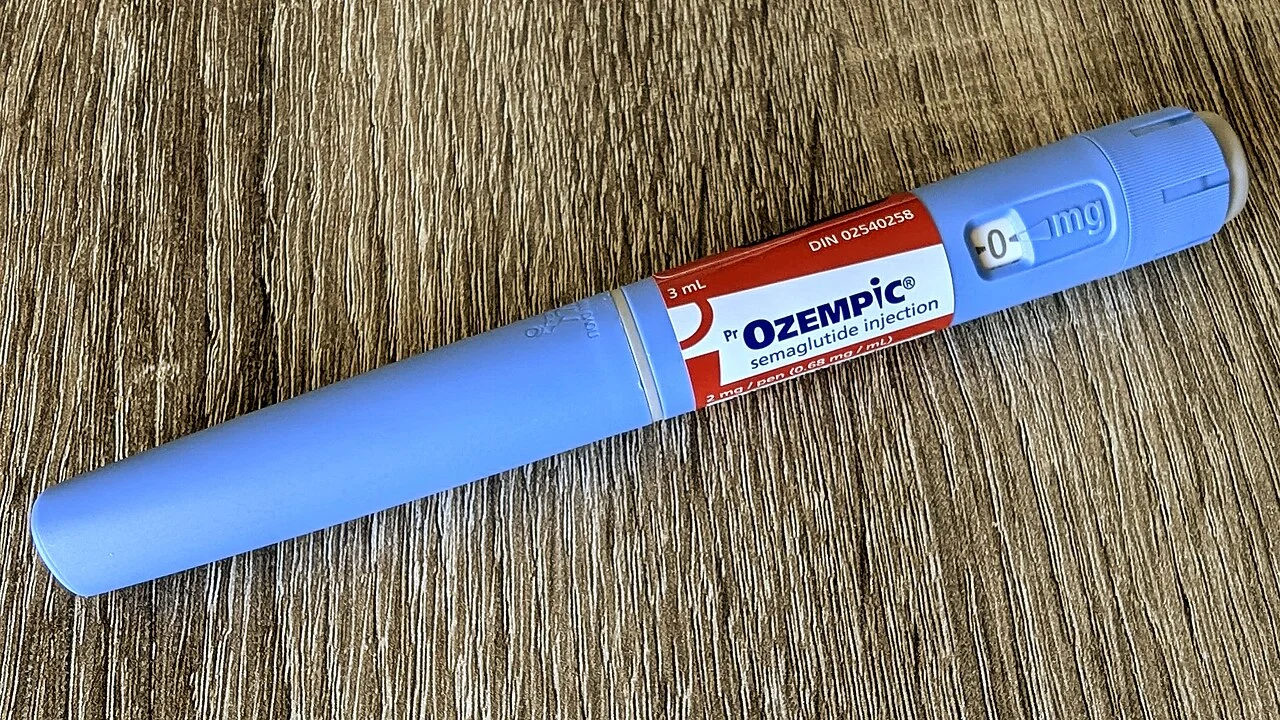
Eli Lilly's experimental weekly shot retatrutide lowered blood sugar more than Ozempic and produced about twice the weight loss in the first late-stage trial to put the two drugs side by side. Lilly released the topline TRANSCEND-T2D-2 results on Wednesday, October 28.
The trial enrolled 1,298 adults with type 2 diabetes whose blood sugar was not under control on metformin, with or without an SGLT2 inhibitor. They were randomly assigned to retatrutide at 9 mg or 12 mg, or to Ozempic at 2 mg, the highest dose approved for diabetes, and treated for 80 weeks.
What the trial found
| Measure at 80 weeks | Retatrutide 9 mg | Retatrutide 12 mg | Ozempic 2 mg |
|---|---|---|---|
| A1C change (average start: 8.3%) | -2.2 points | -2.2 points | -1.8 points |
| Weight change (average start: 225.8 lbs) | -19.5% (44.3 lbs) | -20.9% (47.4 lbs) | -9.4% (20.9 lbs) |
| Stopped treatment because of side effects | 4.8% | 7.9% | 2.7% |
A1C is a measure of average blood sugar over the previous few months. Lilly also reported larger improvements with retatrutide in non-HDL cholesterol, triglycerides and systolic blood pressure, without giving those numbers.
The weight results stand out more than the A1C gap. Lilly notes that weight loss has historically been harder for people with type 2 diabetes. Its earlier TRIUMPH-2 trial, in adults with obesity and diabetes, produced an average loss of 20.8% on the top retatrutide dose, in line with this result.
Side effects and dropouts
Stomach problems were the most common side effects in all three groups. Diarrhea affected 28.3% and 32.7% of people on the two retatrutide doses, compared with 26.4% on Ozempic; nausea rates were about the same across groups. Dysesthesia, an unusual skin sensation such as tingling or burning, was reported in 4.8% and 6.5% of retatrutide patients and 2.7% of Ozempic patients. The higher dose had nearly three times Ozempic's rate of people stopping treatment because of side effects.
What the results do not show yet
The figures come from a company announcement, not a journal paper. Lilly says full results will be presented at a medical meeting and published in a peer-reviewed journal later.
The trial's registry record lists it as open label, meaning participants and their doctors knew which drug they were taking. Lilly's numbers also use what it calls the efficacy estimand, which estimates results as if every participant had stayed on treatment for the full 80 weeks without adding other diabetes drugs. Lilly has not released results that count every participant who was randomized, including those who stopped the drug.
The comparison was with Ozempic, the diabetes brand of semaglutide, not with Wegovy, its obesity brand. Lilly is testing retatrutide directly against its own tirzepatide, sold as Mounjaro and Zepbound, in a separate obesity trial called TRIUMPH-5.
When patients could get it
Retatrutide is not approved anywhere. In its July 23 release on two obesity trials, Lilly said it plans to ask the FDA for approval in the first quarter of 2027. Lilly says no one is legally allowed to sell it to patients, and that anyone offering it to consumers is breaking the law.
Retatrutide activates three hormone receptors (GIP, GLP-1 and glucagon); tirzepatide targets the first two and semaglutide only GLP-1. Lilly's other Phase 3 trials of the drug cover obesity, knee osteoarthritis pain, sleep apnea, chronic low back pain, fatty liver disease and heart outcomes.


