Dear America: Artists Explore the American Experience gave the National Gallery of Art's anniversary program a manageable point of entry: prints, drawings and photographs considered through land, people and community, and freedoms. For a visitor weary of giant historical surveys, those themes supplied something specific to look for.
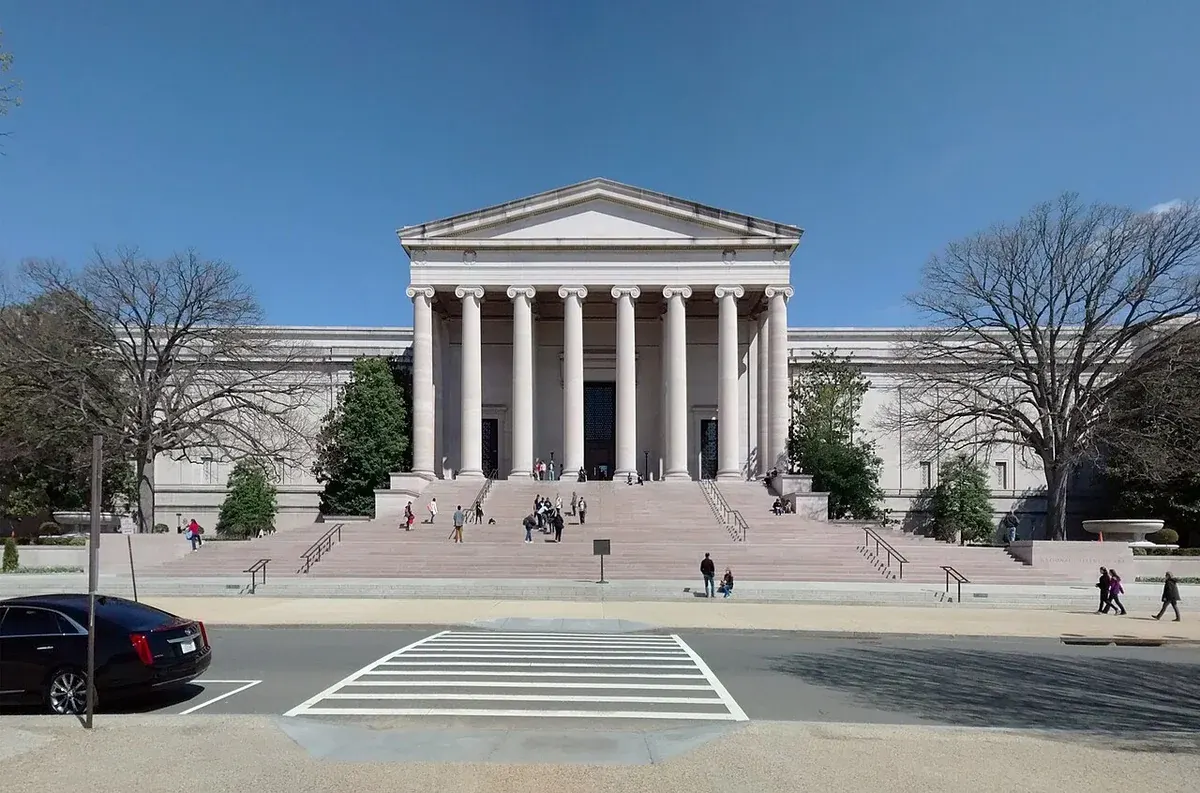
The National Gallery's exhibition record lists the Washington show from April 11 through September 20, 2026, in the West Building. The selection suits people interested in how artists describe a country through ordinary details as much as national symbols.
Land, community and freedom
The museum's program announcement describes 115 works on paper and names artists including Ruth Asawa, Jacob Lawrence, LaToya Ruby Frazier and Carleton Watkins. The themes connect works made in different media and periods.
Each medium makes different things visible. A photograph establishes a particular view. A drawing can disclose the decisions of a hand. A print can repeat an image for different audiences.
Different views of a country
The exhibition page names Carleton Watkins and Carrie Mae Weems among the photographers, and Tonita Peña and John Wilson among the artists represented by drawings. That range lets a visitor follow a subject across very different practices. The selection brings those different practices into a shared account of American experience.
A landscape’s apparent emptiness can itself be an artistic choice. The edge of a photograph determines who and what is visible; the title, date and historical setting can tell a different part of the story.
The show's appeal lay in that scale of attention. A paper-based exhibition can give a visitor permission to stop close to a single object and read it carefully. Plan the West Building as the destination, rather than treating this as something to squeeze between distant museums. For an archival look after the run, the official exhibition record preserves its dates and links to collection material.
Washington printed onto everyday design
One selected work brings national history into the scale of a household object. Edith Magnette's Chintz with Portraits of George Washington, made around 1939, is a rendering in watercolor, pen and ink, and graphite on paperboard. It records a patterned textile; the sheet displayed in the museum is not the textile itself. The drawing measures about 11 by 14 inches, a modest surface carrying repeated images of a national figure.
That distinction gives the exhibition's broad themes a specific form. A president can appear in an official portrait or recur as decoration on cloth. The latter places a public symbol within domestic design. Magnette's work adds another stage: an artist records the decorated object on paper, preserving its appearance in a different material. American experience includes the way political imagery enters things people use and live beside.
The drawing belongs to the Index of American Design, a Federal Art Project of the Great Depression. The National Gallery describes a collection of 18,257 watercolors by about 1,000 artists, depicting folk and decorative arts from the colonial period through 1900. Such a project documents makers and objects that a history told only through presidents and monuments could miss.
A paper collection beyond the exhibition
The Index also changes the scale of the anniversary story. Thousands of renderings preserve regional objects and designs, while Dear America selected a much smaller group across prints, drawings and photographs. An exhibition necessarily makes choices. Its themes offer routes through a collection rather than a complete visual inventory of the United States.
For an online continuation, Magnette's collection record supplies the medium, dimensions and accession number 1943.8.843. The Index page opens a much larger body of material. Those resources let a reader follow the domestic-design strand after the temporary display has closed. Collection pages may show a work as no longer on view; the exhibition's dated record establishes the historical presentation. In Washington, the listed location was Ground Floor Gallery G23 in the West Building, with free museum admission.