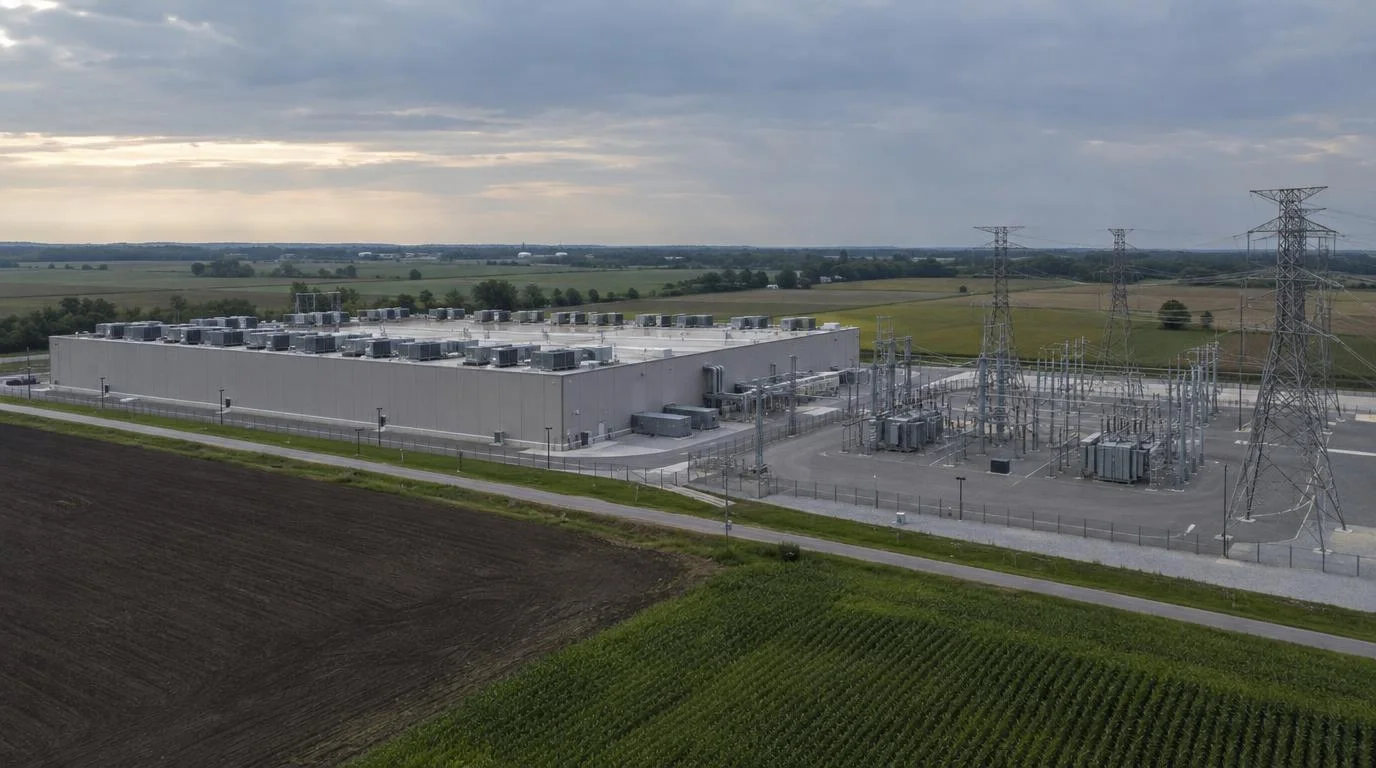
Households are paying a large share of the cost of the power lines built for data centers, and the poorest and most rural ones are hit hardest, according to a study published Nov. 9 in Nature Energy by Cornell University engineers Cheng Feng and Fengqi You.
The researchers studied six years of data, 2020 through 2025, across four big regional grids. In the wholesale markets most exposed to data center growth, they found the new demand raised power prices by more than 10% by 2025. In utility rate cases, residential customers were assigned a median 47% of grid costs even though they added far less of the new demand.
Who ends up paying

Cornell's summary of the study says that in 2025, data centers paid about $3.12 billion of the $8.25 billion in grid costs their growth created, or 38%. The other $5.13 billion fell largely on residents.
Transmission spending in the four regions rose from $2 billion in 2020 to $34 billion in 2025. Data centers drove much of it.
The regions studied were the southern San Francisco Bay Area, north Texas around Dallas-Fort Worth, the Midwest, and the mid-Atlantic, including northern Virginia, which has more data centers than anywhere else in the country. Cornell says data center growth pushed wholesale prices up 15% in Virginia and 20% in the southern Bay Area. No clear increase showed up in New York or New England, which have seen little data center construction.
The costs also cross state lines. Under grid cost-sharing rules, Cornell says, households in New Jersey, Pennsylvania and Ohio share the bill for upgrades driven by Virginia's data centers.
Rural and low-income households

Energy burden is the share of a household's income that goes to energy bills. Above 6% counts as high. The study found energy burdens rose 76% more in rural communities than in urban ones. For the lowest-income households, the extra burden reached as much as 28 percentage points.
Rural counties were hit hardest even though their residents report using AI tools the least, according to the national survey data the researchers cite.
The states that took on the most added cost also got the smallest economic return. Cornell says states got very different payoffs from data center tax incentives, about $180 in worker income per dollar spent in California compared with $2 in Virginia. A skilled workforce already in place predicted returns better than incentive spending did.
What the researchers propose
If data centers cut their power use during the 22 highest-demand hours of the year in each region, grids would need less new capacity, and companies could shift computing work to other regions during those hours. States could bill data centers directly for the demand they add, put money into programs that help low-income households with bills, and tie tax breaks to jobs and wages.
"It's kind of a chicken-and-egg problem," You said in Cornell's release, explaining that grid capacity has to be built before a data center draws power, so rates based on past use leave households paying for much of it.
Congress is weighing the same question. Edit USA reported Nov. 8 that the Senate advanced a permitting bill that would make large data centers pay for grid upgrades.