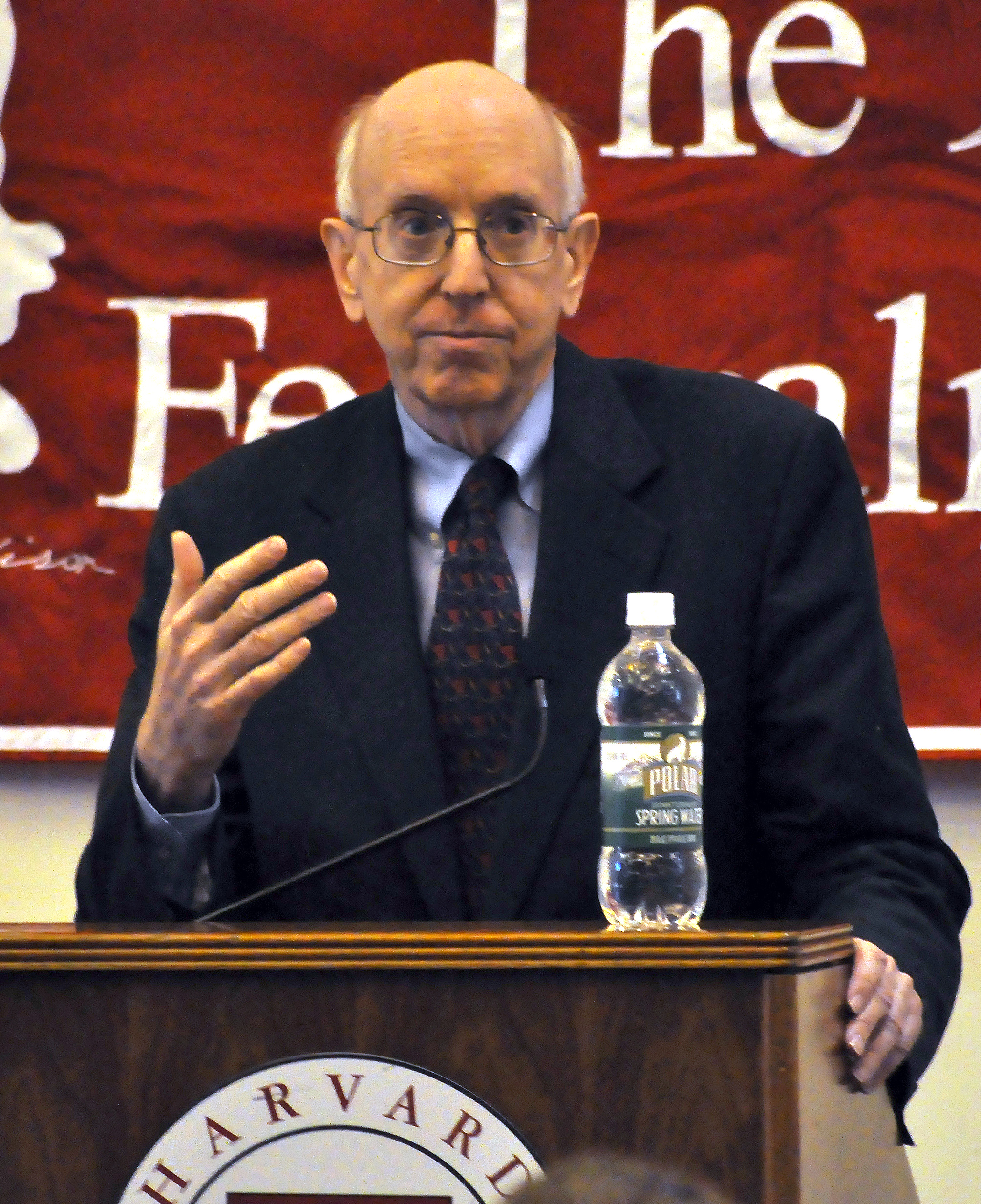
Richard Posner, a federal appeals judge whose writing made economics part of the way many lawyers think about the law, died Nov. 10 at 87. The University of Chicago Law School, where he taught for decades, announced his death Wednesday.
Posner spent 36 years on the Chicago-based U.S. Court of Appeals for the Seventh Circuit and wrote about 3,300 opinions, according to the law school. President Ronald Reagan nominated him in 1981. He served as chief judge from 1993 to 2000 and retired in 2017. The circuit hears federal appeals from Illinois, Indiana and Wisconsin.
He graduated from Yale and Harvard Law School and clerked for Supreme Court Justice William J. Brennan Jr., according to the Federal Judicial Center. He worked at the Federal Trade Commission and in the U.S. solicitor general's office before teaching at Stanford. He joined the University of Chicago faculty in 1969.
From a casebook to the courtroom
His 1973 book Economic Analysis of Law helped define a field that asks how legal rules affect people's choices. A rule assigning the cost of an accident, for instance, can change who has an incentive to prevent the next one. The University of Chicago said the book reached its ninth edition. Posner applied that interest in consequences to judicial work and described his approach as pragmatic.
In a unanimous 2014 opinion in Baskin v. Bogan, Posner wrote for the panel that upheld lower court rulings striking down bans on same-sex marriage in Indiana and Wisconsin. Indiana defended its ban by arguing that marriage helped keep biological parents together to raise children from unplanned pregnancies. Posner asked how barring same-sex couples from marrying helped meet that goal. He pointed to children already being raised by same-sex adoptive parents and considered how the states' marriage rules affected those families. The panel held that the bans violated the Constitution's guarantee of equal protection.
Posner also clashed in print with Supreme Court Justice Antonin Scalia over how judges interpret the Constitution. As Reuters reported, he questioned how Scalia's ruling striking down a District of Columbia handgun ban fit with Scalia's stated approach to constitutional interpretation.
When Posner retired from the court in September 2017, he told the Chicago Daily Law Bulletin that he had disagreed with colleagues over how the court treated people who represented themselves. He retained his affiliation with the University of Chicago, whose law school listed him as a senior lecturer when it announced his death.