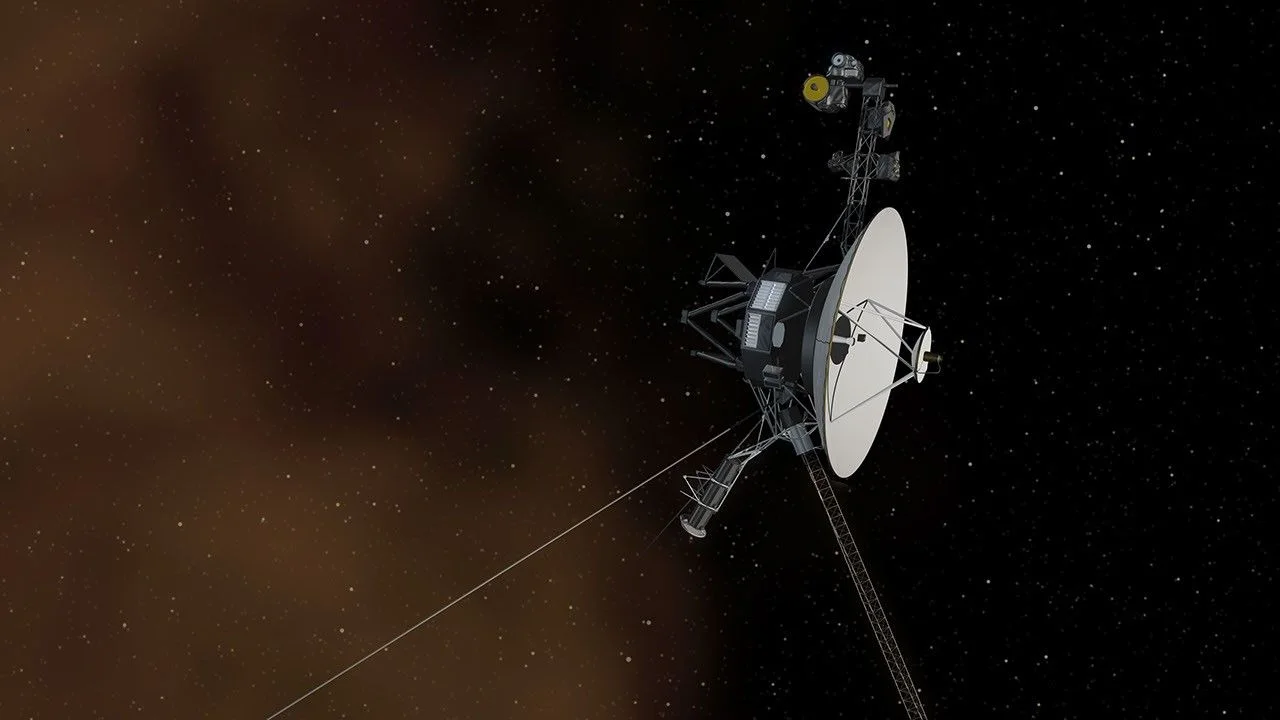
NASA's Voyager 1 went silent for two days this month, and engineers still do not know exactly why. The spacecraft, launched in 1977 and now about 16 billion miles from Earth, missed two scheduled contacts on October 18 and 19 and then reappeared on October 20 before the team had sent any commands to fix it, NASA said in an October 29 update. Contact has held since.
What engineers have found so far
A set of thrusters shut down and the backup set took over, a swap the spacecraft's computers make automatically when they detect a problem with the active set. That same fault protection puts Voyager 1 into a stable, safe configuration and pauses normal work until engineers can diagnose what happened.
"This is the first time we've seen the spacecraft do something like this, but we are also at a point in the mission where we have to expect the unexpected," said Kareem Badaruddin, the Voyager mission manager at NASA's Jet Propulsion Laboratory.
A power swap to keep instruments running
The pause came a few weeks after a power-saving change. In early September, engineers switched off three devices that help keep Voyager 1 warm and turned on three lower-power replacements at the same moment, a maneuver the team calls the "Big Bang." Both Voyagers run on plutonium generators that lose about 4 watts of power a year, and NASA says that without the swap, another science instrument on Voyager 1 would have had to go dark as early as summer 2027. The same change was made on Voyager 2 about six weeks earlier.
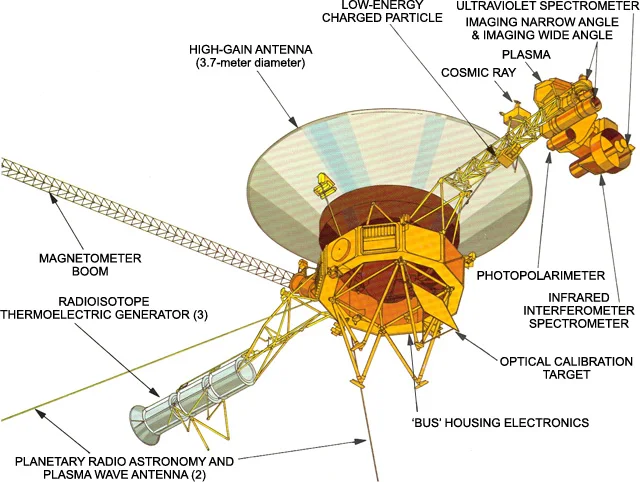
The mission launched with 10 science instruments. Some were turned off after the planet flybys, and two more have been switched off in recent years as the power supply shrinks. The Voyagers are the only spacecraft that have directly studied interstellar space, the region outside the heliosphere, the Sun's bubble of particles and magnetic field.
One light-day from Earth on November 18
Voyager 1, the most distant spacecraft humans have built, will reach one light-day from Earth on November 18: about 16.09 billion miles, the distance light covers in 24 hours. NASA's countdown page puts the moment at 2:16 a.m. Pacific Standard Time, or 5:16 a.m. Eastern.
From then on, a radio command takes a full day to reach the spacecraft and the answer takes another day to come back. "If you want to say 'hello' to Voyager, you send your message and then you go home and you wait two days before you finally get a response," said Suzanne Dodd, the Voyager project manager at JPL.
Nothing changes on board when Voyager 1 crosses the line, NASA notes, and the spacecraft will not sense anything different around it. It is moving at about 38,000 mph.