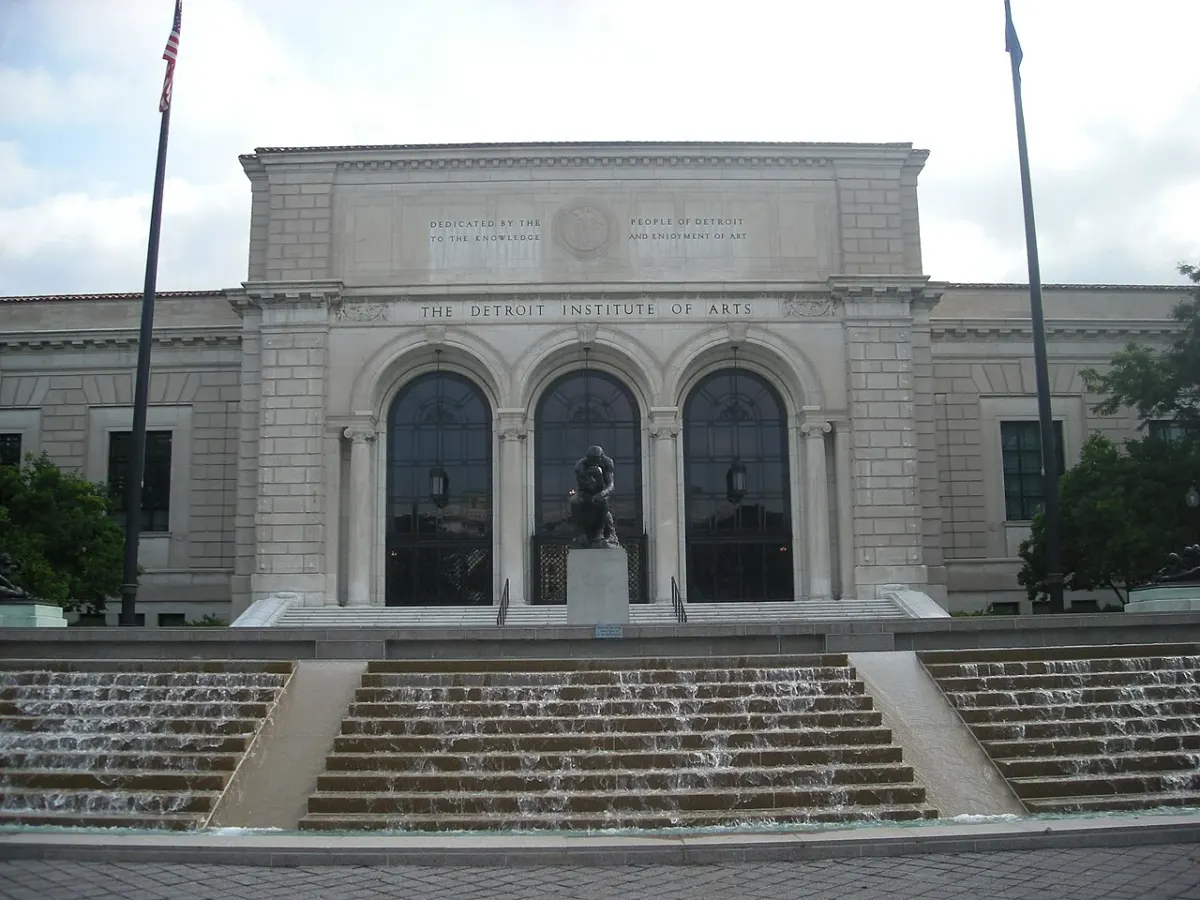
Georgia O'Keeffe: Architecture at the Detroit Institute of Arts focuses on Manhattan towers, rural barns and New Mexico adobe buildings. The built environment offers a view of an artist more often associated with flowers.
The DIA's exhibition description identifies approximately 35 paintings made from the 1920s through the 1960s. The show opened September 11, 2026 and runs through January 3, 2027. The works span several decades of her interest in buildings.
Budget for the exhibition itself
The museum lists this as a ticketed special exhibition. That matters for residents of Macomb, Oakland and Wayne counties, whose free general museum admission does not automatically mean free entry to every special show. The exhibition page publishes separate resident pricing and says the resident discount requires an in-person purchase with proof of residence.
Use the visitor FAQs alongside the exhibition booking information before traveling. Confirm opening hours, the ticket category that applies to your household and any access arrangements. The DIA also lists selected free exhibition days for tri-county residents; check the actual date before choosing a paid slot.
The ticket details that change the cost
The DIA's visitor FAQ says an exhibition ticket already includes museum admission. You do not need to buy two admission products for the same visit. Its published adult exhibition prices distinguish a general visitor from an eligible tri-county resident:
| Adult visitor | Exhibition price listed by the DIA | Purchase detail |
|---|---|---|
| General visitor | $30 | Advance purchase recommended |
| Macomb, Oakland or Wayne County resident | $20 | Buy in person with valid ID |
| Member | Depends on membership entitlement | Reserve the included ticket for a date |
The DIA's selected works make the architectural range concrete. Stables is dated 1932; Black Door with Red is dated 1954; East River from the 30th Story of the Shelton Hotel is dated 1928. A doorway and a high hotel view create different relations between a viewer and a building, giving the architectural theme variety beyond a contrast between New York and New Mexico.
A door can make a wall feel close, while a high viewpoint can flatten buildings into a pattern. The framing changes how much of a structure is visible; the paintings' physical sizes also matter in a way reproductions may obscure.
The FAQ also sets an earlier deadline than the building's closing time: exhibition ticket sales stop 90 minutes before closing, and final exhibition entry is one hour before closing. A late arrival can therefore leave too little time even when the museum is still open. Choose the exhibition arrival first, then fit any other galleries around it.
New York and New Mexico in one career
The Georgia O'Keeffe Museum's biography places her architectural subjects within a life lived across different settings. She first visited northern New Mexico in 1929 and began spending part of almost every year there. In 1949 she made it her permanent home. New York and New Mexico were therefore overlapping parts of her career for years before the move became permanent.
That chronology adds substance to the Detroit selection. East River from the 30th Story of the Shelton Hotel dates to 1928, before her first northern New Mexico visit. Stables comes four years later, while Black Door with Red belongs to 1954, after her permanent move. Together they span 26 years. The buildings give the show a way to follow an artist's changing surroundings without reducing that history to a single before-and-after move.
The DIA also lists In the Patio III, from 1948, among its selected works. A patio places the viewer within a built enclosure, while the Shelton Hotel title identifies an elevated look outward. Architecture can establish the position of the person looking, as well as supply a structure to paint. A barn, a doorway and a distant river view create different kinds of space within the same broad subject.
Leave enough time after the entrance
The published ticket cutoffs have a concrete consequence. On a day the museum closes at 4 p.m., the stated policy puts the ticket-sales cutoff at 2:30 and the final exhibition entry at 3. On a 9 p.m. Friday closing, those become 7:30 and 8. These are calculations from the policy, not extra reserved sessions. A visitor needing an in-person resident purchase should allow for that earlier sales deadline as well as the time spent inside the show.