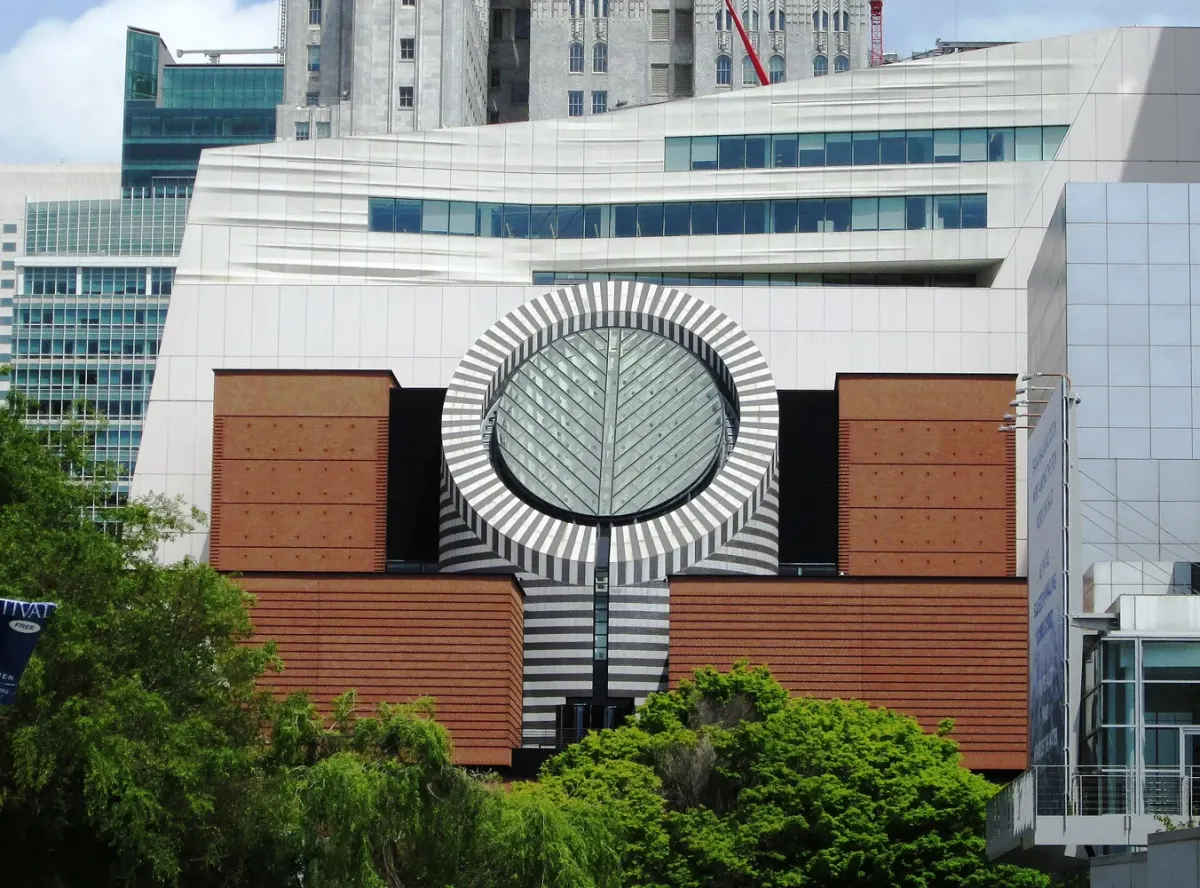
RM x SFMOMA: Between You and Me offers a clear starting point for a visitor curious about Korean art. The BTS member's collecting provides the organizing idea, while the work itself ranges across media and periods.
The exhibition opened October 3, 2026, and runs through February 7, 2027. Nearly 150 works from RM's collection appear alongside SFMOMA holdings. The museum identifies Yun Hyong-keun, Park Rehyun and Chang Ucchin among the featured artists, with ceramics, calligraphy, painting and sculpture contributing to the wider presentation.
The collection in RM’s own words
The display includes handwritten wall texts and an audio guide narrated by RM. Those contributions bring the collector’s perspective into the galleries alongside the museum’s interpretation.
Check the additional ticket cost
Use the exhibition's booking link and visitor information to price the complete visit for your group.
The published supplement is $10 on weekdays and $12 on weekends or holidays, with different arrangements for members and Encore Pass holders. Those are supplements, so compare the complete booking total for your group. For two visitors paying the supplement, the additional cost is $20 on a weekday or $24 on a weekend or holiday, before their ordinary admission. The four-dollar difference is a scheduling consideration alongside travel costs.
If you are choosing between a weekday and a weekend, include the cost and convenience of travel as well as the two-dollar difference in the supplement. A cheaper entry day can still be the more expensive outing if it requires additional time away from work or a more complicated journey.
| Your main interest | Give attention to |
|---|---|
| RM's collecting | His wall texts and narrated reflections |
| Korean modern art | Artist names and differences in approach |
| Ceramics or calligraphy | The exhibition's range beyond painting |
| A general museum day | Total admission and time for other floors |
The museum describes the Korean material as spanning the fifth century to the present. Ceramics and calligraphy extend the presentation beyond modern painting and into much older artistic practices.
RM’s texts and audio explain some of the choices behind the personal collection. That account sits beside the works’ own dates, materials and artistic histories, connecting a musician’s collecting interests with a much longer span of Korean art.
Korean paintings beside international works
SFMOMA's account of the exhibition's pairings gives the visit more definition than a collection count. In the Bluewater section, Kim Whanki's 26-I-70 and 15-VII-70 #181, both from 1970, appear with Yves Klein's 1961 sponge work Éponge (SE251). The shared blue palette connects paintings made with repeated dots and grids to an object whose physical surface carries the color.
The Home section pairs To Sangbong's Forsythia from 1975 with Giorgio Morandi's Fiori from 1949. Both use domestic still-life subjects, making the arrangement of flowers and vessels a point of contact across different places and decades. These are named comparisons within the exhibition, rather than a suggestion that every Korean work follows one national style.
Yun Hyong-keun's work also receives a dedicated gallery. SFMOMA describes his use of ultramarine and umber in relation to heaven and earth. The museum pairs his Burnt Umber & Ultramarine from 2001 with Donald Judd's To Susan Buckwalter from 1964 and recounts the artists' meeting in 1991.
That meeting gives one pairing a personal history, while other groupings depend on subject or material. The exhibition can hold both kinds of connection. RM's collecting explains why these works have come together, and the individual works retain the histories of their makers. The named sections make room for still life and abstract painting alongside the ceramics and calligraphy described in the museum's broader introduction.