
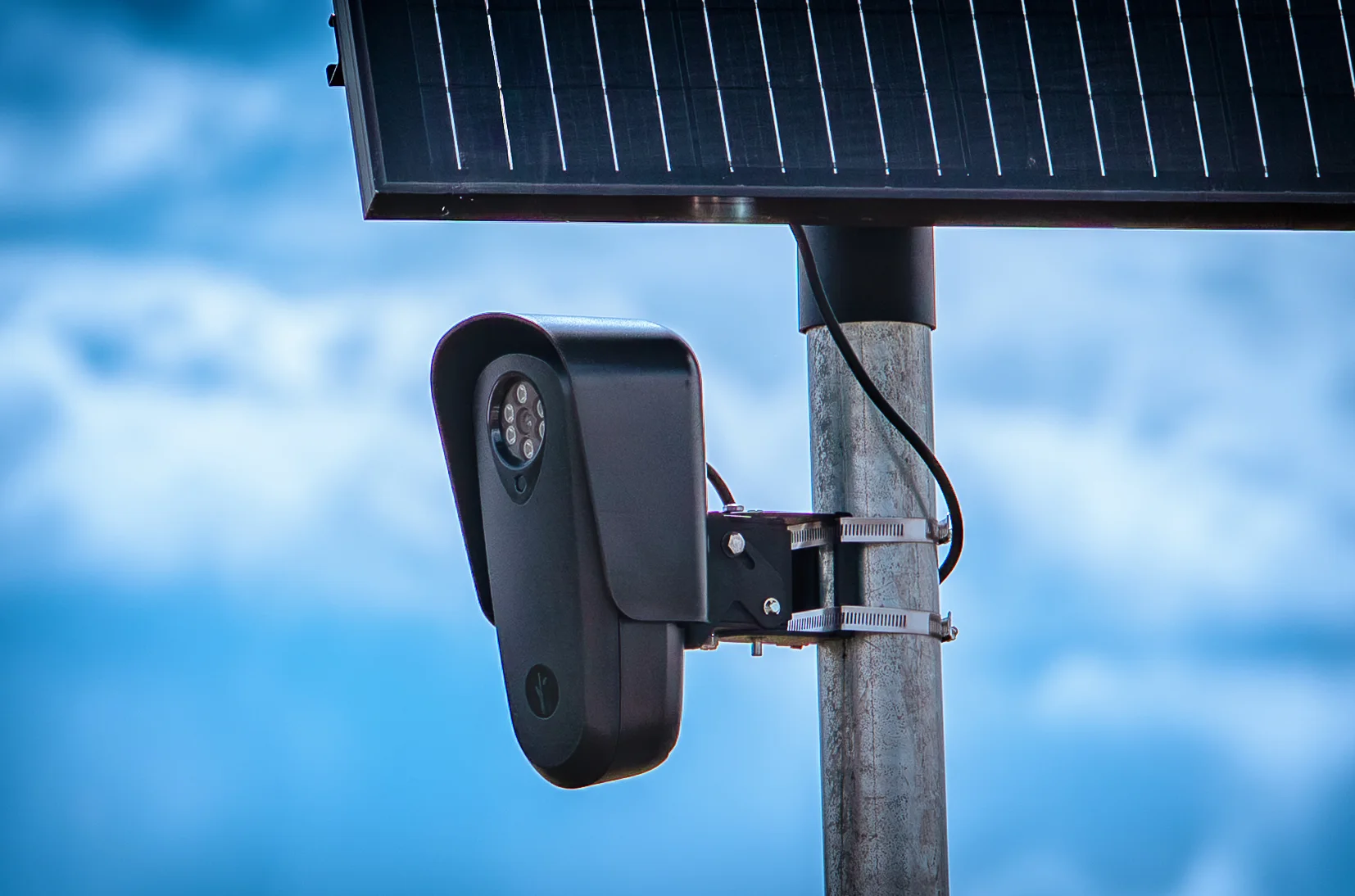
A road trip can leave a trail of license-plate sightings that police can search for patterns. The question for drivers is how those records become grounds for a stop, and what limits prevent ordinary travel from being treated as suspicious.
In an October 26 account, the ACLU described Grace Knowles being stopped during a 2025 trip after an officer cited her travel patterns. A recent Texas verdict and Flock Safety's published policies show how the legal tests and data controls work.
From a camera sighting to a travel-pattern search
Flock's license-plate readers record vehicles and allow searches by full or partial plates and other vehicle characteristics. Its product page describes alerts against designated lists, including vehicles associated with crimes, and searches connecting sightings across jurisdictions. A plate read can identify a vehicle at a place and time. An inference about why it traveled there requires additional reasoning.
The technology also extends beyond plate recognition. WIRED reported in August that code for Flock's OS Investigate described tools for querying travel patterns and combining plate records with police and commercial data. Flock told WIRED the separate investigative product was in development with a small partner group and could change before broader release. The publication cautioned that the visible code did not reveal live backend behavior. It establishes described capabilities, not proof that every agency deploys those tools or that a particular stop used them.
Three different decisions can therefore be involved:
| Stage | What it establishes | What remains unresolved |
|---|---|---|
| Camera capture | A recorded vehicle sighting | Whether the plate was read correctly |
| Pattern search | A set of sightings matching a query | Whether the pattern indicates a crime |
| Police action | An officer acts on information | Whether the stop, detention or search has legal justification |
Flock says its machine learning reads plates and issuing states. Its August safeguards announcement says officers must visually confirm plates and follow legal requirements before acting on alerts. That company guidance does not itself establish the justification for any particular stop.
What the Texas jury decided
On September 28, a federal jury found Bexar County, Texas, liable in Alek Schott's case. The verdict form records findings that the initial stop lacked reasonable suspicion, its extension lacked separate reasonable suspicion, and the truck search lacked probable cause. Jurors also found the county's policies or customs were a moving force behind those violations and that a county policymaker knew or should have known about them.
The Institute for Justice, which represented Schott, says the March 2022 stop followed camera-based scrutiny of his travel. It says deputies detained him for 76 minutes and found nothing illegal. The jury awarded $76, the amount he sought for that detention.
The jury instructions treated the stop, its extension and the search as separate questions. They also explained that facts innocent on their own can combine to support reasonable suspicion. The verdict concerns this county and these facts. It does not create a nationwide ban on plate readers or establish that every travel-pattern search is unlawful.
Seven-day retention has exceptions
Flock's evidence policy, updated August 12, sets standard retention at seven calendar days unless an individual customer agreement provides otherwise. Its August 13 announcement said existing customers would keep their approved retention periods. Stateline's independent reporting likewise explained that the shorter default would not automatically apply to existing customers.
Flock says expired cloud data is permanently deleted. Its policy also recognizes independently stored downloads. A seven-day default therefore does not mean every copy of a sighting disappears after a week. The company separately announced an Evidence Mode for preserving records needed in active investigations.
For a driver trying to understand local exposure, the agency's actual retention and sharing rules matter more than the vendor's default alone.
Which safeguards are still prospective?
Flock said in August that all law-enforcement customers would need case codes for searches and Audit Assistance by the end of 2026. Those are announced year-end requirements, not confirmation that every customer already uses them. Emergency searches could bypass case-code entry but would be flagged for review.
The company also described controls allowing communities to restrict categories of outside-agency searches. Their effect depends on the permissions an individual customer selects.
Flock's evidence policy directs public-records requests to the customer agency, which controls its data. Its transparency portals can show retention policies, sharing partners and search activity. Those records provide concrete questions for local oversight: how long sightings remain searchable, who can search them, and what reasons and review records accompany those searches.


