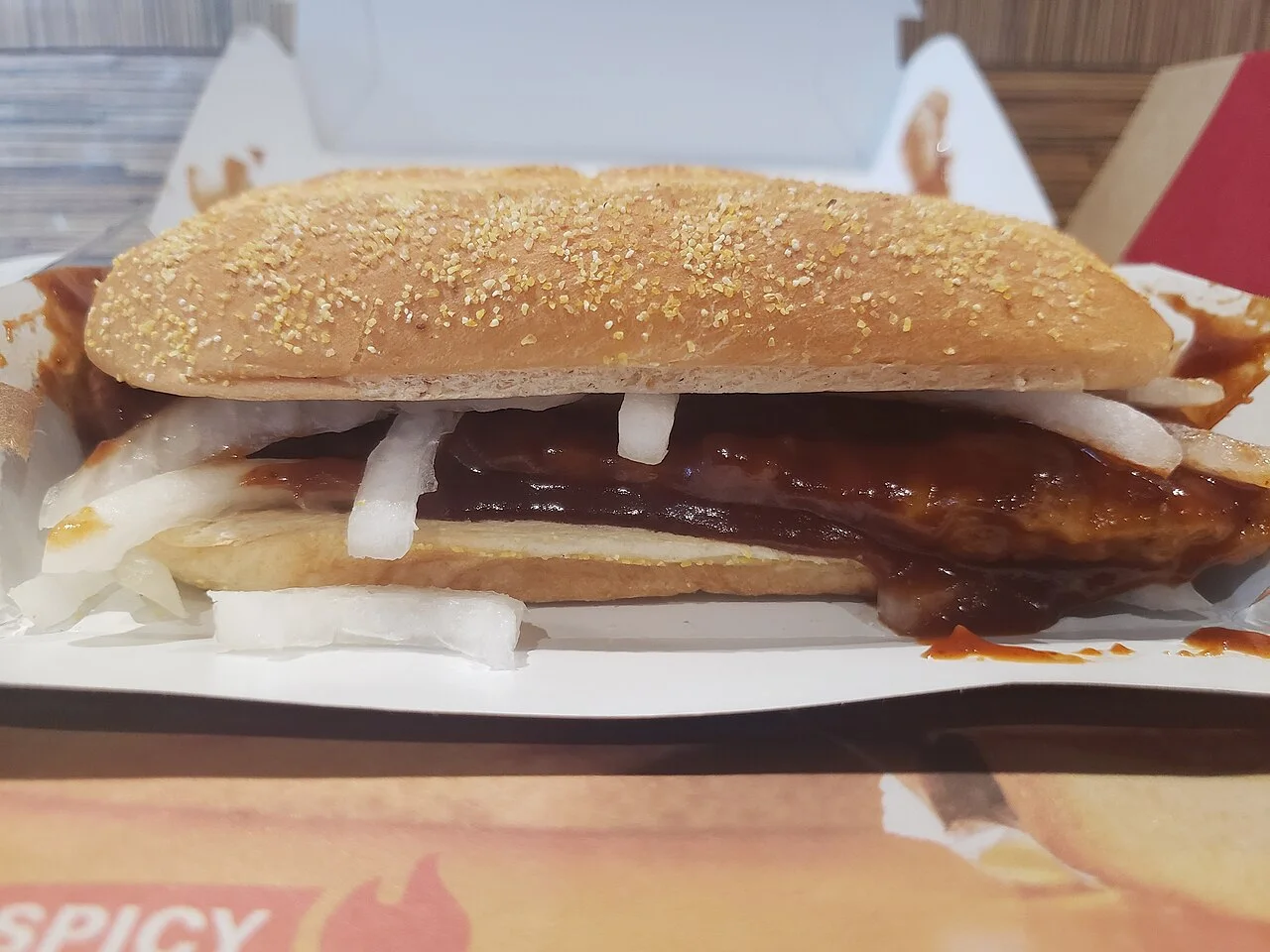
A federal judge in Chicago has let most of a class-action lawsuit over the McRib go forward, ruling that a customer could reasonably believe a sandwich called the McRib, shaped like a rack of ribs, contains rib meat. U.S. District Judge April M. Perry denied most of McDonald's motion to dismiss in a 15-page opinion dated Oct. 30, though she threw out several of the buyers' claims.
What the lawsuit claims
Four customers who bought McRibs in late 2024 sued in December 2025 (Le v. McDonald's Corp., No. 1:25-cv-15609). They say the McRib contains no rib meat and is instead made from "lower-grade pork products," including "pork shoulder, heart, tripe or scalded stomach." They argue that the name, the rib-shaped patty, the limited-time sales and a price that makes it one of the most expensive single items on the menu all lead buyers to expect rib meat. They say they would not have bought it, or would have paid much less, had they known.
The complaint cites two surveys by the buyers' expert. In the first, 155 of 215 people, or 72%, said they expected rib meat after seeing a McRib menu image. In the second, 118 of 174 said it was "important" or "very important" to their decision that the McRib contained rib meat.
McDonald's website describes the patty's ingredients only as "Pork, Water, Salt, Dextrose, [and] Rosemary Extract," according to the opinion, without naming the cut.
What McDonald's argued
McDonald's told the court it never said the McRib contains rib meat and truthfully calls it a boneless pork sandwich. It also argued that "McRib" is a registered trademark, that "Mc" only signals the brand, that the ingredients are public and that the sandwich's contents have been widely reported during more than 40 years on and off the menu. It called the surveys "methodologically opaque."
How the judge ruled
Perry rejected those arguments at this stage. A literally true description can still mislead, she wrote, and a trademark does not protect its owner from deception claims. On the name, she noted that a McChicken contains chicken and an Egg McMuffin contains an English muffin, while the McFlurry "does not come accompanied by a small snowstorm." Rib meat, unlike a snowstorm, actually exists, so the McRib is closer to a literal name. She added that "the reasonable consumer does not necessarily do research before buying a $7 fast food item."
What survives:
- consumer-protection claims under California, New York, Illinois and District of Columbia law;
- three fraud claims, including fraudulent concealment, and a claim for unjust enrichment.
What she dismissed:
- negligent misrepresentation, because McDonald's sells food, not information;
- four contract and warranty claims, dismissed without prejudice because the buyers cited no cases supporting them; they may try again;
- the buyers' request for an injunction covering future sales, because the four now know the McRib has no rib meat and cannot be misled again.
In a footnote, Perry noted that McDonald's 27-page brief exceeded the court's 15-page limit and said she expects the company to follow the local rules going forward.
What it means for McRib buyers
Perry did not decide whether McDonald's misled anyone. At this stage the judge must accept the buyers' allegations as true, and she said proving fraudulent intent will require more than the complaint offers. No class has been certified, and there is no settlement or claim process for customers. The case now moves forward on the claims that survived.