

Social Security's retirement and survivor trust fund is projected to exhaust its reserves in the fourth quarter of 2032. Continuing income would then cover 78% of scheduled benefits, according to the trustees' June 9, 2026 report. Those figures imply a projected 22% shortfall. The report describes a future financing shortfall, with the outcome depending on future legislation and economic conditions.
Why 2032 and 2034 both appear
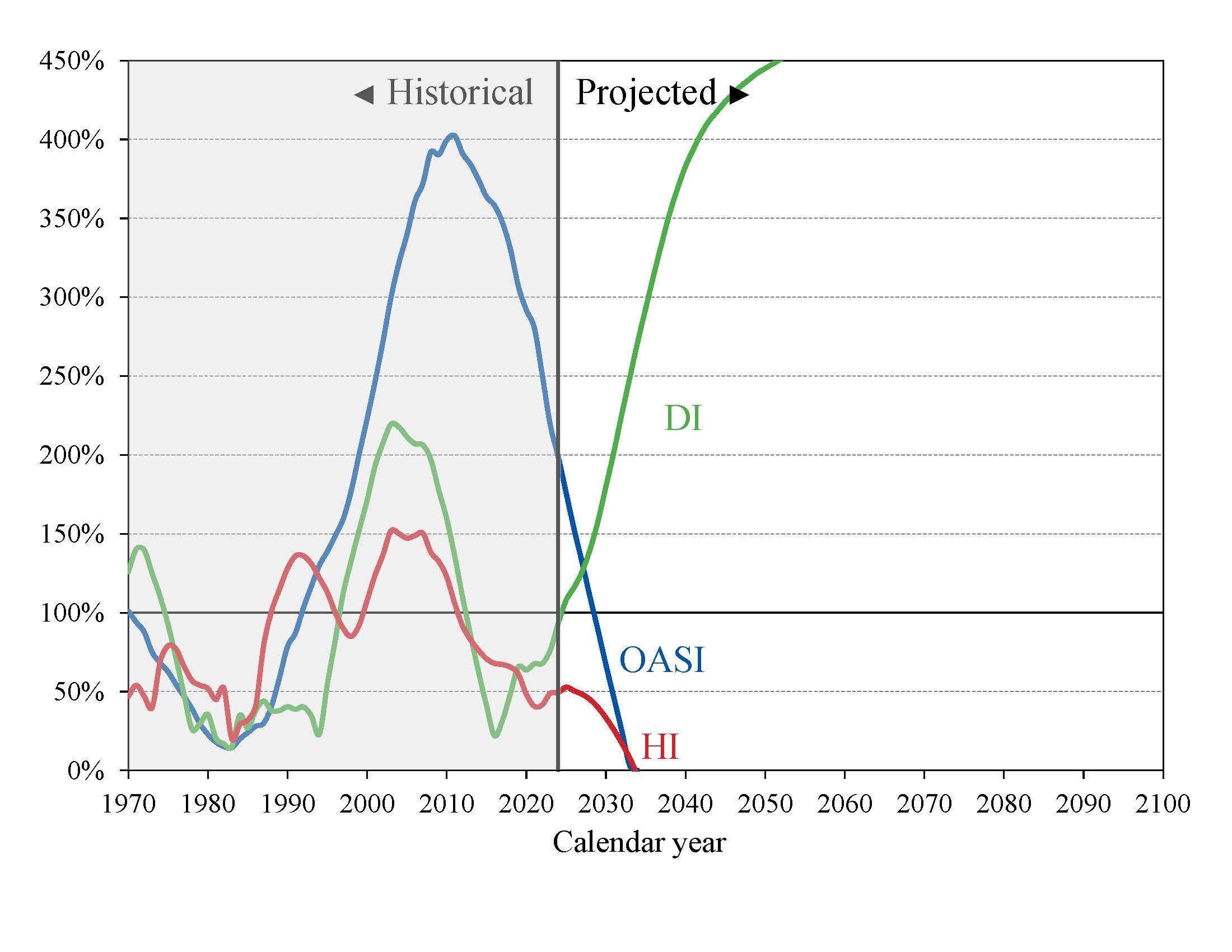
Retirement and survivor benefits are financed by the Old-Age and Survivors Insurance trust fund, called OASI. Disability Insurance has a separate trust fund, DI. The trustees project that DI can pay its full scheduled benefits throughout the report's 75-year period, through 2100.
The often-quoted 2034 date comes from a hypothetical combination of those two legally separate funds. Under that calculation, combined reserves last until the third quarter of 2034, when continuing income covers 83% of scheduled benefits. It does not move the retirement fund's own projected exhaustion date to 2034.
| Projection | Reserves exhausted | Share payable from continuing income then |
|---|---|---|
| Retirement and survivors, OASI | Fourth quarter 2032 | 78% |
| Disability Insurance, DI | Not within the period ending 2100 | 100% scheduled benefits projected |
| Hypothetically combined OASDI | Third quarter 2034 | 83% |
These are the trustees' 2026 estimates. The combined figure is useful for examining Social Security's overall finances, but it rests on a different funding assumption from the retirement-only figure.
What 78% means in dollars
A 78% payable share leaves a 22% shortfall. For an illustrative scheduled monthly benefit of $2,000, multiplication by 0.78 gives $1,560, a difference of $440 a month or $5,280 over a year.
| Illustrative scheduled monthly amount | 78% of that amount | Monthly difference |
|---|---|---|
| $1,500 | $1,170 | $330 |
| $2,000 | $1,560 | $440 |
| $3,000 | $2,340 | $660 |
Those calculations show the size of the projected gap. They are not individualized benefit estimates or predictions of a particular deposit in 2032. They leave out future cost-of-living adjustments, taxes and Medicare deductions, and assume the same percentage applies to each illustrative amount.
The 78% figure also applies at the projected point of reserve depletion. It is not a permanent funding ratio for every later year. The trustees' summary projects that continuing OASI income would cover a smaller share, 62%, by 2100 under its assumptions.
Why the reserves are running down
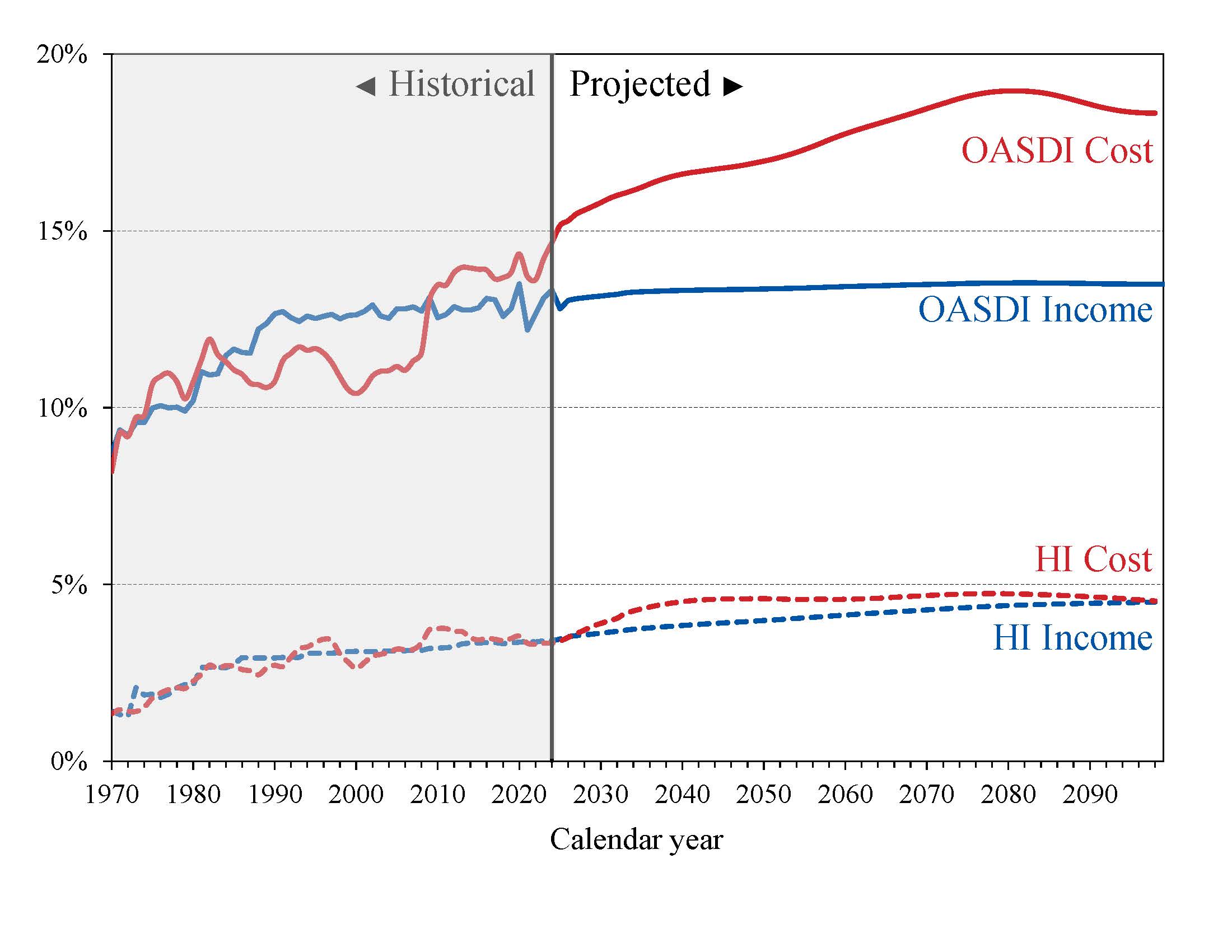
Social Security can use reserves while current spending exceeds current income. The agency says combined reserves declined by $160 billion during 2025 to $2.56 trillion. Total program cost has exceeded total income since 2021 and is projected to remain higher during the report period.
Reserve depletion therefore does not mean every source of money disappears. Continuing program income remains, but falls short of the benefits scheduled in law. The trustees explain that the funds cannot borrow to cover the difference once available income and reserves are insufficient.
The retirement fund's projected exhaustion moved one quarter earlier than in the previous annual report. The Committee for a Responsible Federal Budget's June analysis identifies lower fertility, immigration assumptions and lower revenue from taxing benefits among the changes worsening the long-term outlook. Stronger productivity and wage-growth assumptions offset part of that deterioration.
Separate the funding projection from your benefit estimate
Lawmakers can change the financing or benefit rules before reserves are depleted. In its June analysis, the Committee for a Responsible Federal Budget modeled an immediate solvency fix as changes equivalent to a 34% payroll-tax increase (4.25 percentage points), or a 25% reduction in total benefits. Those are alternative illustrations of the 75-year combined-system gap, not enacted changes or the same measure as the retirement fund's 22% shortfall in 2032.
For a personal starting point, SSA's retirement planning page directs people to their Social Security account to compare estimates at different claiming ages. Payments depend on lifetime earnings and when a person applies; waiting can increase the monthly amount up to age 70.
The figure deposited in a bank account can differ from the benefit amount because Medicare Part B premiums and tax withholding may be deducted. Keep those deductions separate from any hypothetical trust-fund reduction when comparing a benefit estimate with household expenses.