
Paolo Bulgari, the longtime chairman of the Roman jewelry house whose name became familiar far beyond Italy, has died at 89. He joined the family business in 1960 and became chairman in 1984, helping expand a jeweler associated with colored stones and film stars into an international luxury company.
His wife and children announced his death in a family notice published Sunday. The company also published a tribute there. The notices did not give a cause of death.
Paolo belonged to the third generation of the business founded by his grandfather, the Greek silversmith Sotirio Bulgari. Alongside his brothers Gianni and Nicola, he helped develop a style that treated color, rounded forms and references to ancient Rome as central parts of a jewel's design.
Paolo later described work that ranged from buying raw materials to working at the jeweler's bench. Drawing was his great passion, he wrote in an introduction to his foundation, and he directed Bulgari's creative work for many years until the family sold control in 2011.
Color and rounded stones
Bulgari's history of the 1950s traces its experiments with cabochons, the smooth, rounded cuts that emphasize a stone's color, to that decade. The company connects their domed contours with the cupolas of Rome. It also places the first Serpenti creations in the 1940s, before Paolo entered the business.
The change was gradual. A 2009 retrospective at Palazzo delle Esposizioni, curated by jewelry historian Amanda Triossi, followed the company's production from silver objects through the diamond-set Art Deco jewelry made under the second generation, Giorgio and Costantino.
Its account identifies the 1960s as a turning point. Compact shapes, rounded profiles and unusual combinations of colored gemstones became associated with the arrival of Gianni, Nicola and Paolo. Earlier pieces from the 1940s and 1950s still showed the influence of Parisian jewelry.
The retrospective brought together nearly 500 objects made between 1884 and 2009.
Ancient coins and a modern logo
The Monete collection put ancient coins into contemporary jewelry during the 1960s. Bulgari credits Nicola, an enthusiastic coin collector, with championing the idea. The company describes it as a continuation of a tradition of coin jewelry reaching back to ancient Rome.
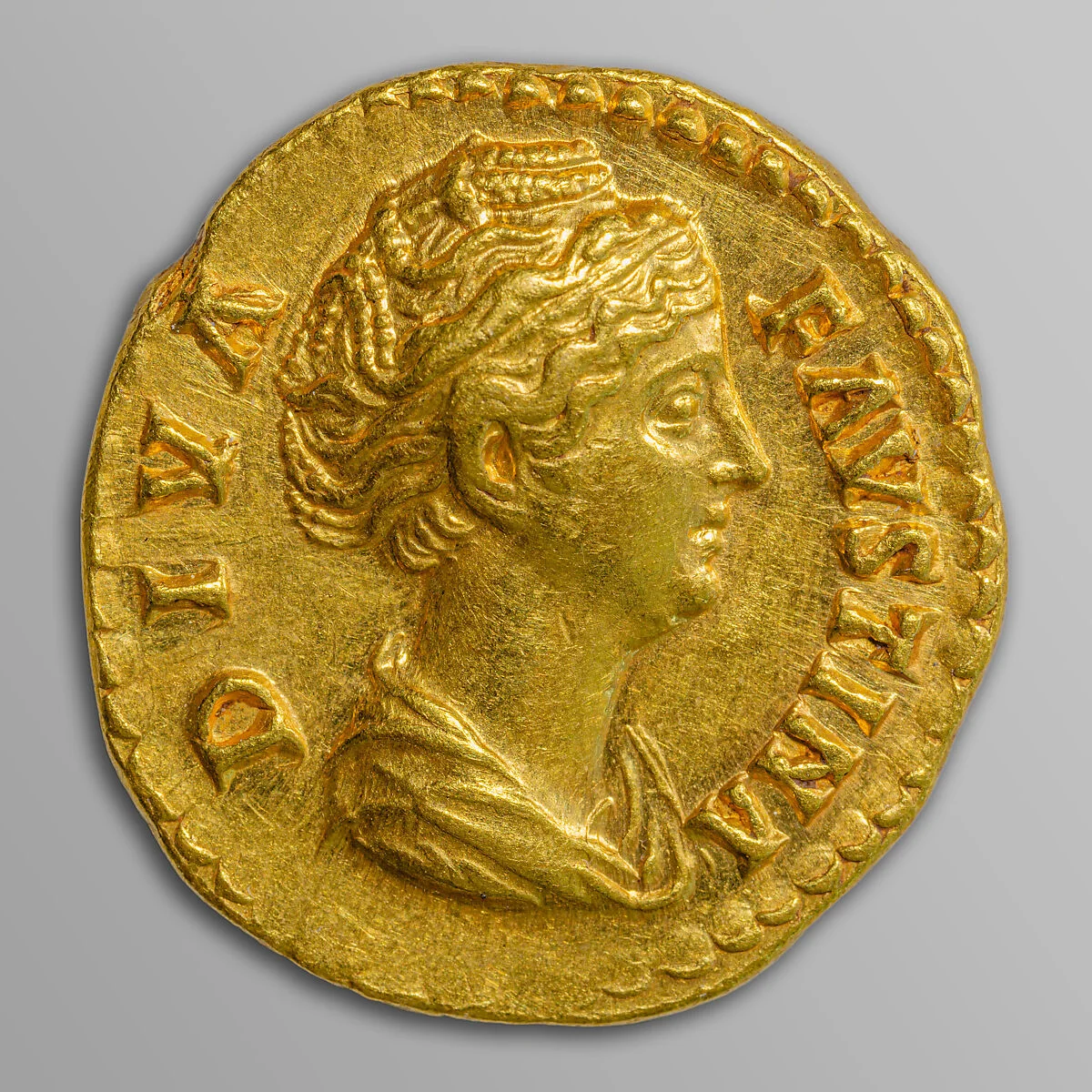
Coins offered both an object to mount and a design vocabulary. A Roman gold aureus dated 141 CE in the Metropolitan Museum of Art's collection, for example, carries the name of Faustina I around her portrait. It is an ancient coin, separate from Bulgari's jewelry.
In the Bvlgari Bvlgari watch, the company applied that visual idea differently. Its own name appears twice around the bezel. The company says ancient coin inscriptions inspired the lettering, while Roman temple columns informed the cylindrical case.
The watch appears in the company's historical record as a circa-1977 design. The repeated name became part of the object itself, occupying the space around the dial.
From Rome to New York
International business had begun earlier. In his foundation essay, Paolo recalled that his father Giorgio and uncle Costantino had opened a shop in Saint Moritz in 1920.
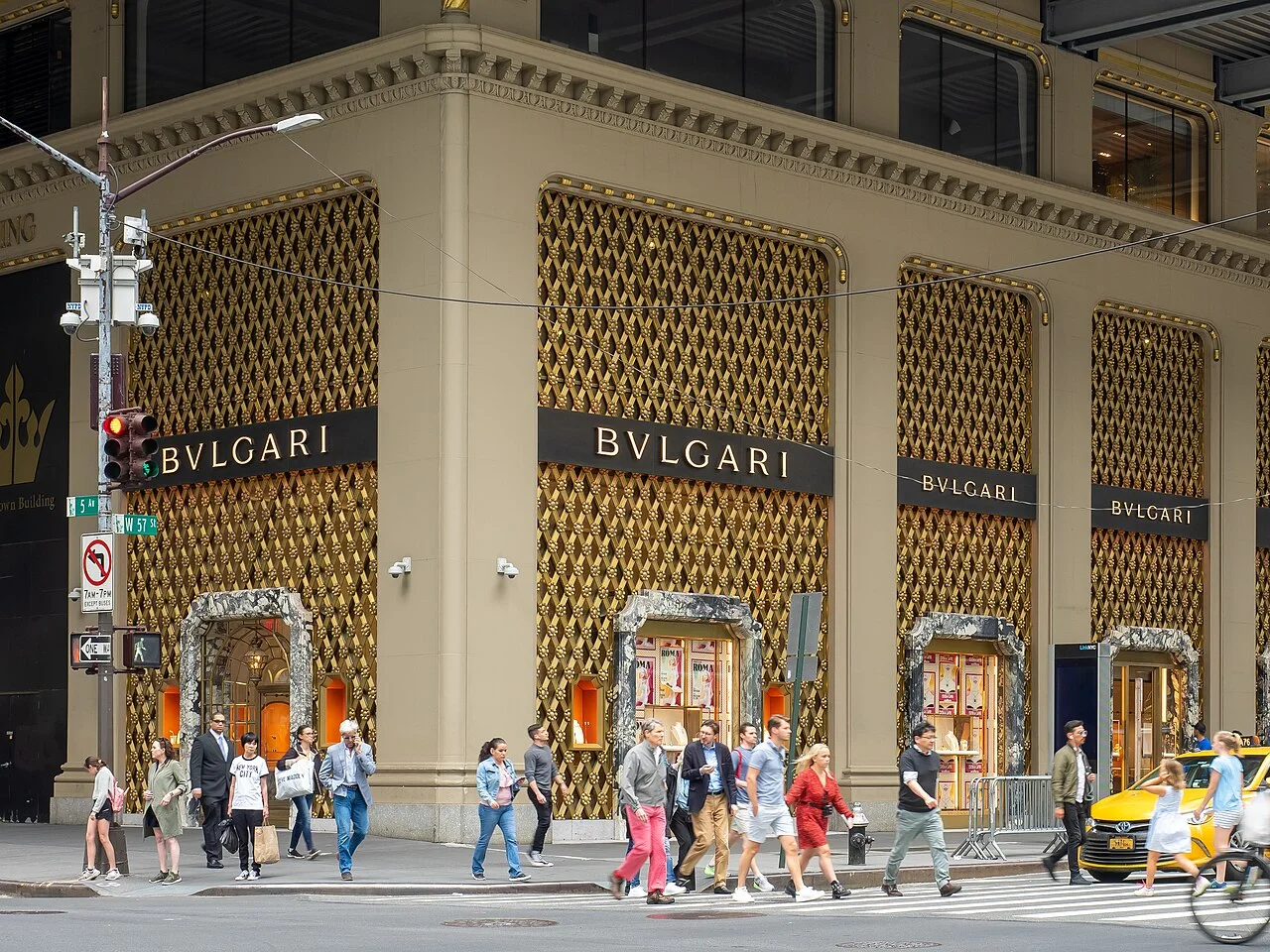
The 1970s brought stores in New York, Paris, Geneva and Monte Carlo. Bulgari also broadened its materials and forms, using hardstones to extend its color combinations and drawing on influences ranging from Indian jewelry to Pop Art.
Long sautoir necklaces were one expression of that approach. Their pendants could often be detached and worn as brooches. A necklace could change form, with the same ornament serving another purpose.
Cinema supplied another connection with an international audience. The 2009 Rome exhibition devoted an entire room to Elizabeth Taylor's Bulgari collection, including emeralds and sapphires surrounded by diamonds. Jewelry worn by Ingrid Bergman, Sophia Loren and other actors appeared alongside photographs and film clips.
A change in ownership
In 2011, the family agreed to transfer its controlling interest to LVMH. The transaction announcement set out an exchange of 152.5 million Bulgari shares for 16.5 million newly issued LVMH shares, alongside a proposed offer of 12.25 euros per share to minority shareholders.
Under the terms, the Bulgari family would become LVMH's second-largest family shareholder. The cash offer concerned the remaining minority shares; the family exchanged its controlling stake for shares in the larger group.
The agreement preserved roles for family members. Paolo and Nicola were to remain chairman and vice chairman of Bulgari, respectively. The family would receive two seats on LVMH's board, while their nephew Francesco Trapani would join its executive committee and oversee the group's watches and jewelry activities.
Paolo's later work also included the foundation that bears his name. He wrote that he and his wife decided to create it in 2019, with educational poverty and young people's prospects among its concerns.
The foundation says it has worked with schools and community groups in disadvantaged areas of Rome since early 2020. Two four-year programs brought together universities, social enterprises and associations. Projects included improvements to a square, school gardens, courtyards and a soccer field, alongside school and community networks, training courses and summer camps. In 2025 it began a vocational training project in eastern Rome.