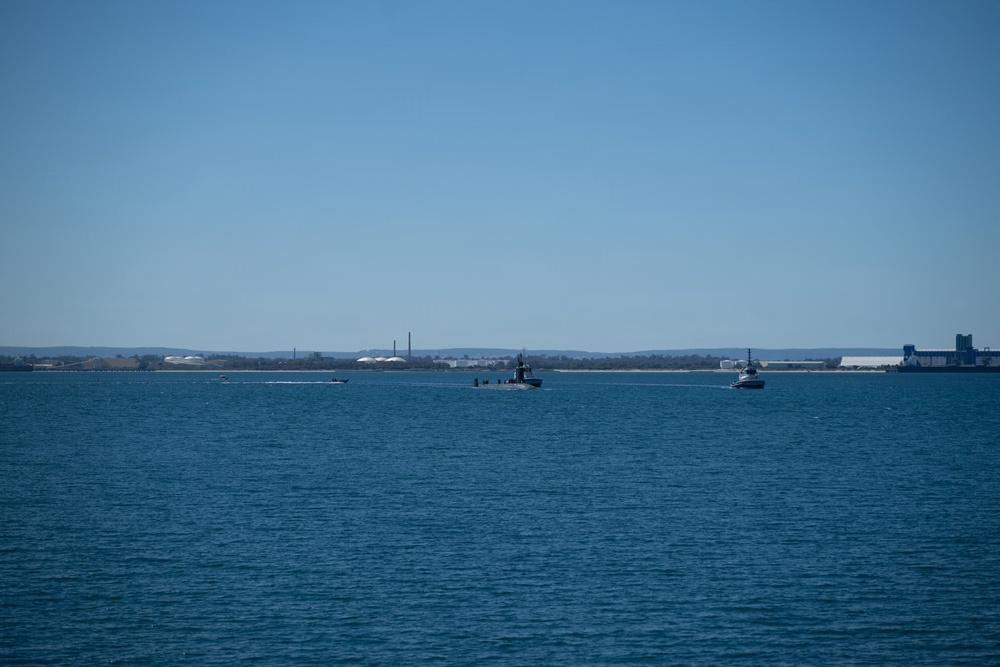
Australia's defense minister, Richard Marles, has challenged a new U.S. congressional assessment of AUKUS, arguing that American submarine production and maintenance in Australia will create room to transfer boats to the Australian navy.
The dispute concerns two measures of naval strength: how many submarines the United States owns, and how much time those submarines can spend operating. For Americans following defense spending and Pacific deployments, the distinction helps explain why progress at an Australian maintenance base can coexist with a projected reduction in the U.S. fleet.
In a November 22 interview with Insiders, which aired November 21 Pacific time, Marles said U.S. production was increasing and rejected the Congressional Budget Office's assessment. He also pointed to work on USS Colorado at HMAS Stirling, near Perth. His stated goal is to create the equivalent of one submarine's operating days by the early 2030s, helping make a boat available to Australia.
What CBO modeled
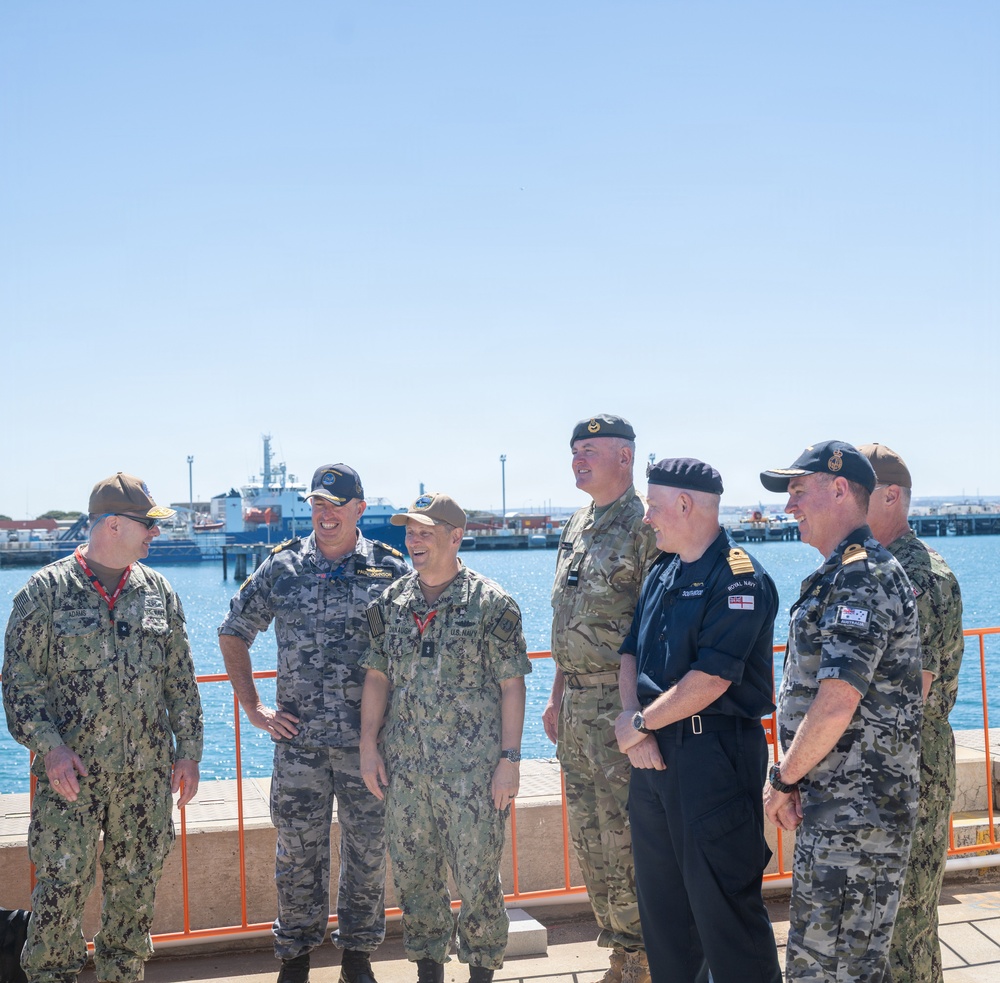
The CBO report, released November 19, says the Navy's 2027 shipbuilding plan does not factor in the effect of AUKUS sales or replacement purchases. It therefore models separate scenarios.
The first involves three used Virginia-class submarines sold in 2032, 2035 and 2038. A second assumes five used boats transferred between 2032 and 2044. Without replacement purchases, the United States would have three to five fewer attack submarines for most of 2033 through 2053.
In a third scenario, five replacement purchases lift production to about 2.3 attack submarines a year during the relevant construction period. The U.S. fleet would still be smaller than the baseline from 2032 through 2052, before becoming slightly larger by 2055.
These are illustrative comparisons with a fleet that retains its boats. CBO also says a stronger Australian fleet could offset some U.S. capability losses, while Australia would decide whether its submarines joined a particular conflict.
What maintenance in Australia adds
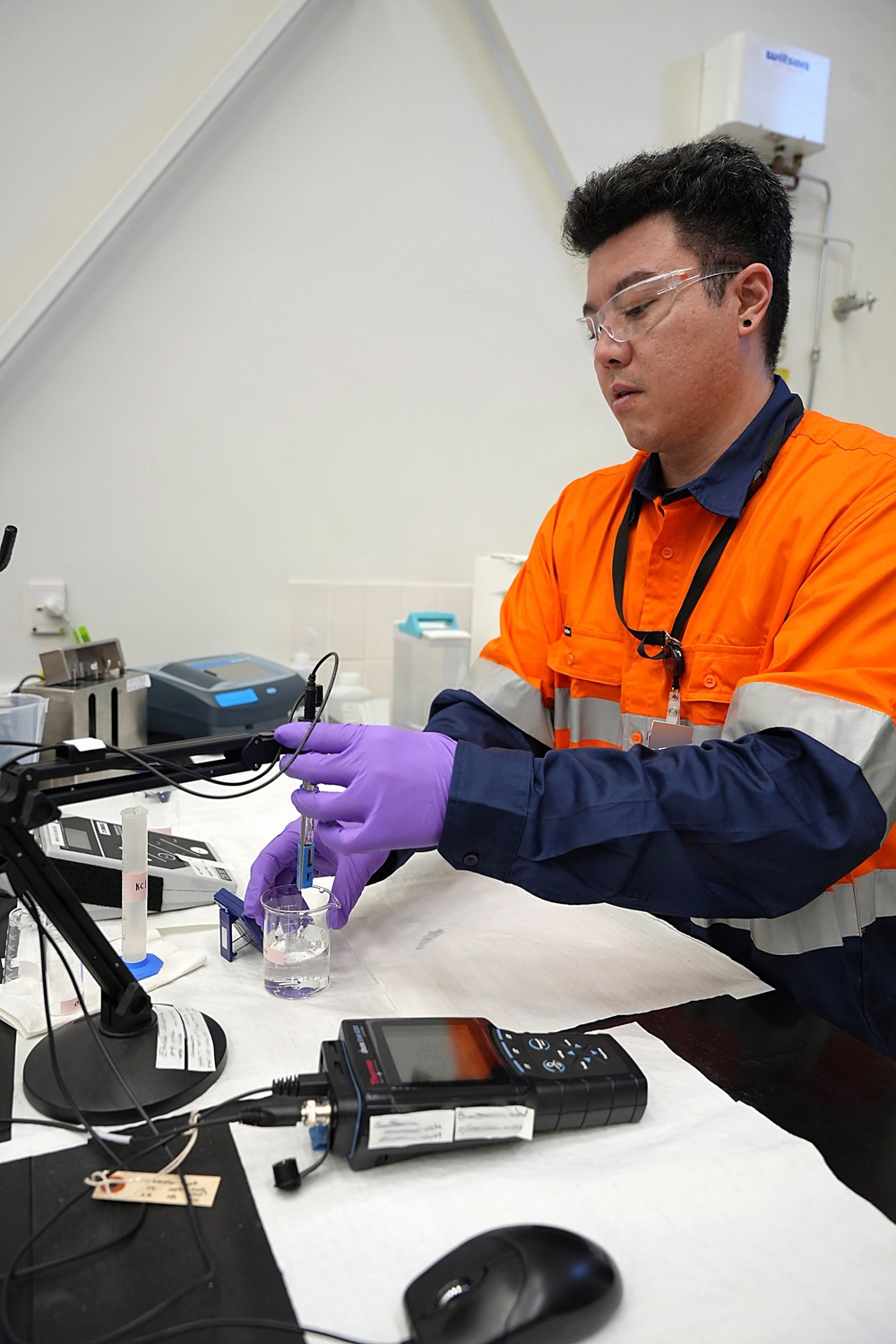
The U.S. Navy's October 27 account describes a monthlong maintenance visit by USS Colorado. More than 30 trained Australian civilian technicians were scheduled to work alongside specialists from Pearl Harbor Naval Shipyard and Intermediate Maintenance Facility.
The Navy said the visit would use upgraded facilities at Diamantina Pier and Australian-built equipment, including a safety walkway around the submarine's sail. Pure water, high-pressure air and dehumidification systems are among the supporting infrastructure described in its account.
Maintenance closer to a submarine's operating area can support additional time at sea, even though the number of boats remains a separate inventory question. His promised gain of a submarine's worth of operating days is a target, not a completed result demonstrated by Colorado's visit.
The Navy plans for Colorado to return in late 2027 to help establish Submarine Rotational Force-West. The planned rotation allows up to four U.S. submarines and one British submarine to operate from Stirling.
The Australian Submarine Agency's account of the visit puts the wider ASC workforce supporting the maintenance period at almost 60, including more than 30 graduates of specialized training at Pearl Harbor. It says Royal Australian Navy divers and Australian sailors embedded with the Virginia-class force are also involved. About 15 Western Australian businesses are supporting ASC during the work.
Production investment is still being built
There is also work inside the United States. The Australian Submarine Agency's October account describes a new Propulsor Center of Excellence in Pascagoula, Mississippi. Australian representatives attended its groundbreaking on October 20.
The Bird-Johnson Propeller Company facility is intended to make submarine propulsor rotors and other Virginia-class components. The agency describes it as part of combined U.S. and Australian investment and says Australia has committed $3 billion in U.S. dollars to production and sustainment capacity.
The facility is expected to add manufacturing capacity once operational.