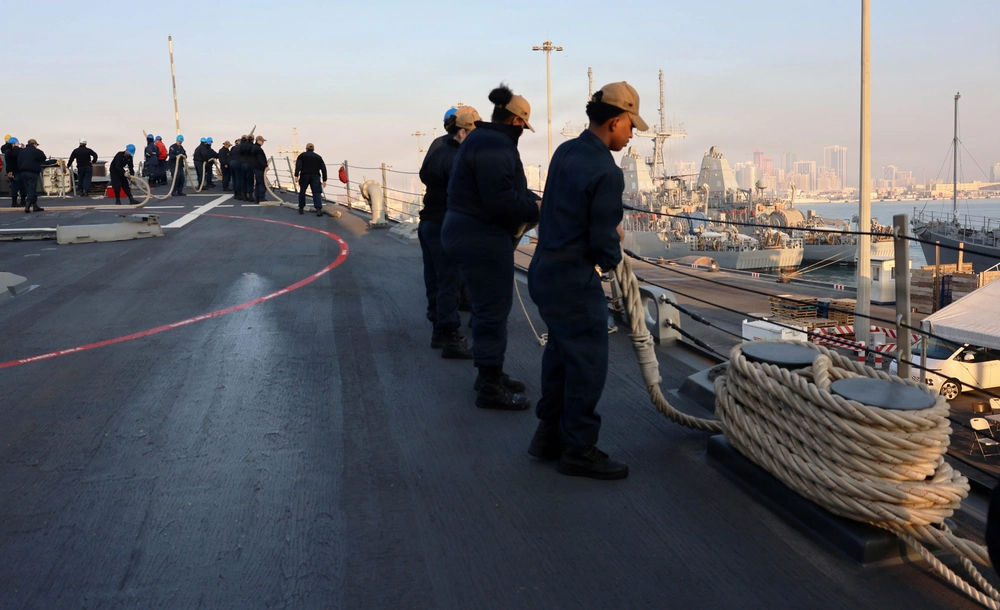
The U.S. military says ships receiving Iranian-loaded cargo at sea can face blockade enforcement even if they have never entered an Iranian port. A November 18 Navy update, distributed by the Joint Maritime Information Center, sets out the change.
It applies when a ship receives cargo from a vessel subject to the blockade that loaded it at an Iranian port or coastline. The Navy says recipients may be stopped, boarded, diverted, captured or sent to the Iranian port of origin. Failure to comply with lawful orders can bring enforcement involving force.
Neutral passage through the Strait of Hormuz to non-Iranian destinations remains permitted, though ships can still face searches. The blockade applies regardless of flag.
Humanitarian cargo needs clearance
Ships carrying food, medical supplies or other essential humanitarian cargo for Iran must seek Navy clearance. The updated requirements include a crew list and scanned passports for everyone aboard. Approval does not exempt a ship from boarding or inspection.
Guidance for U.S.-flagged ships

The Maritime Administration’s active advisory 2026-011 tells U.S.-flagged commercial vessels to coordinate voyage planning closely with Naval Forces Central Command’s shipping guidance team. It recommends keeping at least 30 nautical miles from U.S. military vessels to reduce the risk of being mistaken for a threat and answering coalition navies’ VHF calls.
The agency also warns of satellite-navigation interference, spoofing and jamming in the Persian Gulf, Strait of Hormuz and Gulf of Oman. Mariners should cross-check electronic positions using radar, visual bearings and secondary navigation systems.