A tire-pressure warning on a cooler morning should prompt a pressure check. Falling outside temperatures can reduce tire inflation pressure, according to NHTSA's winter-driving guidance.
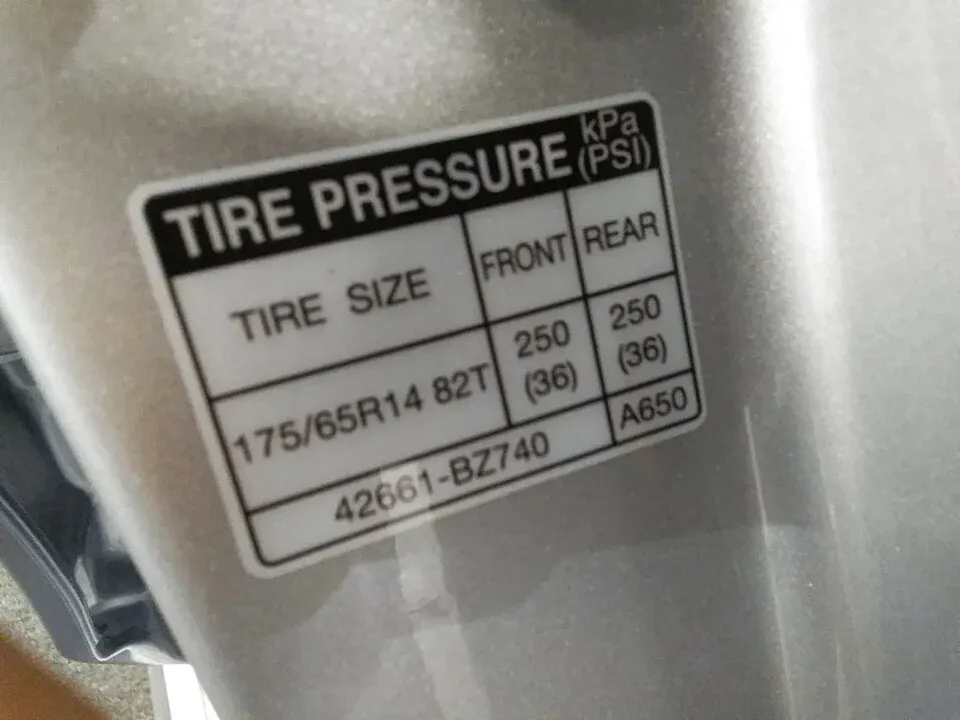
Find the recommended pressure on the vehicle's tire-information label, often on the driver's door frame, and in its owner's manual. The number molded into the tire is its maximum pressure, not the vehicle's recommended setting.
The parked-car check
- Leave the vehicle parked for at least three hours so the tires are cold.
- Read the vehicle label and note whether front and rear settings differ.
- Measure each tire with a gauge and compare it with the correct setting.
- Inspect for visible cuts, bulges or other damage.
- Follow the vehicle's instructions for adjustment and any warning-light reset.
NHTSA's TireWise guide defines a cold tire as one not driven on for at least three hours. Measuring after a drive and then releasing air to match a cold-pressure number can leave the tire underinflated once it cools. Plan the check before leaving rather than at the end of a long trip.
Keep a simple note of the readings and date. If one tire repeatedly loses pressure, arrange an inspection instead of treating every warning as a seasonal nuisance. A temperature change does not establish that a tire has no leak or damage.
If a warning appears while traveling, stop somewhere safe and follow the owner's manual. A visibly damaged or substantially deflated tire needs attention before continuing. Do not postpone the check merely because the warning later disappears.
NHTSA recommends inspecting tires at least monthly and before a long road trip. Put the gauge where it is easy to find, and save a photograph of the vehicle's pressure label so a second driver can use the same figures.
Compare each tire with its specified pressure
Match each gauge reading with the specified pressure for that tire, keeping the manufacturer's recommendation separate from the measured number. Keep the units visible. A gauge set to kilopascals and a label read in pounds per square inch cannot be compared as bare numbers.
Check the spare if the vehicle has one, using its specified setting. The spare may have a different pressure requirement from the road tires. If you cannot safely reach its valve or identify the applicable instruction, include that question when arranging service. A bottle of tire sealant or another mobility system also needs the inspection described in the owner's manual; it does not create a spare tire.
Do not use the warning light as a monthly measuring tool
NHTSA explains that a tire-pressure monitoring system warns when pressure is significantly low. A dark dashboard light does not give you the reading for every tire. The monthly gauge check can find a mismatch before that warning threshold is reached.
If you need to use an air pump after driving, follow NHTSA's warm-tire instructions and the vehicle guidance instead of bleeding air from a warm tire to reach the cold specification. Recheck when the tires are cold. If a shop adjusts them, ask which specification it used and whether another cold check is needed.
For a recurring loss, bring the technician readings that identify the tire, the amount lost and the time between checks. Leave damage assessment and repair decisions to a qualified tire professional.
Turn the readings into an adjustment
Suppose a vehicle label specifies 35 psi at the front and 38 psi at the rear. A cold reading of 31 psi at one front tire is 4 psi below that tire's setting; a rear reading of 35 psi is 3 psi below its own setting. These are hypothetical values, not a recommendation for your vehicle. They show why making all four readings identical can be wrong when the label specifies different front and rear pressures.
Use the gauge again after adding air rather than relying on how long the pump ran. NHTSA's instructions call for checking each tire against the specified pressure, including any permitted front-to-rear difference. Recording the tire's location beside the result also prevents a later service discussion from confusing the reading with its target.