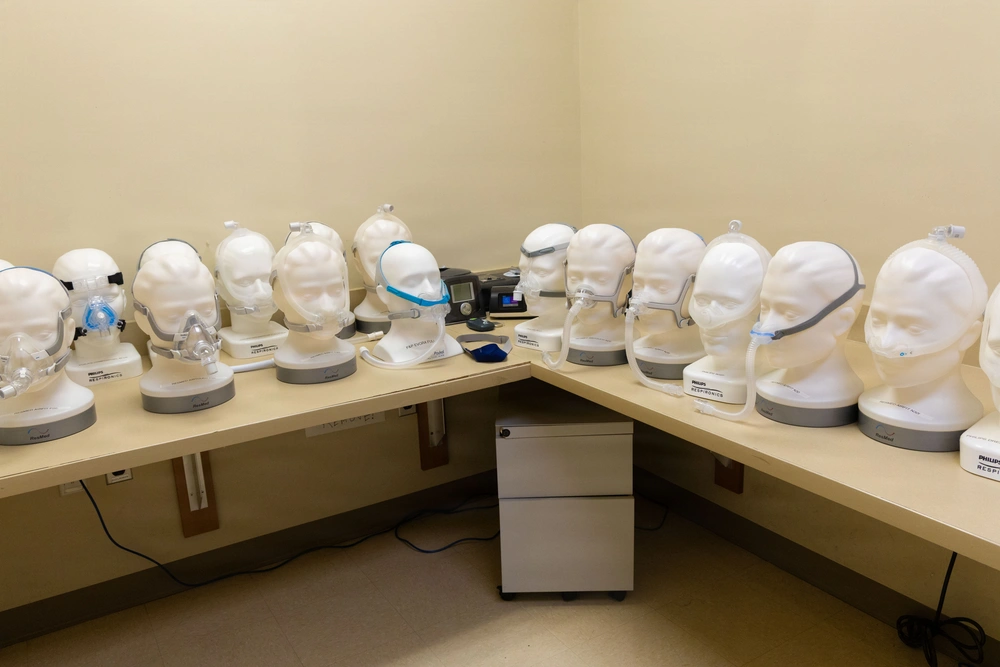
The FDA posted an updated Luna G3 BPAP correction notice on November 19 for certain LG3800-30VT breathing devices. Patients should contact their clinician or equipment provider promptly, continue prescribed therapy until they receive guidance, and avoid changing prescribed settings on their own, according to React Health's November 17 update.
This medical-device recall concerns pressure information saved for later review. A separate Luna G3 APAP recall involves a different model, malfunction and correction.
Identify the model and the recall

The BPAP notice identifies model LG3800-30VT and device identifier 06948538365731. It covers specific units distributed in the United States and Puerto Rico, not every device bearing the Luna name. Your equipment supplier or React Health can help establish whether your unit needs correction.
The FDA's recall database identifies this action as Z-0409-2027, initiated October 8 and posted November 12. The device is intended to treat adult obstructive sleep apnea. The November 19 posting republishes a company update; it is not the date the recall began.
The FDA lists the BPAP action as Class I. Under the agency's recall classification, that means a reasonable chance of serious health problems or death. The FDA explains that a recall can involve checking, adjusting or repairing a device where it is used.
The records give different quantities. React Health's updated notice lists 7,533 distributed devices, while the database lists 12,672 as the quantity in commerce. Neither explains the difference. Those totals cannot establish whether an individual device has already been corrected.
What happens to the pressure data
The database says the system records and transmits the configured inspiratory pressure instead of the pressure actually delivered when Targeted VT is enabled. Clinicians reviewing historical reports may therefore receive an inaccurate account of therapy.
Pediatric Home Service's October 29 patient letter explains that ventilation support during use and the device's live display are unaffected by this reporting problem. It warns that inaccurate historical data could nevertheless lead a clinician to change settings based on incorrect information.
The provider's letter describes contacting affected families to check the feature and guiding them through disabling it. The October letter predates React Health's November 17 update directing patients to get clinical guidance before changing prescribed settings.
What patients and providers should do
React Health reports 15 complaints and two serious adverse reports associated with the BPAP issue. Its newer guidance separates patients' instructions from the actions expected of clinicians and equipment providers.
Patients should seek advice without independently stopping therapy. Providers are directed to discontinue Targeted VT on affected devices, arrange appropriate patient support and coordinate the correction. The FDA database also directs facilities to remove affected devices from clinical service, segregate them and use unaffected PAP devices for support.
Firmware G3-2.00.80 is available through React Health using update SD cards. A permanent device replacement is not required for this correction. The update fixes future pressure reporting; it does not repair previously stored reports. Clinicians reviewing earlier data still need to account for that limitation.
LG3600 has a separate recall
The older Luna G3 APAP notice, updated October 1, concerns model LG3600 with firmware G3-2.00.76 and configuration G3 A20-31.cfg. Under simultaneous high pressure, high respiratory rate and high peak flow, a debug code can trigger an error and shut the device down.
BMC reported a retrospective correction involving 20,160 devices and said it could not confirm that up to 196 received the warehouse firmware upgrade. Those figures belong to the APAP action, not the BPAP data-reporting recall.
LG3600 users can check their serial number through the inquiry page linked in that notice and contact their device provider about replacement. The updated announcement says patients should continue prescribed use and should not discontinue therapy before receiving a replacement.
For either notice, React Health's published support number is 863-226-6285, Monday through Friday, 8 a.m. to 5 p.m. Eastern. Have the model and serial number available when asking your provider which recall instructions apply.