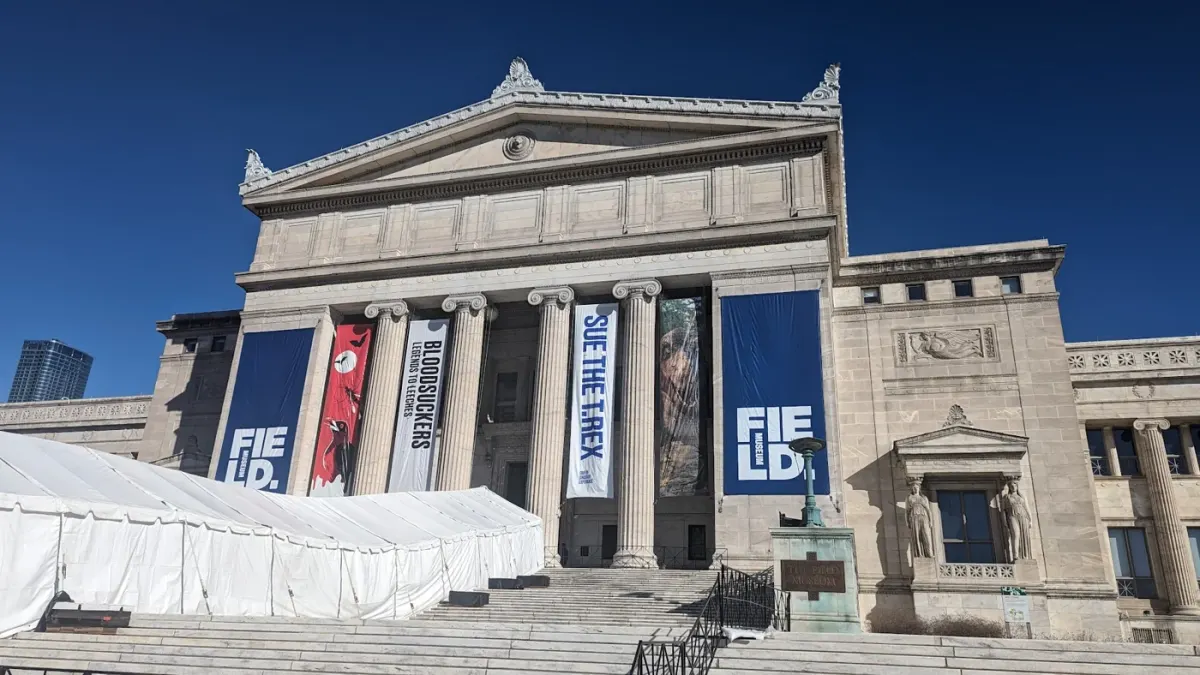
The Field Museum’s Pokémon Fossil Museum pairs familiar fictional creatures with real paleontological material, giving fans a connection between the game and natural history. Tyrantrum and Archeops are among the named comparisons, alongside real fossils including SUE the T. rex.
The Chicago exhibition opened May 22, 2026, and is scheduled to remain through April 11, 2027. It places fossil Pokémon beside paleontological material, offering a route into the museum for visitors whose first interest is the game rather than a natural-history collection.
This selection suits a family with an existing Pokémon interest, or a mixed group looking for a common starting point. A visitor interested only in extensive fossil galleries should also look at the museum's wider permanent displays before deciding how to divide the day.
Fossils have a working life beyond the skeleton
The Field's introduction to the exhibition's scientists describes real preparation tools, Pokémon models and illustrations of staff. Chief fossil preparator Akiko Shinya explains the work between an excavation and a finished display: removing surrounding rock, making repairs and producing casts or samples when research requires them. An impressive skeleton is the public end of a much longer process.
That gives the exhibition two kinds of appeal. A fan can begin with a recognizable creature and notice a shape shared with a fossil. Someone more interested in making and discovering can follow what happens to the specimen itself. Those interests can coexist in a family without requiring everyone to know the games.
Shinya's example is Shieldon, which the museum compares with ceratopsids, the beaked, plant-eating dinosaurs known for head frills and horns. Her account points to narrower juvenile frills and broader adult ones. A comparison built around that change has more substance than a general resemblance: the same group of real animals looked different at different ages.
The museum also introduces Arjan Mann, who studies early land vertebrates, and Jingmai O'Connor, who studies early birds and their dinosaur relatives. Their different specialties explain why paleontology extends beyond the large dinosaurs most visitors recognize. A fossil fish, a bird and a horned dinosaur belong to different research problems even when a game groups them together as fossil creatures.
How to divide the museum day
A mixed-age group can use the character names as familiar landmarks while adults spend more time on the specimens and preparation material. The useful comparison is already present in the displays: an invented animal beside evidence of an animal that lived.
Book the exhibition itself
Use the Field's tickets and pricing page to check how general admission and the exhibition fit together. Read the date and time information in the confirmation. A museum ticket and a reservation for the particular display are not interchangeable assumptions.
The Field's general ticket information is also the place to investigate admission arrangements for your group. A benefit connected with membership, residency or another offer needs its own conditions checked, including how exhibition access is handled. Read the final confirmation rather than relying on the headline name of a pass.
The ticket page lists general admission starting at $30 for guests and $21 for Chicago residents, with free Wednesday general admission for Illinois residents. These are starting categories, not a guaranteed total for every configuration. Children under three receive free museum admission. Community discounts are generally handled in person, and the Field warns that same-day Pokémon availability cannot be guaranteed.
That creates a practical tradeoff for visitors eligible for an in-person discount. An advance online booking can secure the exhibition more directly; a discounted visit may need help from the museum before arrival. Contact the Field about adding the exhibition to the particular benefit you intend to use. Its published number is 312-922-9410. Bring the identification required for the reservation and any residency or eligibility documentation.