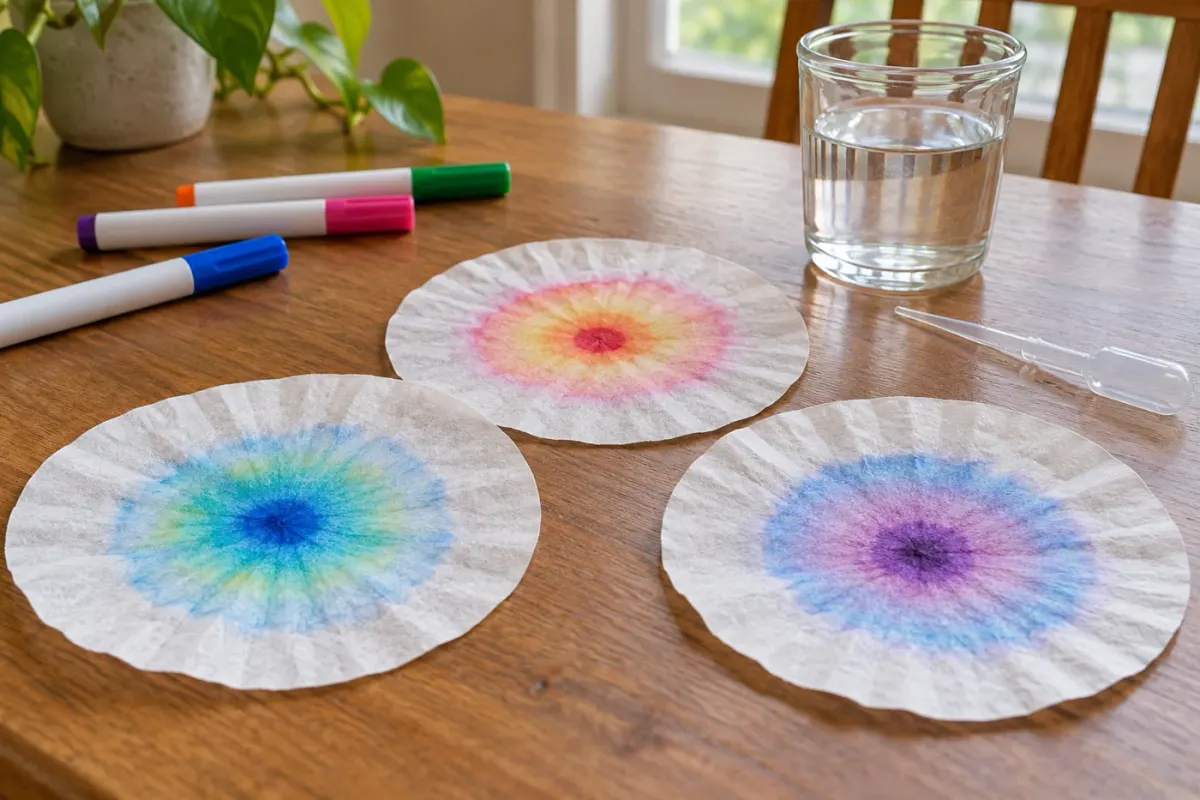
A black marker can leave more than a black mark when water moves its ink across a coffee filter. The American Chemical Society's Investigate with Chromatography at-home activity gives a family a specific first chemistry project before buying a kit.
The activity is a way to mark National Chemistry Week, October 18 through 24, 2026. The week's official theme is Chemistry Under Construction. This marker experiment comes from ACS's separate, existing Kids Zone resources; it is a way to try separating a mixture, rather than a construction-themed experiment.
Gather the supplies before starting
Use white coffee filters, water-soluble markers, scrap paper, water, a plastic cup or bowl and a dropper or paintbrush. Protect the tabletop with a placemat. The ACS at-home sheet lists ages three and up, with an activity time starting around ten minutes; an adult should manage supplies and help younger children with the sequence.
| Step | Action |
|---|---|
| Make a prediction | Choose three marker colors and say which might contain other colors |
| Draw | Put a filter over scrap paper and make three separate, marker-cap-sized dots |
| Add water | Drape the filter over a cup or bowl and drop water onto each dot's center |
| Observe | Watch the spots spread, then wait about five more minutes and compare them |
Keep the marker caps beside the results so you can identify each starting color. Wash hands and clean the work area afterward.
Compare what the water reveals
ACS's Mystery Markers explanation describes how dyes travel differently because of their interactions with water and paper. A single-looking mark can therefore separate into visible colors. The particular result depends on the marker.
For a second round, use black water-soluble markers from different brands on another filter and label the dots in pencil. Ask someone else to choose one without identifying it, then compare its pattern with the labeled examples. Keep the first filters as references for identifying the mystery marker.
Make the comparison readable
Use a pencil to label the filter with the marker's name or an identifying number before adding water. Put the label far enough from the dot to avoid confusing it with the colored result. If several children take part, assign one filter to each comparison so nobody needs to remember which of several identical black dots came from which pen.
Change one part of the setup for the next attempt. Comparing different marker brands is easier when the filter type and the amount of water stay similar. Comparing filter materials is easier when the same marker makes the starting dots. You can explore both questions, but mixing both changes in one trial makes the result harder to explain.
The observed pattern is evidence about the ink under these conditions. Record what happened, check whether it is water soluble and compare the materials with ACS's instructions. Do not add household solvents to force another result. This activity uses water; a permanent-marker investigation with another liquid would be a different project.
Leave room beside each dried filter for an observation in the child's own words. A useful note might describe where a color appeared or which dot spread farthest. Write predictions before the water goes on and observations afterward. That keeps a later explanation from being mistaken for what someone predicted.
If you repeat the mystery-marker game, keep the reference filters from the same set of pens. Compare pattern and color placement before guessing a brand. Describe an uncertain match as uncertain. This is a household demonstration of separation and comparison, so it cannot establish who wrote an unknown note or prove the identity of every ink. Store the dried filters with their labels if you want to compare them later.