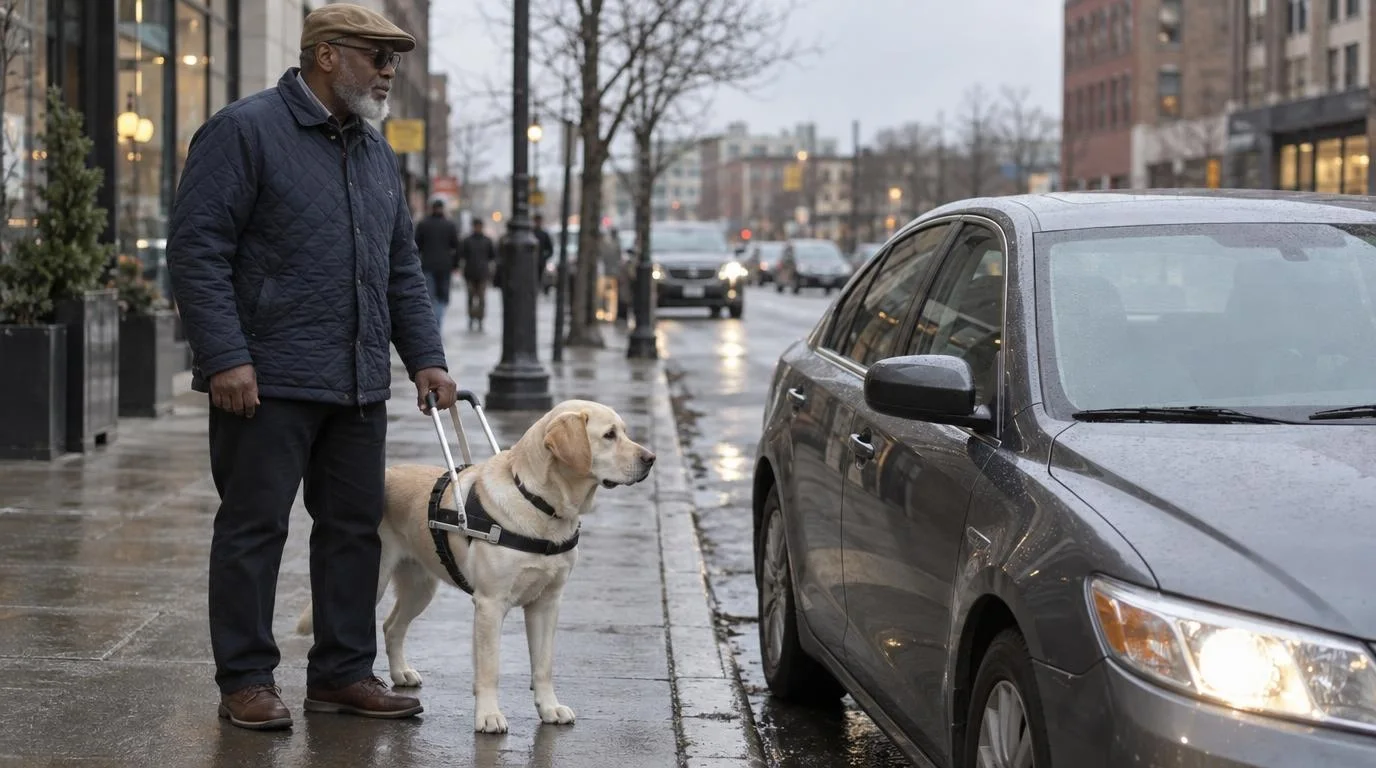
The Justice Department sued Lyft on Monday, Nov. 9, accusing the ride-hailing company of letting its drivers turn away riders who use guide dogs and wheelchairs, then charging some of those riders cancellation fees. The department is asking for $53 million for people with disabilities who complained to Lyft or to the government, plus a civil penalty.
The complaint, filed in federal court in San Francisco, says Lyft violated Title III of the Americans with Disabilities Act. It says Lyft denies service to "hundreds, and likely thousands," of riders with disabilities and receives thousands of discrimination complaints a year. These are allegations. The court has not ruled on them.
What riders say happened

The complaint names more than a dozen riders. One is David Tatel, who is blind and travels with a guide dog, and who served for nearly three decades as a judge on the U.S. Court of Appeals for the D.C. Circuit. In April 2023, it says, a Lyft driver screamed at him and his wife to get out of the car because of the dog. In September 2026, another driver locked the doors when he saw them and drove off. Lyft answered both of his complaints with a $10 credit. He had asked Lyft to change its procedures instead. The second credit, he felt, was insulting.
A deaf-blind teacher in Vancouver, Wash., was charged a "no show" fee after a driver refused her guide dog and waited down the road instead of canceling the trip. She had to complain to get the money back. A legally blind rider in Franklin, Tenn., says a driver left him at the airport late at night and never canceled the trip, which kept him from booking another car.
Wheelchair users describe drivers who drove away after seeing the chair. One rider who is a fall risk was refused a seat in the front when she asked for it.
After the Justice Department told Lyft it was investigating, the company added an opt-in setting that lets riders tell drivers ahead of time they are bringing a service animal, the complaint says, and drivers have kept refusing riders who use it.
What the law and Lyft's own rules say
Under the ADA, Lyft has to carry riders with service animals and help riders who use stowable wheelchairs. The law defines a service animal as a dog trained to do work tied to its owner's disability. Emotional support dogs do not count, the department notes.
Lyft's anti-discrimination policy already lists the refusal of service animals or mobility devices as discrimination that can get an account deactivated. The government says Lyft fails to train drivers properly or remove those who discriminate, and offers riders $5 or $10 credits instead.
The department wants a court order requiring Lyft to stop the discrimination, change its policies and train drivers and staff. The U.S. attorney in San Francisco, Craig Missakian, compared it to the department's case against Uber over similar conduct. Lyft had not posted a response on its newsroom by Monday evening.
What riders can do now

Riders refused because of a service animal or a wheelchair can report it to the Justice Department through its civil rights complaint portal. The department's ADA Information Line is 800-514-0301 (TTY 1-833-610-1264).
Several riders in the complaint saved screenshots and video of the encounters, and one sent screenshots with each complaint because Lyft's support staff doubted her accounts.