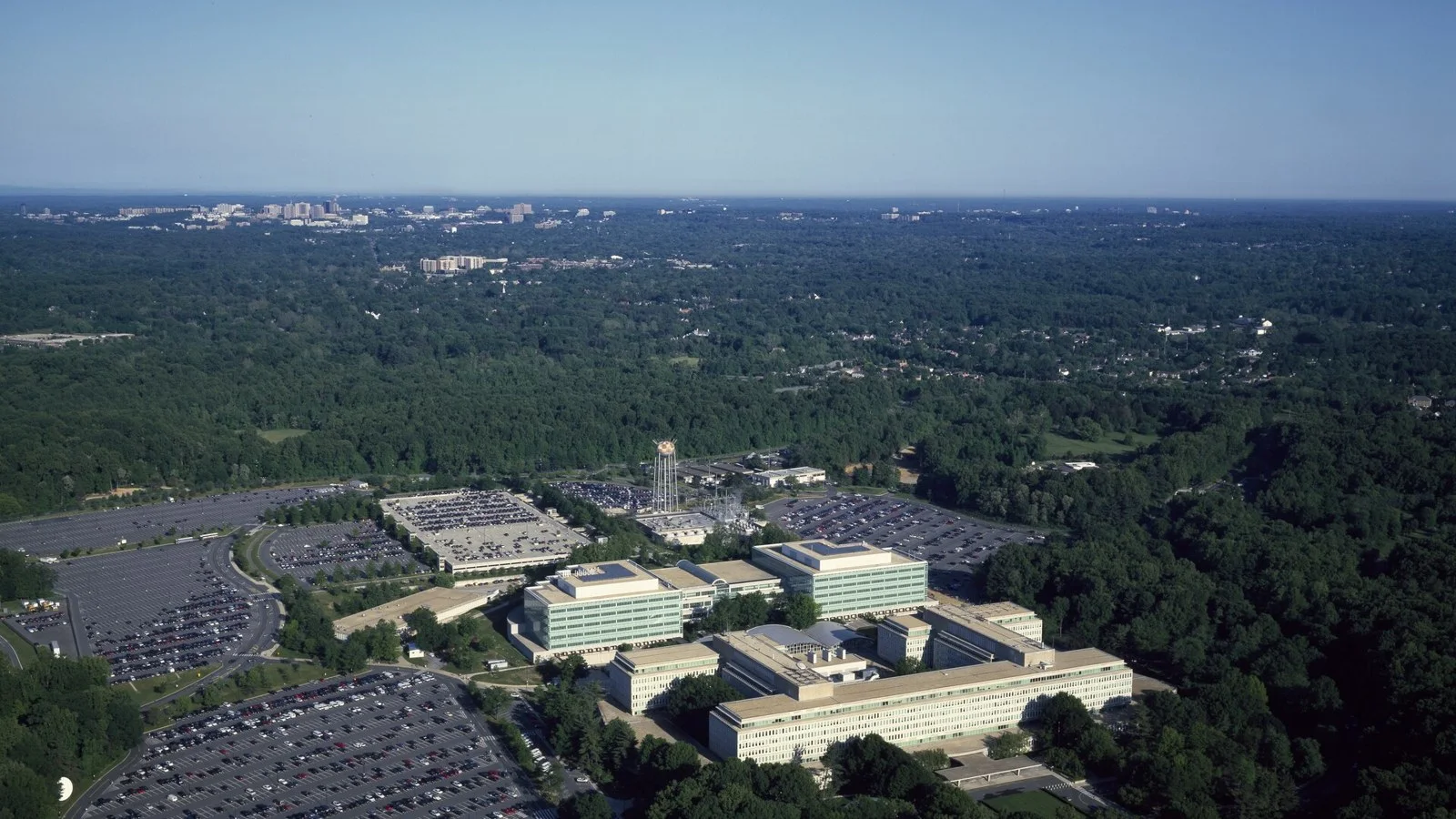
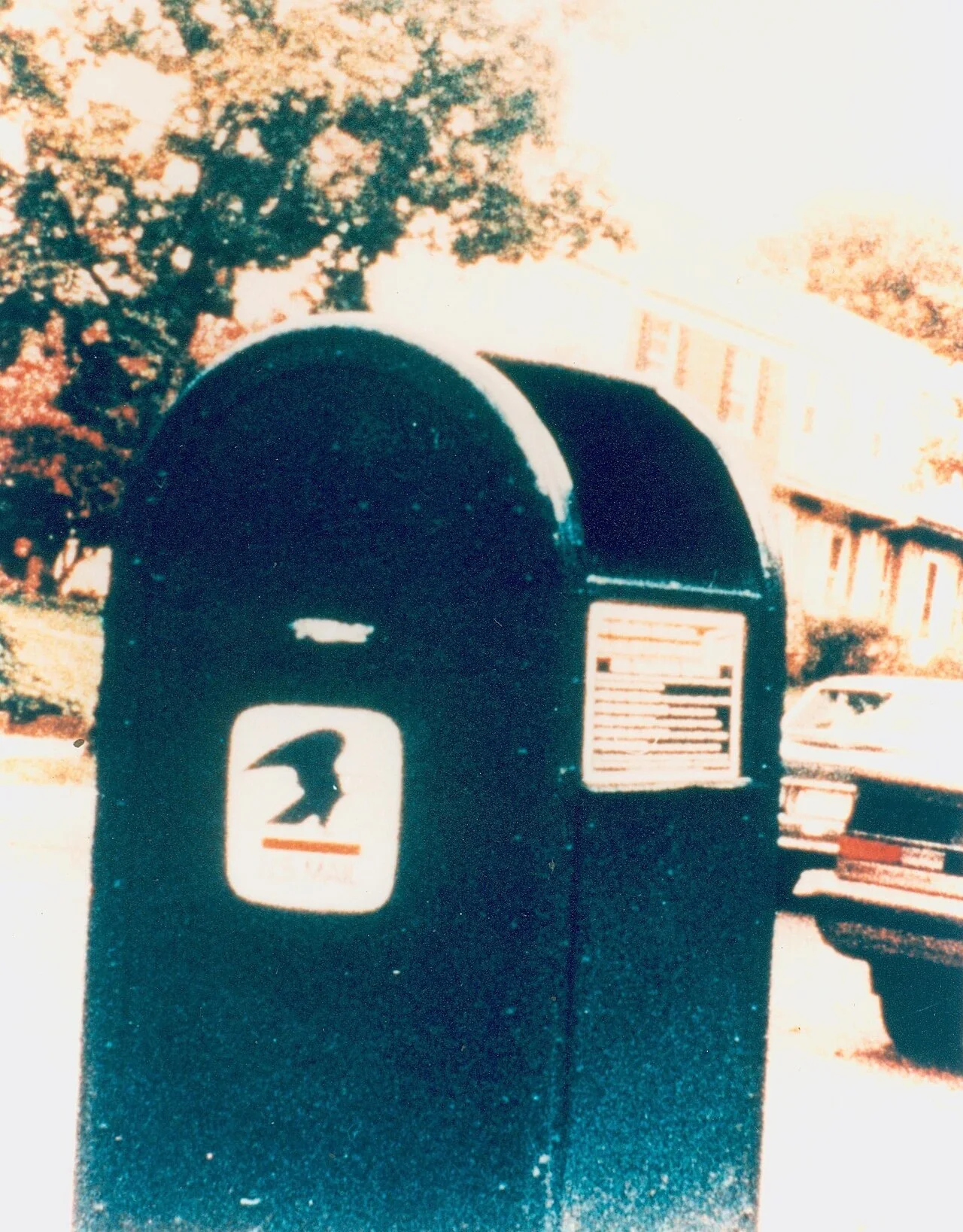
At 6:22 on the morning of October 13, 1993, Aldrich Ames left his house on North Randolph Street in Arlington, Virginia. He was back 22 minutes later. At about 7:00, FBI surveillance staff spotted a horizontal chalk mark on a mailbox at the corner of 37th and R Streets, across the Potomac in Georgetown. The mailbox had been clean at 3:35 the afternoon before, according to the FBI agent's sworn affidavit.
In Ames's communications plan, that mailbox was called SMILE. The mark, the FBI says, told the Russians he intended to meet them in Bogota. Four months later it was part of the affidavit agents used to arrest Ames, a CIA officer who had been selling the agency's Soviet secrets to Moscow since 1985.
Ames died in federal custody on January 5, 2026, at the Federal Correctional Institution in Cumberland, Maryland, according to the Bureau of Prisons. He was 84. The bureau has not released a cause of death. The FBI's own history of the case still says he "is serving his sentence."
This account comes from the official record: the Senate Intelligence Committee's 1994 report, the FBI's affidavit and its wiretap transcripts, the Justice Department inspector general's review and the CIA's own published accounts. Where those records disagree or remain classified, it says so.
An envelope at the Soviet Embassy
Ames's father worked in the CIA's operations directorate, and Ames took a summer job at the agency as a high school student in 1957. He joined full time in 1962 and stayed 31 years, much of it in the clandestine service, with postings in Ankara, New York, Mexico City and Rome.
By 1985 he was counterintelligence branch chief for Soviet operations, a job that meant reviewing chosen CIA cases built on Soviet sources. He was also meeting Soviet Embassy officials with the agency's permission, as part of his work. One of them was Sergey Chuvakhin, an arms-control specialist.
On April 16, 1985, Ames walked into the Soviet Embassy in Washington, passed an envelope to the officer at the reception desk and asked for Chuvakhin. The Senate report describes what it held: a note describing two or three cases in which Soviets had approached the CIA, a page from an internal directory with Ames's real name highlighted, and a request for $50,000. "The duty officer nodded his understanding," the report says.
A month later, on May 17, Chuvakhin handed him $50,000 in cash.
On June 13, Ames met Chuvakhin again. He brought five to seven pounds of CIA cables, wrapped in plastic bags, that he had carried out of headquarters, knowing, the report says, that the agency no longer checked packages employees took out of the building. The documents identified more than ten of the highest-level sources the CIA and FBI had. A CIA witness later told the Senate committee it was the "largest amount of sensitive documents and critical information, that we know anyway, that have ever been passed to the KGB in one particular meeting."
Ames later told investigators why he named those sources. According to the report, he wanted to remove the people best placed to tell the CIA that the KGB had a spy inside it.
"Reckless abandon"
The arrests started that fall. Valeriy Martynov, a KGB officer in Washington who had worked for the FBI since 1982, was arrested when he landed in Moscow on about November 7, 1985, and later executed, according to an FBI affidavit filed in a later spy case. Sergey Motorin, another KGB officer and FBI source, was executed in February 1987. A third, Boris Yuzhin, went to prison and later emigrated to the United States. (The same affidavit says another spy, the FBI's Robert Hanssen, also betrayed Martynov and Motorin.)
Inside the CIA's Soviet division, an officer told Senate investigators, the KGB was "wrapping up our cases with reckless abandon." A November 1986 internal memo counted 45 Soviet and East European cases and two technical operations known to be compromised or showing problems. By January 1987, another memo said: "I am not aware of any Soviet case we have left that is producing anything worthwhile."
The Senate report concluded that ten of the agents Ames identified were executed. The Justice Department inspector general put it at "at least ten."
In May 1986, in the middle of the losses, Ames took a routine CIA polygraph. The examiner found him truthful and described him as "bright [and] direct."
Rome, 1986 to 1989
In July 1986, the CIA sent Ames to Rome. His new Soviet contact there, Aleksey Khrenkov, would collect him by car and take him into a Soviet compound for evening meetings. Ames hid much of his face under a hat and crouched low as they drove through the city and the compound gates, the Senate report says. His sessions with a KGB officer from Moscow he knew as "Vlad" typically ran three to four hours.
Ames told investigators he often left the office with shopping bags full of classified papers. He opened two accounts at Credit Suisse in Zurich, one in his own name and the other in his mother-in-law's, and deposited at least $950,000 while in Rome.
Before he left Italy, the KGB gave him a financial accounting. As of May 1, 1989, it said, he had been paid more than $1.8 million, and another $900,000 was being held for him in Moscow. A nine-page letter promised another $300,000 before he left Rome. The plan for Washington called for meetings in Bogota on the first Tuesday of every December.
Living beyond his means
The Ameses came home in July 1989 and soon bought a house in Arlington for $540,000 in cash. That November, a CIA colleague who knew Ames well reported that he appeared to be "living beyond his means." A December 1990 internal memo listed the house, with "no record of a mortgage," and a white Jaguar worth about $49,000.
A Treasury check in early 1990 turned up cash deposits of $13,000 and $15,000 and a $22,107 currency conversion, but the officer assigned to the case then left for two months of training, and no one covered for him, according to the Senate report. In April 1991, a polygraph showed deception on the question of whether Ames was hiding contacts with foreigners. He passed a retest four days later. The first examiner wrote: "I don't think he is a spy, but I am not 100% convinced because of the money situation."
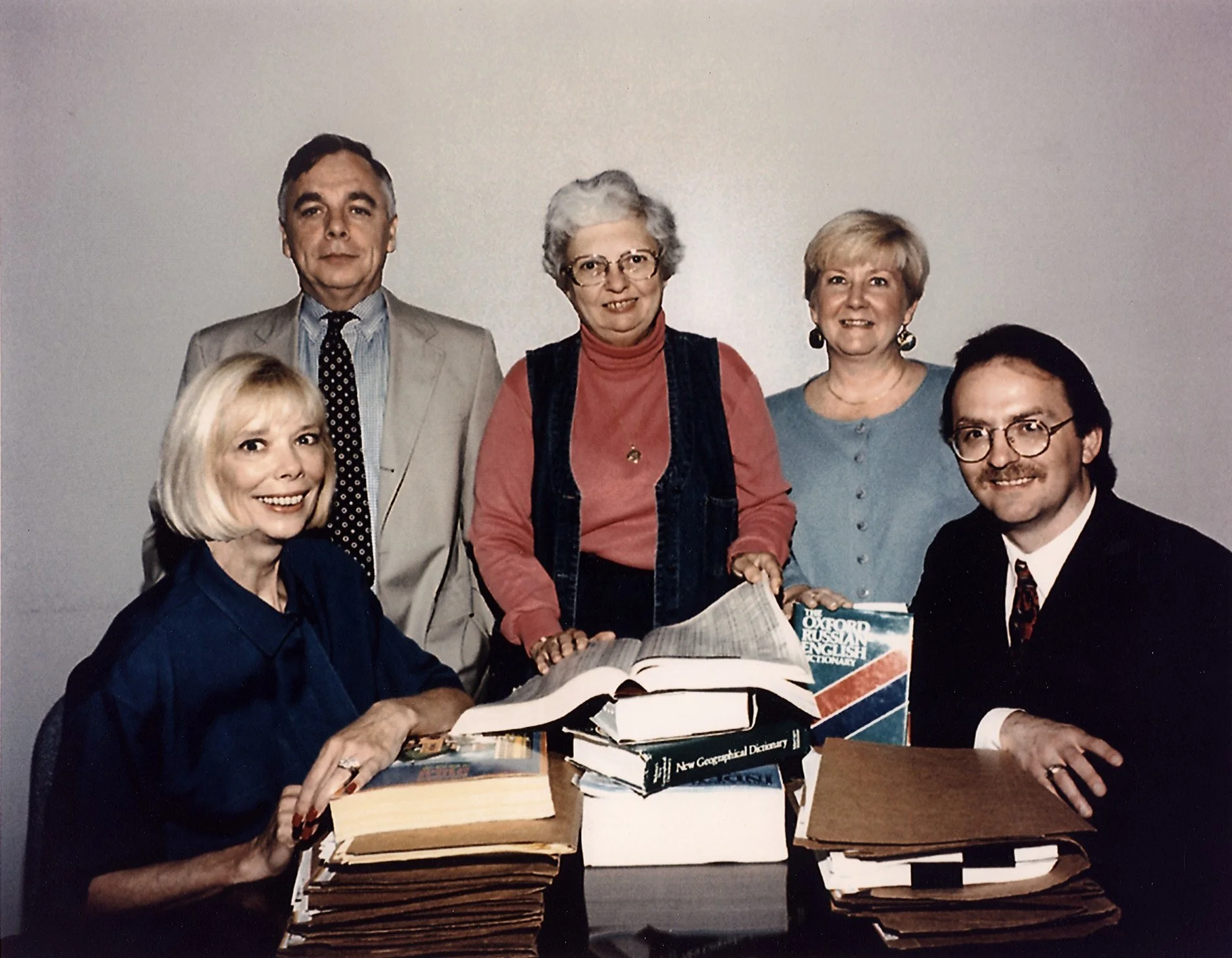
That same year, the CIA and FBI put a small joint team on the mole hunt. The CIA credits Jeanne Vertefeuille, a veteran counterintelligence officer, with leading its side of the hunt. The agency notes that Ames, asked by his handlers which CIA official could be framed, had given them her name. By August 1991 the team had narrowed 198 employees with access to the lost cases to 29 for priority attention, Ames among them.
The break came in August 1992. CIA officer Sandy Grimes found that Ames made large bank deposits after his 1985 and 1986 meetings with Chuvakhin, usually on the next business day. By October, the team had traced wire transfers to his Credit Suisse account and was, the Senate report says, "relatively certain" Ames was the spy.
The bureau closes in
The FBI opened a full investigation in 1993. Under orders from the Foreign Intelligence Surveillance Court, agents bugged Ames's office and home, watched his mail and put a tracking monitor in his car. In June they quietly searched his office at CIA headquarters and counted about 144 documents marked Secret and about 10 marked Top Secret, according to the affidavit.
They also went through his trash. On September 15, 1993, agents pulled torn pieces of paper from it. Pieced together, the hand-printed note read in part: "I am ready to meet at B on 1 Oct." Other fragments mentioned a signal site called North and a "message at pipe." The FBI laboratory concluded Ames wrote it.
A covert search of the house on October 9 found a printed form cut from a newspaper with an instruction to "put Smile before the 17th of October." Ames's computer identified SMILE as the mailbox at 37th and R.
On October 12, the bureau's microphones picked up Ames talking with his wife, Rosario. "I have to take off early to put a signal down," he said. He had meant to do it already, he told her, "except it was raining like crazy."
The next morning, the chalk mark appeared on the mailbox at 37th and R.
On November 1, FBI agents watched Ames, and separately his Russian handler, in Bogota. "I had a short meeting this evening," he said that day in a phone call recorded by the FBI.
The arrest
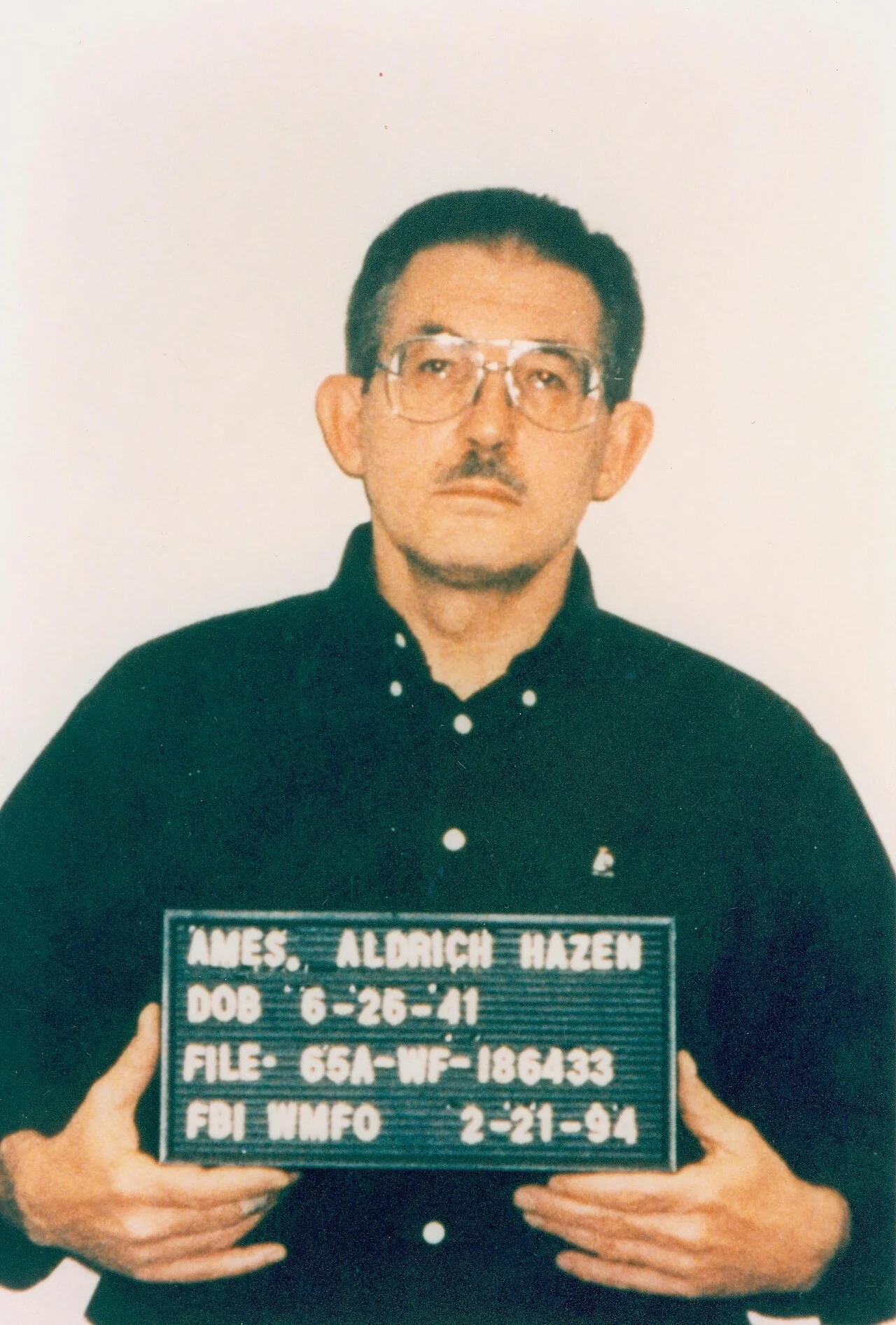
In early 1994, Ames was due at a conference in Moscow. The FBI decided it could not wait. On the morning of February 21, agents arrested him in his car outside his house. Rosario was arrested inside minutes later.
The next day, the White House said President Clinton had told the State Department to lodge a "strong official protest" with the Russian government. A senior Russian intelligence officer at the embassy in Washington was expelled.
On April 28, 1994, Ames and Rosario pleaded guilty. He was sentenced to life without parole. In court, the Senate report notes, he said he had compromised "virtually all Soviet agents of the CIA and other American and foreign services known to me." Of the Soviet sources he had betrayed, he said: "I have the deepest sympathy even empathy. We made similar choices and suffer similar consequences."
Rosario received 63 months. Ames forfeited his assets, and $547,000 went to the Justice Department's victims fund. Investigators estimated he had spent at least $1,397,300 between April 1985 and November 1993, while his take-home CIA pay over the same years was $336,164.
What the record still does not say
Much of the case remains classified, including the full CIA inspector general report, more than 450 pages, and the Justice Department inspector general's full report. The totals vary by source: the affidavit says Ames was paid more than $1.5 million, the FBI says $1.88 million by 1989, and the Senate report estimates about $2.5 million. Even the money waiting for him in late 1993 is disputed: $1.9 million in the Senate report, $190,000 in the wiretap transcript.
Some of the record is still coming out. A 2025 article in the CIA's journal Studies in Intelligence examines a KGB deception operation built around a KGB officer the CIA code-named GTPROLOGUE, run in part to protect Ames, and notes that the primary documents remain classified. The FBI affidavit shows Ames confirming that code name to his handlers in December 1990.