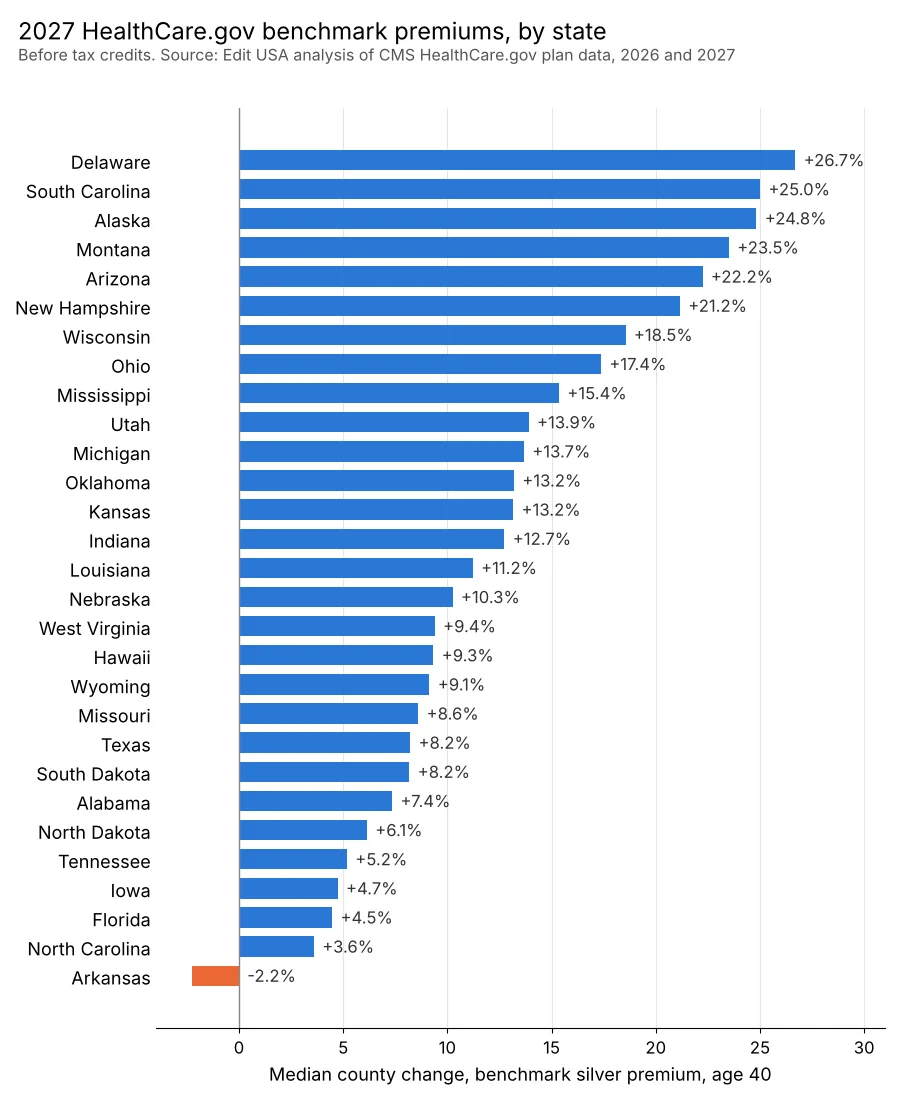
HealthCare.gov's 2027 plans and prices went up for browsing this week, two days before open enrollment starts on Sunday, November 1, and the full-price premiums are higher almost everywhere. In the 29 states that use HealthCare.gov, the benchmark silver plan for a 40-year-old costs more in 2027 than in 2026 in 91% of counties, by Edit USA's count from the plan data CMS released for the new year.
You can preview 2027 plans and estimated prices now by entering a ZIP code. Applying, getting final prices and enrolling start November 1.
How much prices rose
Edit USA compared the 2026 and 2027 plan files for the 2,019 counties that appear in both years, using the monthly premium for a single 40-year-old before any tax credit:
- Benchmark silver plan: The median county went from $697 to $757 a month. The typical county increase was 10.4%, and one in ten counties saw 23.5% or more.
- Cheapest bronze plan: The median county went from $481 to $541 a month, a typical increase of 12.2%. It went up in 97% of counties.
The benchmark is the second-lowest-cost silver plan, and it matters even if you never buy it, because your premium tax credit is figured from its price.
The change varies a lot by state. These are the states at each end, by the median county change in the monthly benchmark premium for a 40-year-old:
| State | Change | 2026 | 2027 |
|---|---|---|---|
| Delaware | +26.7% | $692 | $876 |
| South Carolina | +25.0% | $556 | $689 |
| Alaska | +24.8% | $1,056 | $1,318 |
| Montana | +23.5% | $716 | $885 |
| Arizona | +22.2% | $713 | $826 |
| Iowa | +4.7% | $525 | $537 |
| Florida | +4.5% | $699 | $732 |
| North Carolina | +3.6% | $686 | $694 |
| Arkansas | -2.2% | $774 | $757 |
Texas, with 254 counties, landed in the middle at 8.2%.
Insurer choice also thinned out. The number of counties served by a single insurer nearly doubled, from 57 in 2026 to 112 in 2027. Oregon, which was in the 2026 HealthCare.gov file, is not in the 2027 one; Oregon residents can preview 2027 plans on the state's Explore Health site.
What the tax credit changes
HealthCare.gov's premium tax credit page says households with incomes between 100% and 400% of the federal poverty level qualify for a credit in every state. Because the credit is figured from the benchmark, a higher benchmark price generally means a bigger credit, and someone who stays with a benchmark-priced plan may see little change in what they pay. People who earn too much for a credit pay the full increase.
CMS says in its 2027 plans and prices fact sheet that more than 75% of people buying through HealthCare.gov will still have access to premiums of $50 a month or less. It also says eligible enrollees will have about 35 plans eligible for a health savings account on average, and that the cheapest catastrophic plan is on average nearly 10% cheaper than the cheapest plan at other coverage levels. Catastrophic plans are for people under 30, or older people who qualify for a hardship or affordability exemption, according to HealthCare.gov's catastrophic plan definition.
HealthCare.gov's 2027 income levels and savings amounts are due November 1. Until then, its savings estimates use 2026 figures.
The dates
According to HealthCare.gov's dates and deadlines page:
- November 1: Open enrollment starts.
- December 15: Last day to pick a plan for coverage that starts January 1.
- January 15: Open enrollment ends. Plans chosen from December 16 on start February 1.
If you already have a HealthCare.gov plan, preview your options before December 15 even if you plan to keep it. Your insurer may have changed its prices or left your county, and your credit will be figured from the new benchmark.