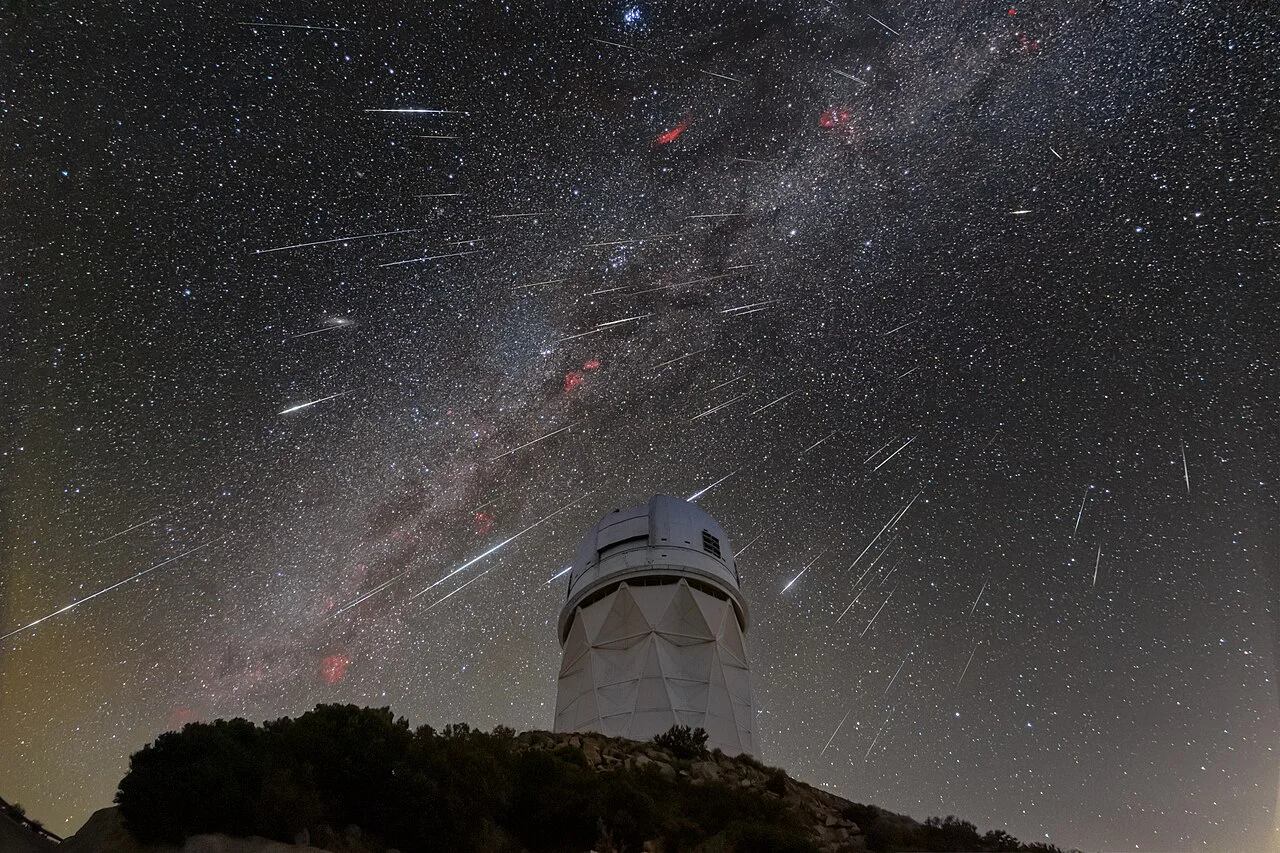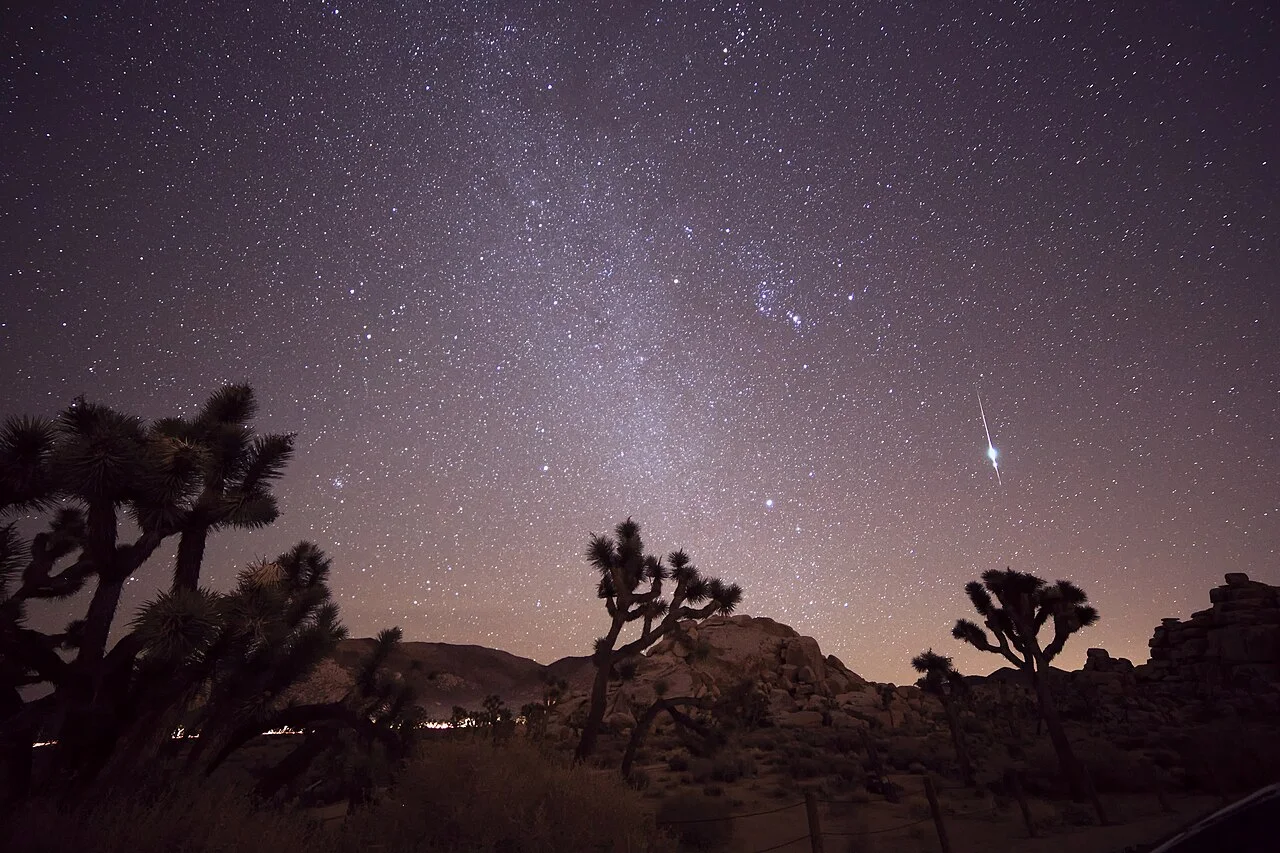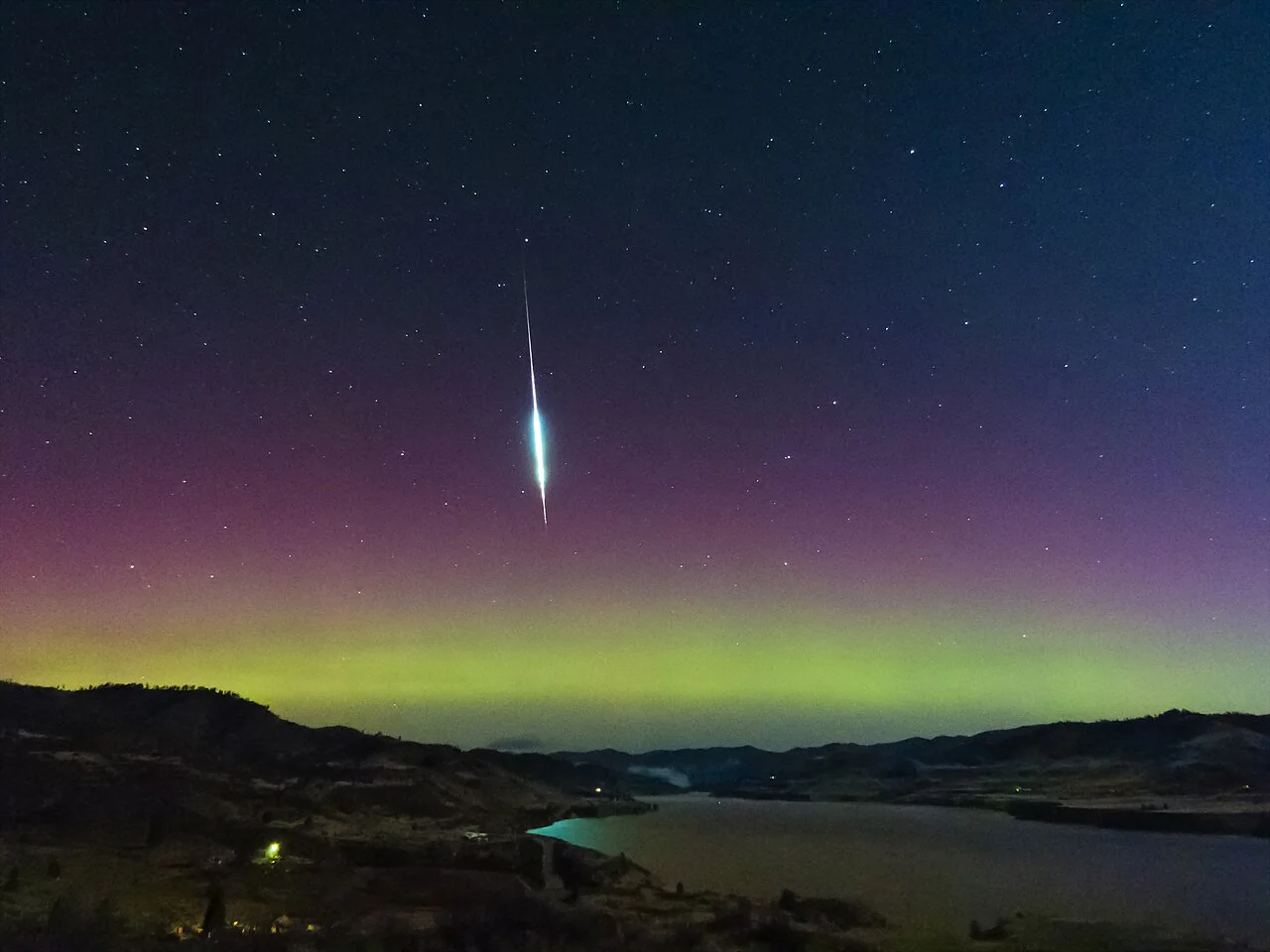
The next few weeks are fireball season. Two branches of the Taurid meteor shower are active at the same time, and the American Meteor Society says that overlap in late October and early November sometimes brings a noticeable rise in fireballs. NASA describes fireballs as bigger, brighter bursts of light and color that last longer than an ordinary meteor streak. Then the Leonids arrive in mid-November, a shower with a famous past and, this year, a modest forecast.
Watching takes no telescope, just a dark spot, a clear night and some patience.
The nights to circle
The American Meteor Society's 2026 calendar lists these peaks, with how much of the Moon will be lit:
- Southern Taurids, fireball swarm: night of November 4 to 5, Moon 24% lit (a waning crescent)
- Northern Taurids: night of November 11 to 12, Moon 4% lit, the darkest sky of the three
- Leonids: night of November 16 to 17, Moon 39% lit, enough to wash out fainter meteors while it is up
- Geminids: night of December 13 to 14, Moon 16% lit
The Taurids are worth watching for the chance of a fireball. Because the Southern branch runs from September 20 to November 20 and the Northern branch from October 20 to December 10, any dark night in the next three weeks gives you a shot, including this weekend.
What to expect from the Leonids
The Leonids are the shower with the history. They produced meteor storms in 1833, 1866, 1966, 1999, 2001 and 2002, and in 1966 thousands of meteors a minute fell during one 15-minute stretch. The storms come when Earth runs through dense trails of debris shed by Comet Tempel-Tuttle, and that will not happen this year. NASA's Leonids page lists fewer than three meteors an hour under dark skies for 2026, and the meteor society says Earth will not meet another dense debris cloud until 2099.
Leonids are fast, hitting the atmosphere at about 43.5 miles a second, and the shower is still known for fireballs and for "Earth-grazers," meteors that skim close to the horizon with long, colorful tails.
If you want a shower that reliably delivers, the meteor society calls the Geminids in mid-December usually the strongest of the year. They are also the one major shower with good activity before midnight, since their part of the sky is well placed from about 10 p.m.
How to watch
NASA's viewing tips for the Leonids:
- Start around midnight local time and plan to stay out, since meteors keep coming until dawn.
- Get well away from city and street lights.
- Lie on your back with your feet toward the east and take in as much sky as you can. You do not need to stare at the constellation the shower is named for; meteors far from it look longer.
- Give your eyes about 30 minutes in the dark to adjust before deciding nothing is happening.
- Dress for winter. A sleeping bag or a reclining lawn chair helps.
If you catch a fireball, the American Meteor Society takes public sighting reports through the "Report a Fireball" link on its site.