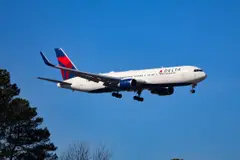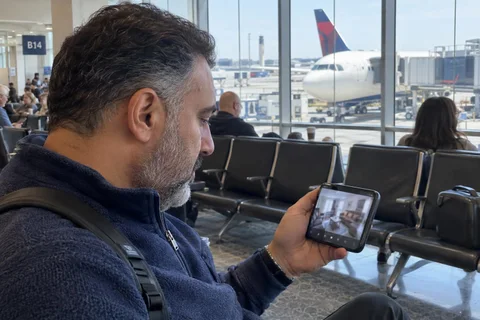

Transportation Secretary Sean Duffy is scheduled to testify before a Senate aviation panel on December 2 about the November 13 nationwide ground stop, how investigators traced the disruption and what the government needs to prevent another one.
The hearing announcement, issued Tuesday, also puts the administration's air traffic control modernization timetable and request for additional money on the agenda. A separate House aviation hearing is scheduled for December 1.
When the hearings take place

The Senate Commerce aviation subcommittee hearing begins Wednesday, December 2, at 10 a.m. Eastern, or 7 a.m. Pacific. Sen. Jerry Moran of Kansas will preside, and Duffy is the listed witness. The committee says it will stream the hearing on its website and YouTube.
The Senate event page lists Russell Senate Office Building room 253, with entry through room 254. Its agenda covers the decision to stop departures, the identification and isolation of the disruption, the root-cause investigation and measures to prevent a repeat.
The House Transportation and Infrastructure Committee calendar lists a modernization hearing for Tuesday, December 1, at 10 a.m. in 2167 Rayburn, with a video player on the event page. Its posted listing does not name a witness. The earlier November 10 event page remains marked postponed, so readers should use the December listing for the current schedule.
What the FAA has said about the failure
In its November 15 account, the FAA said the problem began around 3:30 p.m. Eastern on November 13 and flights resumed at 8:15 p.m. The agency described excessive connection attempts flooding its telecommunications network and destabilizing communications and radar feeds.
That initial investigation identified possible origins at a radar site in Amarillo, Texas, and a communications site in El Dorado, Arkansas, where contractor L3Harris had been replacing a router. The FAA said blocking those locations stabilized the network. It also disabled a broadcasting function on other new routers and paused further installations.
The agency said some radio frequencies and radar feeds continued working, and aircraft already airborne landed safely. That preliminary account supplies a sequence for senators to examine; it does not establish a completed independent finding about every cause of the failure.
What the $50.1 billion request would buy

The administration's November 17 funding letter requests $50.1 billion. Of that, $10.1 billion is for control-system modernization: $7.2 billion for a common automation platform and controller workstations, $2 billion for cloud computing and telecommunications, $600 million for traffic-flow technology and $300 million for consolidating terminal control facilities.
The other $40 billion is divided into four $10 billion categories: airport infrastructure, a terminal replacement pilot program, up to five consolidated air route traffic control centers, and construction or improvements at up to 140 FAA-owned towers. The proposed package therefore covers substantially more than replacing the equipment implicated in the November outage.
That request is separate from the $12.5 billion Congress appropriated in July 2025. GAO says the earlier appropriation divided into $9 billion for systems and $3.5 billion for facilities construction. A hearing on the request does not itself authorize the spending.
What the independent audit found
The Government Accountability Office's September audit found progress on modernization but gaps in cost and schedule planning. It said the first phase targets completion in December 2028. A second phase would add automation for aircraft tracking and traffic management, but FAA had no estimated start or completion date for it.
GAO found 11,389 individual project schedules lacked integration. Repeated installation work at the same sites could create conflicts or disrupt operations. Transportation partly agreed with GAO's recommendations and said FAA maintained schedules and was developing coordination tools; the auditors said the evidence still fell short of an integrated plan.
Both recommendations, for a reliable lifecycle cost estimate and an integrated first-phase schedule, remain listed as open on GAO's report page. Those findings predate the November ground stop and do not determine its cause.