The Federal Railroad Administration asked passenger railroads Thursday to review where riders can stow e-bikes and e-scooters and how crews should respond if a battery overheats. The Nov. 12 advisory is guidance for operators. Passengers planning a trip should use their railroad's current rules for the train, station and device they intend to use.
The guidance follows full-scale research on lithium-ion battery fires inside passenger railcars. It covers battery-powered devices such as e-bikes, e-scooters, e-unicycles and hoverboards. Amtrak and NJ Transit already handle those devices differently. A trip that combines the two railroads can require a bike reservation on one train and a check of the departure hour on the other.
What the federal rail agency recommends

Researchers at the Fire Safety Research Institute tested fires in a full-size passenger car. They found that a failing battery could expose nearby passengers to intense heat while smoke and toxic gases spread through the car. Stowage matters because passengers and crew need a clear way out, and a device under a seat can be difficult to see or reach.
The FRA recommends keeping these devices away from seats and out of the first and last cars, where a fire could obstruct exit routes. It also asks railroads to review fire risks, set aside storage areas where appropriate, and train crews to move passengers away from a battery fire. The notice leaves existing federal requirements in place. It gives operators recommendations they can use when revising their own policies.
What Amtrak allows now

Amtrak's bicycle policy accepts qualifying lithium-ion e-bikes and e-scooters certified by a nationally recognized testing laboratory. An e-bike must have usable pedals, weigh no more than 50 pounds, have tires no wider than two inches and meet the operator's power and motor-only speed limits. Amtrak lists less than 750 watts of continuous power and a maximum of 20 mph under motor power alone. Its baggage policy also specifies what vehicles can be carried on, where they can go and when a crew member handles them as checked baggage.
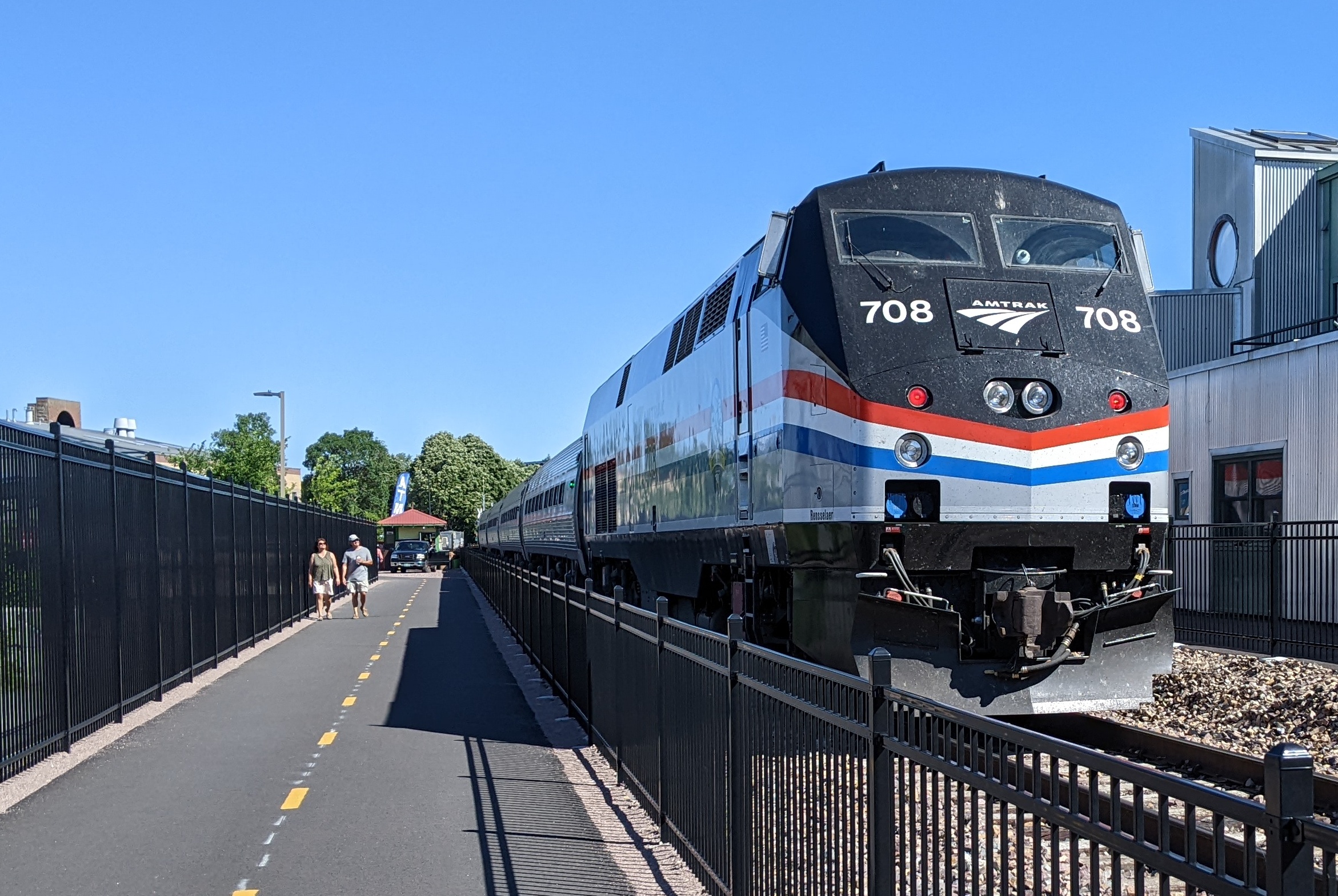
Storage depends on the train and station. Some routes offer carry-on racks and others offer trainside or checked service where available. For example, the Pacific Surfliner requires riders to reserve a space for a full-size bike, including an eligible e-bike, on the specific train. A regular ticket that lets you choose among departures gives you more flexibility than that bike reservation does.
What NJ Transit riders should check
NJ Transit generally allows folding personal vehicles on trains, subject to safety restrictions and space. Its rules for non-folding devices depend on the line and time. The Atlantic City Line allows them throughout the weekday. For other rail lines, NJ Transit lists weekday windows from 10 a.m. to 4 p.m. and 7 p.m. to 6 a.m. Eastern. It also specifies restrictions by arrival or departure time at Hoboken, Newark and New York, including stops in between. Weekend and holiday rules differ.
NJ Transit bars riding or charging personal vehicles on its trains or inside its facilities. Staff can also limit boarding when cars are crowded or a device would create a safety problem. A non-folding device allowed on the train may be barred from a replacement bus during an outage. Check both directions if your return trip falls in a different time window.
Before bringing a device to the station
Confirm the model and battery certification, then check whether your departure and arrival stations offer the bike service you need. Compare the battery, weight and tire specifications with the operator's published limits. Edit USA's e-bike and electric motorcycle guide explains why vehicle labels alone can be misleading.
On the train, use the storage location the operator or crew designates, keep aisles and doors clear and report smoke or overheating to the crew immediately. If the crew orders an evacuation, leave the device behind and follow their directions.