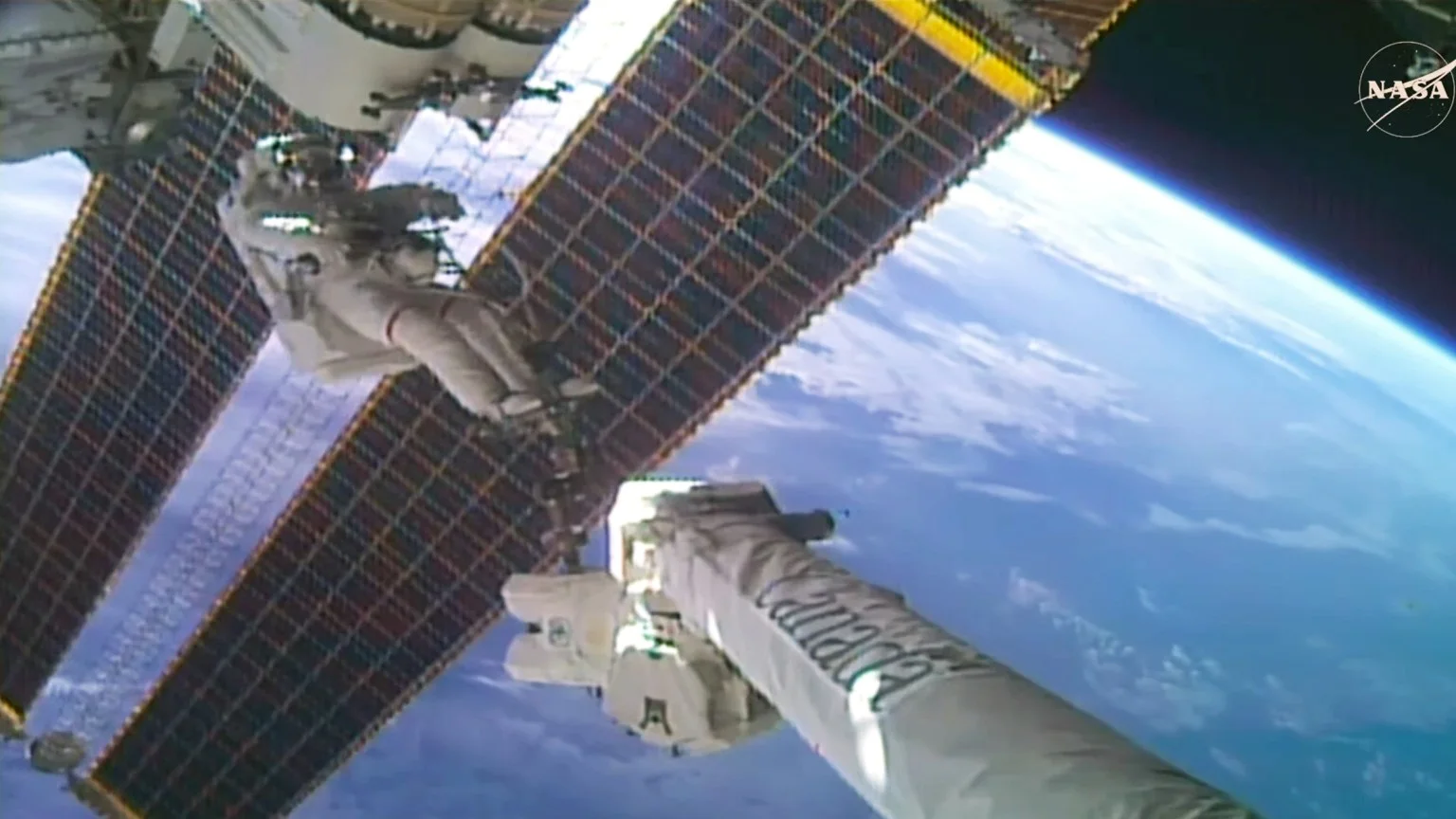
The International Space Station's newest roll-out solar array is generating power after astronauts installed it on October 29. One more array remains to complete the upgrade, with another spacewalk planned for November 5.
NASA astronaut Anil Menon and Canadian Space Agency astronaut Joshua Kutryk spent seven hours and 11 minutes outside the station attaching and deploying the seventh array. NASA's October 30 update says they released tension bolts so the panel could unfurl on its own, a process that took about 10 minutes.
For the installation, Canada’s space agency says Canadarm2 provided Menon with a stable work platform. NASA astronaut Luke Delaney operated the arm from inside the station, supported by Jessica Watkins. Controllers in Longueuil, Quebec, worked with teams in Houston to support the operation. The robotic arm has been in service for more than 25 years.
The new hardware supports the electricity supply for life support, research and station operations. NASA also identifies power for a safe, controlled deorbit among the purposes of the upgrade.
How the new arrays work with the old ones
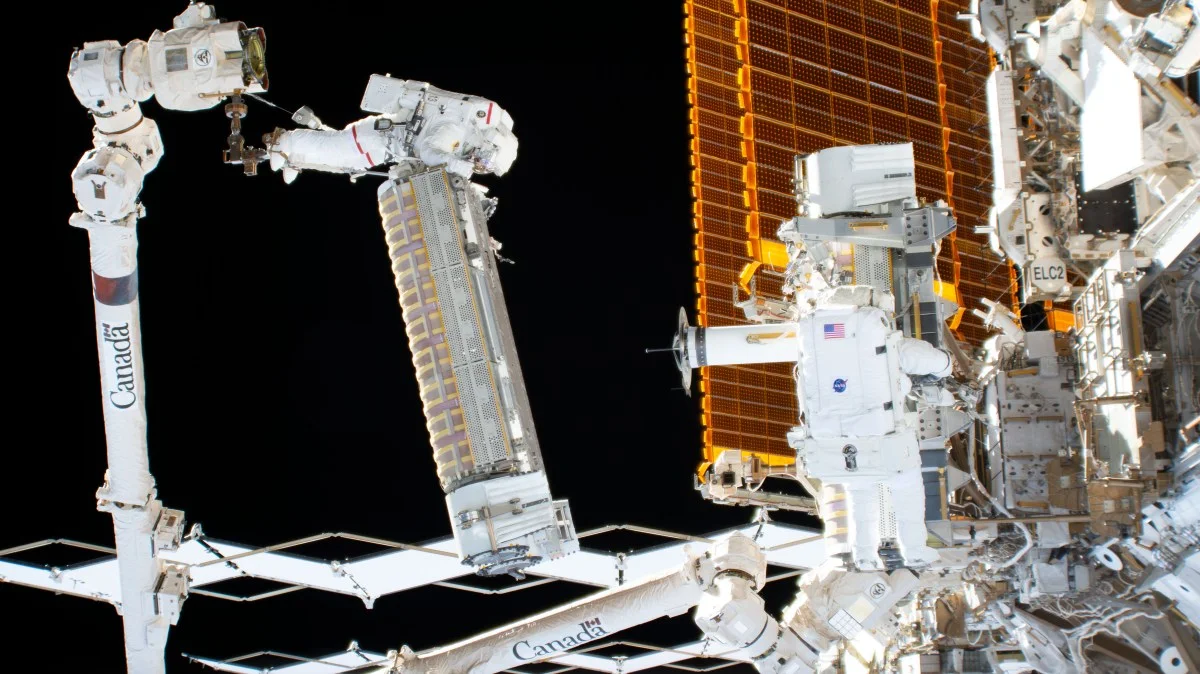
The station keeps its older solar wings while adding smaller, more efficient panels in front of them. In NASA's original engineering explanation, the new panels connect to the existing power system and use its sun-tracking and distribution equipment. Uncovered sections of the original arrays continue producing electricity.
That arrangement addresses aging hardware. The first original pair was deployed in December 2000, and the arrays were designed for a 15-year service life. NASA described their gradual degradation when it announced the upgrade in 2021. Batteries store energy for the portions of each orbit when the station is out of sunlight.
The roll-out design also changes how panels travel to orbit. They launch packed into cylinders, then extend after installation. A 2017 station demonstration tested the technology; six of the operational arrays were installed between 2021 and 2023. NASA says later power projections prompted the request for another pair.
NASA's overview includes a short video of an array deploying in 2022. The archival sequence shows the unfurling mechanism, rather than the October 29 installation.
What remains for November 5
Thursday's installation connected the seventh array to the station's 2A power channel. Menon and Kutryk also prepared work for their next outing, when they are scheduled to install the eighth and final array on the 3B channel.
FOX 35's reporting puts the October 29 operation at the station's 285th spacewalk overall. The separate designation "U.S. spacewalk 100" refers to operations from the Quest airlock without a space shuttle present.
NASA plans live coverage of the next spacewalk.