BepiColombo has been captured into orbit around Mercury, ending an eight-year trip to the solar system's innermost planet. In a mission-control announcement, ESA said its flight-dynamics team had confirmed orbital capture and controllers were assessing the spacecraft's telemetry.
The European and Japanese mission carries two science orbiters that are still joined together. Their separation and final orbital adjustments lie ahead, with the main science phase scheduled for April 2027. It is the first mission designed to put two science spacecraft into separate orbits around Mercury.
What happens before science begins

ESA's arrival schedule lists November 21 as the date for the joined orbiters to enter a polar orbit. The Mercury Transfer Module, which carried them through interplanetary space, had already separated on September 3.
Next, the European Mercury Planetary Orbiter, or MPO, is scheduled to release Japan's Mio orbiter on December 9 and 10. Mio will go into its own elongated polar orbit. On December 16, MPO is due to discard the sunshield that protected Mio during the trip, then use its thrusters to descend toward its own science orbit.
MPO's final orbit is scheduled for March 10, 2027, followed by the start of the mission's science phase on April 6. ESA cautions that the dates can change for operational reasons. Both spacecraft must undergo commissioning, including checks of their instruments, before that phase begins.
Two orbiters with different jobs

MPO will concentrate on Mercury's surface and interior. Its 11 experiments include a laser altimeter for measuring terrain, an infrared instrument for studying minerals and surface temperatures, and an X-ray instrument for mapping the elements in the surface. Radio measurements will help scientists determine the planet's gravity field and the size and physical state of its core.
The planned orbit takes MPO between about 480 and 1,500 kilometers above the surface, completing a circuit in 2.3 hours. That gives the mission repeated close passes for measurements of the terrain below.
Mio's orbit extends much farther out, from about 590 to 11,640 kilometers above Mercury, with a circuit lasting 9.3 hours. Its instruments will examine the magnetic environment, charged particles, electric fields and interplanetary dust. Another instrument will measure sodium in the planet's extremely thin outer atmosphere.
Mio is designed to spin 15 times per minute, distributing solar heating across its exterior. It could not spin while attached to MPO during the journey, which is why it needed the protective sunshield that will be removed during the arrival sequence.
Why observing together helps
Mercury's magnetic field is difficult to study in isolation. The solar wind, a stream of charged particles from the Sun, disturbs the electromagnetic environment around the planet. A measurement can therefore contain both the planet's own field and the effects of those disturbances.
JAXA explains that observations from MPO and Mio together will help researchers separate those contributions. The two spacecraft can measure different parts of Mercury's environment at the same time, improving the interpretation of the magnetic measurements and what they reveal about the interior.
Getting there required a long series of encounters with other planets. Launched in October 2018, BepiColombo used nine planetary flybys: one of Earth, two of Venus and six of Mercury. Those encounters helped the mission align its path with Mercury's orbit.
What NASA's earlier orbiter found
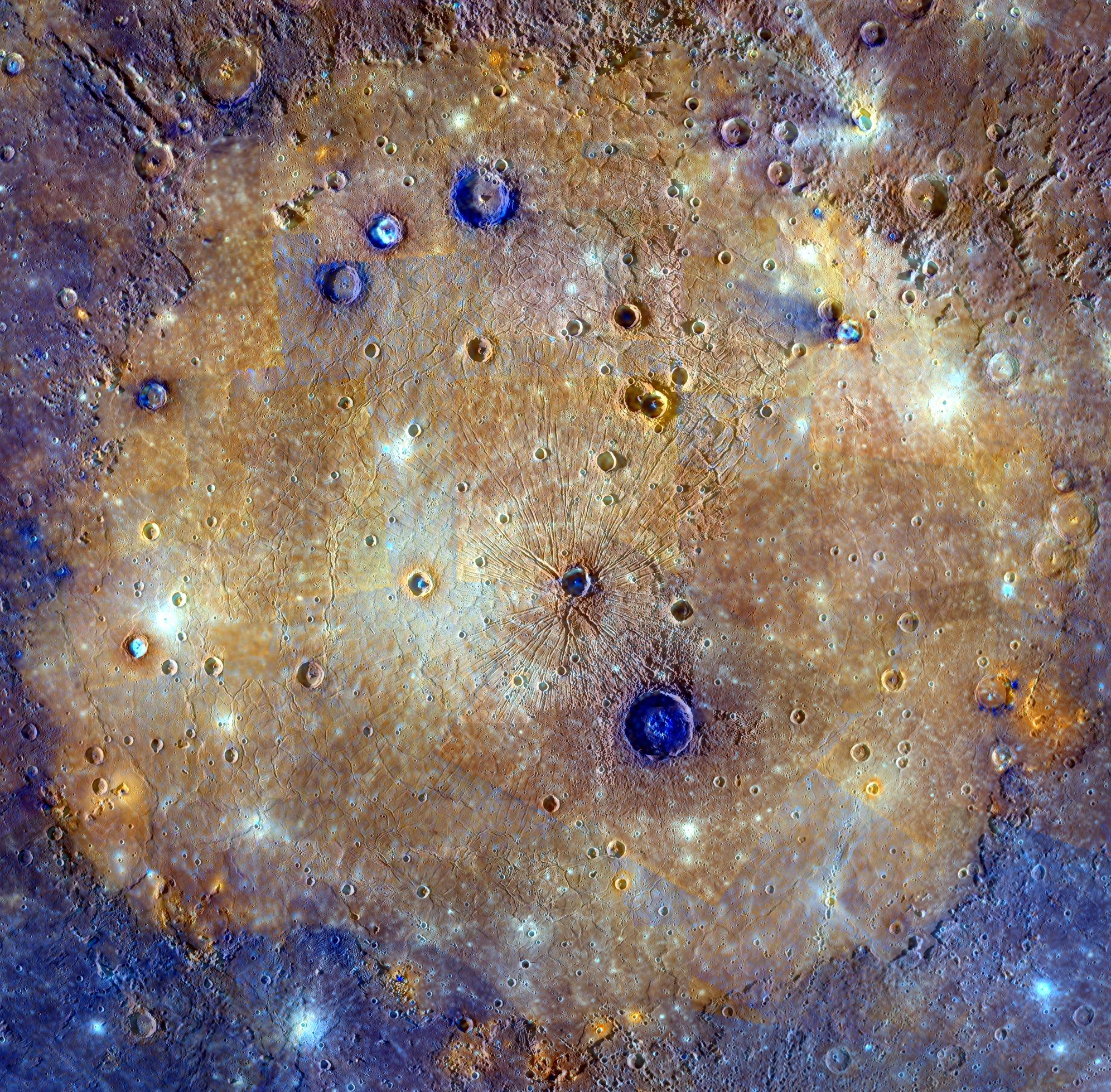
NASA's MESSENGER mission was the first spacecraft to orbit Mercury. Over more than four years, it mapped the surface and investigated its composition, geological history and internal magnetic field. It also verified that deposits at the poles consist predominantly of water ice, sheltered in locations that never receive sunlight.
That mission ended when the spacecraft struck Mercury's surface on April 30, 2015, after exhausting its propellant. BepiColombo brings a different observing arrangement to the same planet, with a close-mapping orbiter and a second spacecraft reaching farther into its magnetic environment.
ESA said it would share another mission update early in the coming week.