NASA has paused science work on Perseverance and Mars Odyssey while engineers investigate separate hardware problems. Both spacecraft remain in contact. The agency's November 19 status report explains why a working radio link alone cannot keep every instrument operating.
Perseverance's main UHF radio stopped responding October 30. Its backup subsequently transmitted at about half its expected power. Engineers have stopped using both. The rover now communicates directly with Earth through its X-band high-gain antenna, reserving the slower connection for diagnostics. New camera images and science operations are paused. NASA hopes science can resume by the end of November.
Odyssey has a different problem: a reaction wheel stopped spinning. With another wheel having failed in 2013, it lacks the three working wheels needed for orientation and is relying on thrusters. NASA estimates fuel for one to two months in that configuration, subject to refinement. One test moved the troublesome wheel; recovery remains unconfirmed. The team aims to restore science and relay work in the last week of November. Those are recovery goals.
Why the rover uses two radio routes
Perseverance was designed with separate paths for talking to passing orbiters and communicating directly with Earth. The JPL launch telecommunications guide describes a cylindrical UHF antenna for the orbital connection and a rotatable, hexagonal high-gain antenna for X-band communication with Earth.
The guide says 99.9% of surface science data would normally travel through the UHF antenna. Direct X-band transmissions are routinely used to send the rover its morning commands, but their capacity for returning data is limited. A separate low-gain X-band antenna can support emergency communication when the geometry and distance permit.
That design separates the daily command link from the route intended to carry large scientific files. The launch guide describes the planned hardware and roles; its list of orbiters predates later changes to the network.
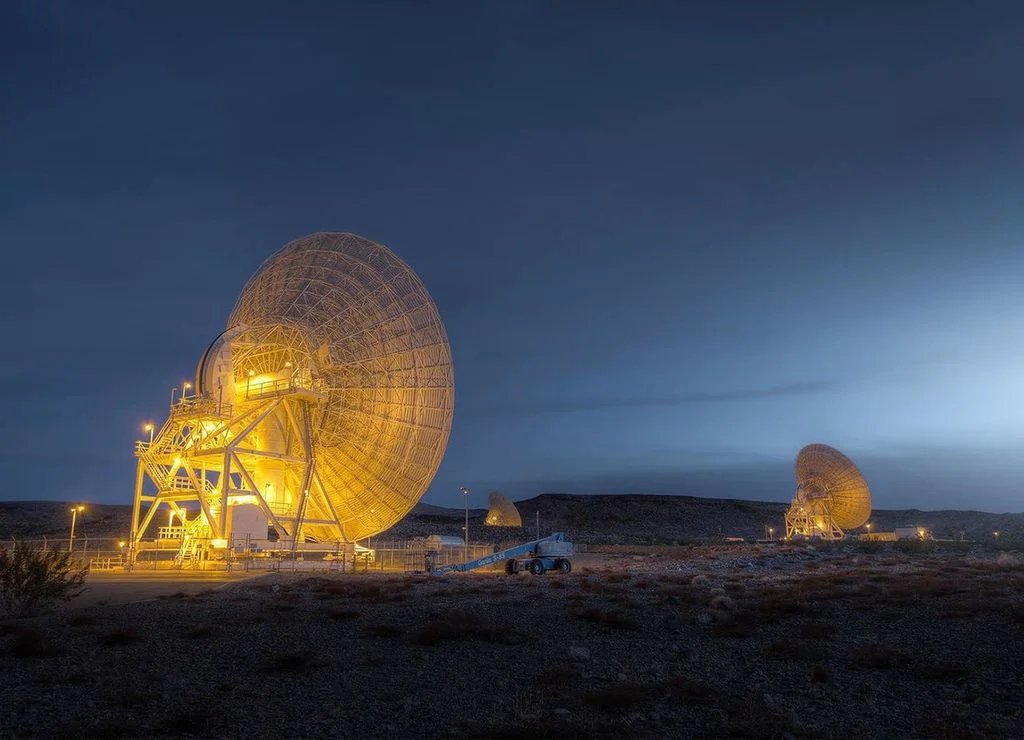
NASA’s Deep Space Network has ground complexes at Goldstone in California, near Madrid in Spain and near Canberra in Australia. Their spacing lets one site take over as Earth’s rotation carries a spacecraft below another site’s horizon. The network sends commands, receives data and tracks spacecraft. That ground coverage supplies the Earth end of both the direct rover connection and orbital relays.
What the orbiters add
NASA's current Mars Relay Network description lists four orbiters: Mars Odyssey, Mars Reconnaissance Orbiter, Mars Express and Trace Gas Orbiter. MAVEN's mission ended in June after engineers could not recover contact. Other orbiters took over its relay work.
Orbiters can carry larger antennas and solar panels than a rover can. Their nearby links with surface missions can transmit up to two million bits per second. They then send the information across interplanetary space to Earth. Rover contact windows vary with each spacecraft's orbit, the length of a pass and the data awaiting transmission.
NASA's published February-to-May 2026 averages show the different workloads: Odyssey relayed 107.3 megabits a day, Mars Reconnaissance Orbiter 850.6, and Trace Gas Orbiter 2,228.1. Mars Express was the backup. These historical averages describe the network before the newly reported faults; they are not measurements of today's remaining capacity.
Odyssey also has its own science mission
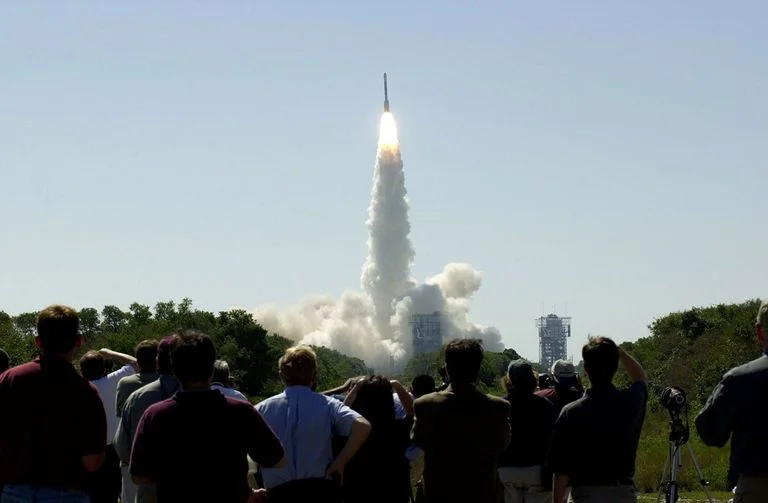
The orbiter launched from Florida on April 7, 2001, and reached Mars that October. Its mission overview records a primary science phase from February 2002 through August 2004. Its extended work has included studying clouds, fog and frost and mapping surface rocks to help identify safer landing sites.
Odyssey uses UHF to exchange data with surface spacecraft and X-band to communicate with Earth. Keeping the spacecraft pointed correctly therefore supports both its instruments and its communications work.
The European Space Agency's history of Mars Express relay tests documents successful connections with seven different surface missions, including Perseverance. Compatibility tests and scheduled passes make cross-agency relays possible. A larger orbital network still depends on a functioning radio aboard the rover sending the data.