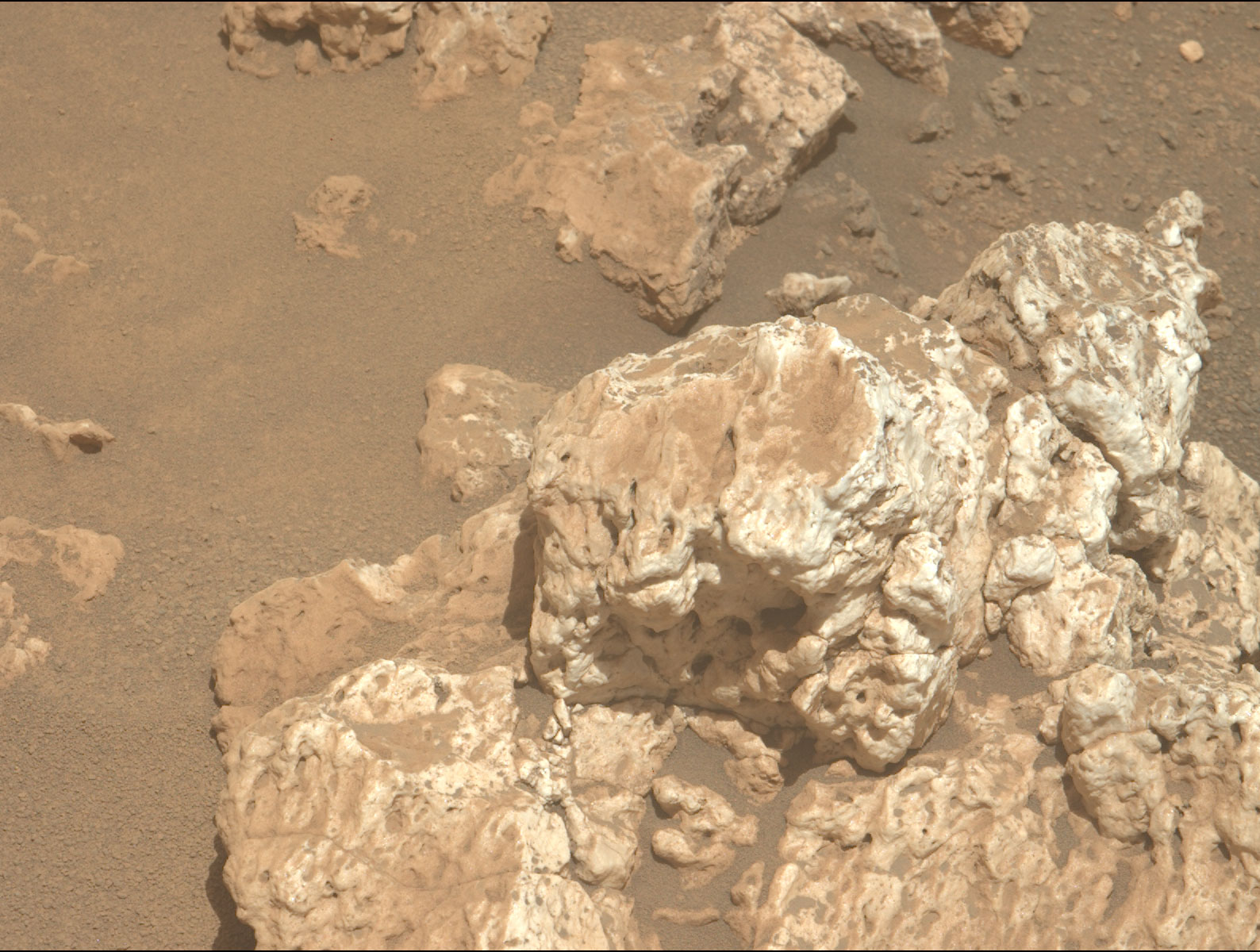
Pale rocks scattered outside Mars' Jezero crater have given NASA's Perseverance rover a new place to look for traces of ancient water. In a Nov. 16 mission update, the rover team said newly received measurements showed that rocks at a site called Idubi are rich in hydrated silica. The mineral can form in several kinds of watery environments, and the pieces at Idubi are large enough for a close inspection that eluded Perseverance at an earlier site.
The rocks stand out against dark, dusty ground west of the crater. Color gave the rover team a reason to stop. Earlier in the same region, though, pale rocks had turned out to include igneous rocks and material affected by impacts. The team used SuperCam to check the newest targets. The instrument combines a camera, laser and spectrometers that read the light from a small spot on the rock, giving researchers evidence about the minerals and elements present.
What earlier rocks could tell the team

Perseverance has found hydrated silica before. A 2025 study cataloged by the U.S. Geological Survey described silica-rich cobbles and quartz-bearing stones found in the crater. The authors proposed that the loose stones could have formed in a system of hot water circulating through rock. Because the pieces were loose, the researchers had to infer where they had formed.
A separate study of rocks along the crater's inner margin found evidence that water had affected the landscape at different times. In the study's reconstruction, fluids first altered the bedrock. Water from the ancient lake or changes in groundwater later helped deposit silica in pore spaces. Hot fluids then left minerals in younger fractures. Those are examples of how the same broad chemical clue can arise at different stages in the history of one landscape. Idubi sits outside Jezero and its rocks need their own investigation. On Earth, groundwater can carry dissolved silica and leave it behind in openings in rock. Silica can also accumulate when hot fluids move through cracks, or when water alters rock and soil near the surface. These routes imply different temperatures and settings. Finding hydrated silica narrows the search to processes involving water, while the surrounding minerals and the rock's texture can help tell those processes apart.
Why the rover is taking a closer look
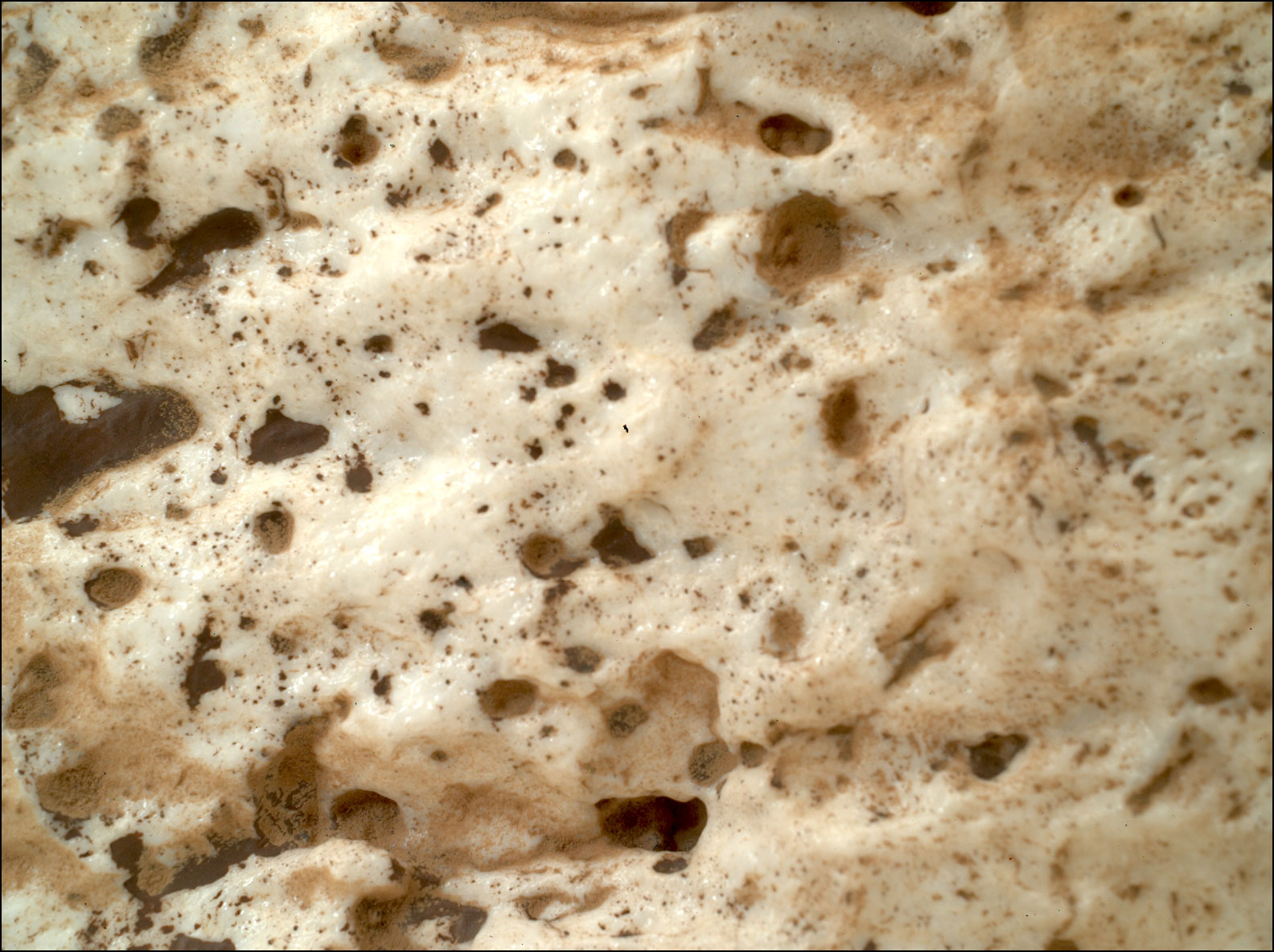
NASA says some of the earlier silica deposits near the inner rim were too small for the rover to gather detailed measurements with instruments that work close to the rock. The Idubi pieces give the team a larger target. On Oct. 29, Perseverance photographed a pale rock with its mast camera and then used the WATSON camera on the end of its arm to photograph a patch of the surface up close. The images show the rock at two scales, from the surrounding grit to dust caught in pits in the rock itself.
That closer view helps put chemical measurements in context. At this scale a rover team can look for whether a mineral is scattered across the rock or concentrated in spots such as grains, pores or fractures. The texture can help scientists work out the order in which the rock and its minerals formed. The mission team says the close-range investigation at Idubi is underway.
Hydrated silica can preserve small traces of earlier environments. On Earth, silica-rich rocks sometimes retain microscopic fossils or other traces of past life that more vulnerable material would lose. The new measurements establish the mineral composition at Idubi. They leave open which kind of water shaped the rocks and whether anything biological was ever preserved there. The next measurements will help researchers compare the larger rocks at Idubi with the smaller pieces they already studied inside Jezero.