NASA will unveil new images from the Nancy Grace Roman Space Telescope on Monday, Dec. 7, with a public broadcast starting at 3:30 p.m. Eastern, or 12:30 p.m. Pacific. The agency announced the date Nov. 17. Roman was built to photograph much larger stretches of sky than Hubble.
The reveal will take place at the American Geophysical Union's annual meeting in San Francisco. It follows Roman's Aug. 30 launch and months of testing, cooling and calibration on its journey toward an orbit roughly a million miles from Earth.
When and where to watch
The NASA viewing advisory gives the public release time as 3:30 p.m. EST. That is 2:30 p.m. Central, 1:30 p.m. Mountain and 12:30 p.m. Pacific on Dec. 7.
Watch through NASA Live. The agency says the images will post on its website at the same time, so watching the broadcast is optional.
AGU's event announcement lists an earlier, publicly streamed conversation with NASA Administrator Jared Isaacman at 11:45 a.m. Pacific. The image release follows at 12:30 p.m. A morning media briefing is under embargo until that public release.
What makes Roman's camera different
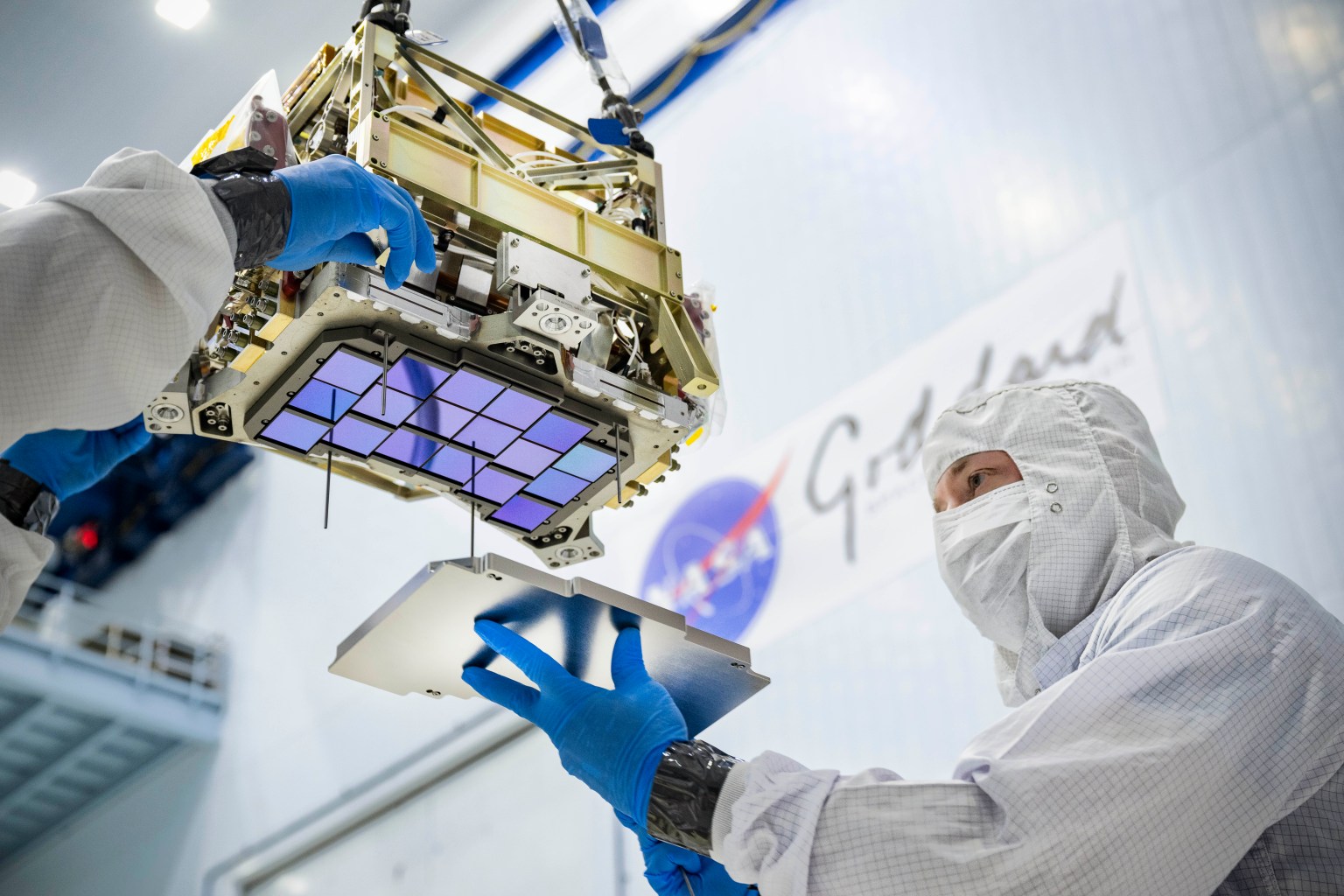
Roman has a primary mirror 2.4 meters across, the same diameter as Hubble's. Its advantage for large surveys comes from the area it can capture in one exposure.
The Wide Field Instrument uses 18 detectors to turn incoming light into images. Each exposure covers an area of sky larger than the apparent size of the full Moon.
The comparison depends on which Hubble camera is used. Roman's field is about 200 times larger than Hubble's infrared Wide Field Camera 3 images and nearly 100 times larger than the widest exposures from Hubble's Advanced Camera for Surveys. Those figures describe coverage, rather than magnification or a 100-fold increase in sharpness.
The instrument detects infrared light at wavelengths beyond human vision. Cosmic expansion stretches the light from distant galaxies toward those wavelengths. Observing from space also avoids atmospheric effects that can block or overwhelm faint infrared signals.
Hubble complements that wide view with ultraviolet observations and more detailed spectroscopy over small areas. The instruments can study some of the same objects with different wavelength coverage.
From launch to focused images
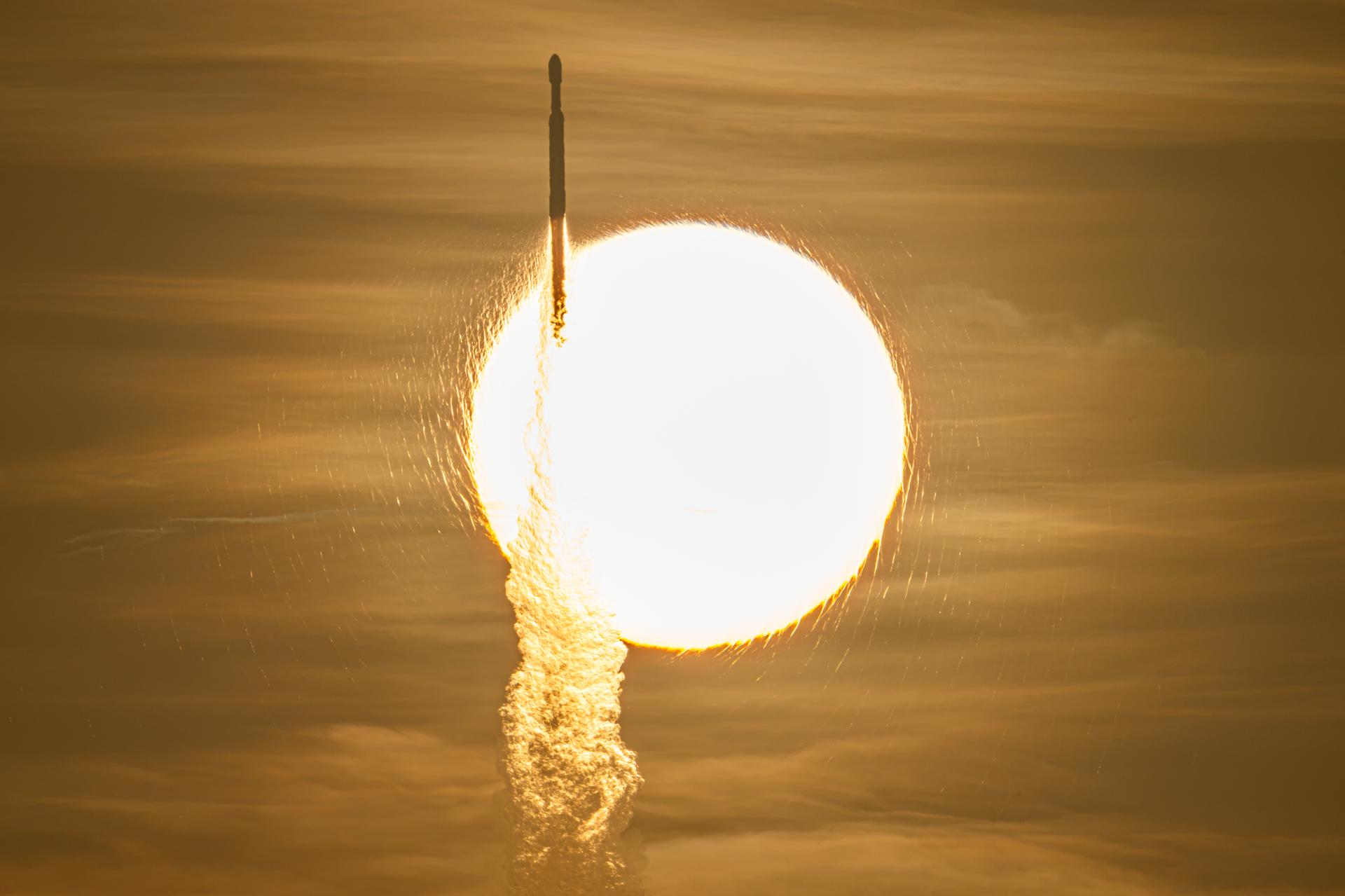
Roman launched from Kennedy Space Center in Florida on a Falcon Heavy rocket. Its destination is an orbit around Sun-Earth Lagrange Point 2, known as L2, where it can keep a broad view of the sky while limiting heat from Earth, the Sun and the Moon.
During commissioning, engineers turn on systems, adjust them and check their performance before science operations. They calibrate the instruments and check how they work together before observations start.
Roman has already sent test pictures. The agency's September 15 instrument update documented early detector checks. Those early frames showed out-of-focus stars as broad rings while the detector array was still stowed in its launch position. They gave engineers a baseline for aligning the optics and focusing the telescope. September's update forecast science images by early 2027; November's advisory now sets the public showcase for December 7.
The science behind the panoramas
Repeated images of the same large regions will let astronomers track changing objects, including exploding stars. Type Ia supernovae help measure distances; comparing those distances with their light gives researchers a way to trace how cosmic expansion changes over time.
Roman will also study the gravitational effects of dark matter and search for planets around other stars. A separate coronagraph instrument will demonstrate technology that blocks bright starlight to reveal much fainter surroundings. These are mission goals, not discoveries established by the upcoming pictures.
NASA is also offering an Adopt a Pixel program tied to a selected first image. One pixel is assigned per email address, with a certificate and a later lookup when the image is revealed. Family members using one email address share the same pixel.