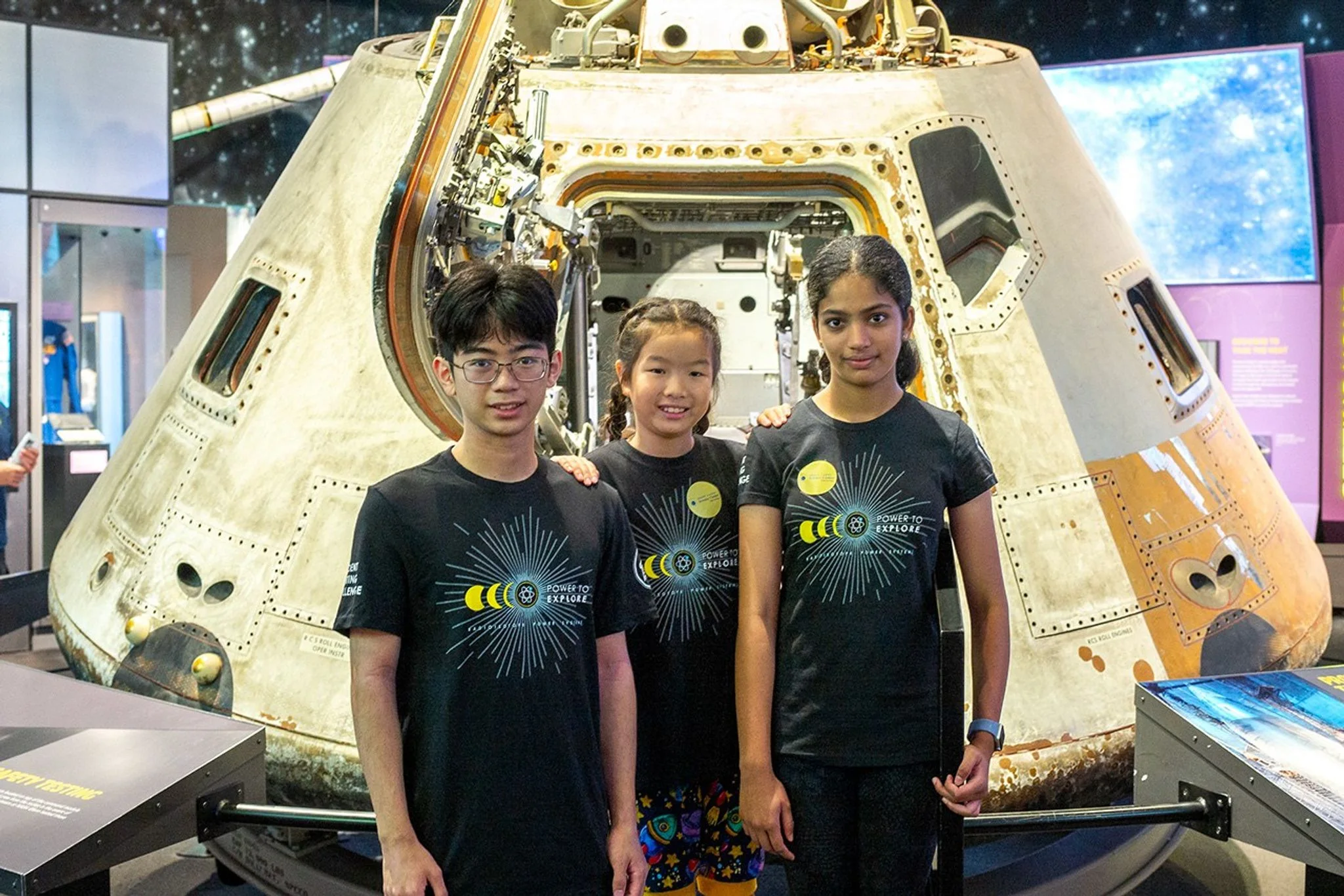
NASA's Power to Explore challenge is open to K-12 students with an idea for a nuclear-powered Moon base. The 2026-27 contest requires an original illustration and a written entry of no more than 200 words. Entries are due March 1, 2027, at 11:59 p.m. Eastern, or 8:59 p.m. Pacific.
NASA opened the challenge Nov. 17. Three grade-group winners will each receive a trip for two to its Glenn Research Center in Cleveland. Families should check the eligibility exclusions and the ban on AI-created ideas before starting an entry.
Who can enter
The 2026-27 challenge rules cover legal U.S. residents in K-12 public, private and home schools, including U.S. territory, Department of Defense Education Activity and Bureau of Indian Education schools.
Students enter individually, with one eligible submission each. Teams cannot enter. Employees of NASA or Future Engineers, their immediate family members and people in their households are excluded. The family exclusion applies even when relatives live elsewhere.
The organizer's FAQ says students entering through a class must be linked to their teacher's account. Minors participating without a teacher need a parent or legal guardian's permission.
The picture and the written entry have different jobs
The challenge instructions ask for a picture of a lunar base that supports human and robotic exploration. It must show both radioisotope and fission power technologies.
The written portion describes a personal strength that could help NASA explore the Moon with nuclear power. The student's skills or personality are the subject of that short text. The picture shows how the base would work.
The submission needs a title of no more than 75 characters. The image file can be up to 10 MB, in HEIC, JPG, JPEG, PNG, BMP, GIF or SVG format. The written entry has a 200-word maximum.
Electricity and heat are different parts of the design
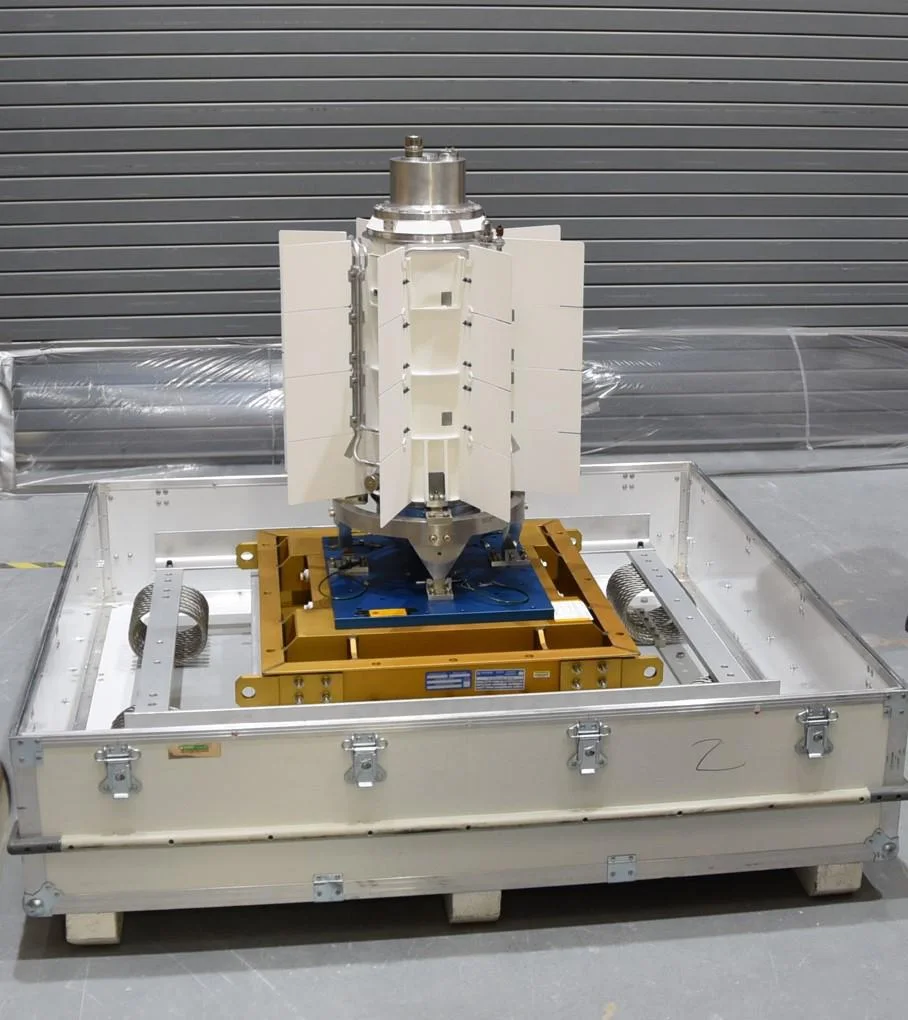
The power sources in the prompt do different work:
| Technology | How it works | What it provides |
|---|---|---|
| Multi-Mission Radioisotope Thermoelectric Generator, or MMRTG | Converts heat from the natural decay of plutonium-238 | Electricity, plus heat |
| Radioisotope heater unit, or RHU | Transfers heat from plutonium-238 decay directly to components | Heat |
| Fission power system | Splits uranium atoms in a reactor and converts the resulting heat | Electricity |
An MMRTG is the kind of power supply used by the Curiosity and Perseverance Mars rovers. NASA's description of Perseverance's unit gives its initial electrical output as about 110 watts. Its fins release excess heat, and some heat can keep rover systems warm.
An RHU is about the size of a C-cell battery and produces roughly one watt of heat. Using that heat directly can leave more of a spacecraft's electrical supply available for its instruments.
Where a reactor fits
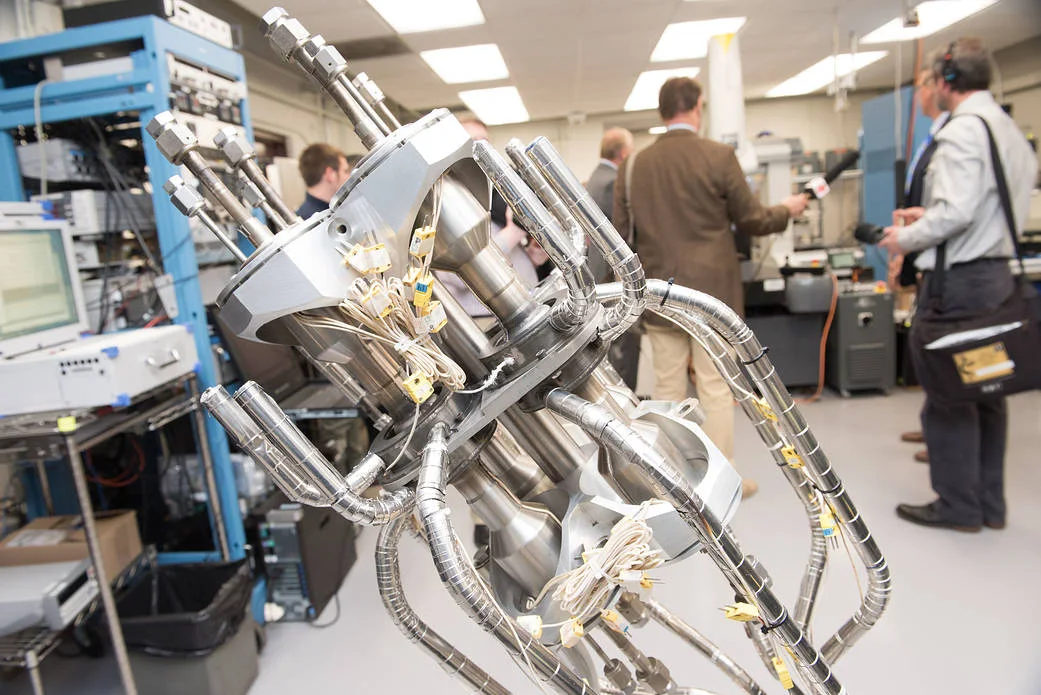
Fission systems are intended for larger power demands. The Department of Energy's January 2026 explanation describes a planned lunar demonstration producing up to 40 kilowatts, or 40,000 watts. That is roughly 360 times an MMRTG's 110-watt initial electrical output.
Those figures illustrate two different scales of electrical power. Students submit their own lunar-base concept using both technologies.
Original work and privacy requirements
The rules prohibit AI tools from developing the entry's substantive ideas or content. Adults may help younger students type the online submission, but the creative work must be the student's own.
Entries must leave out personal contact information, school names and usernames. The rules also exclude full names, while permitting factual references to significant scientists, engineers or astronauts. Submissions may appear in a moderated public gallery.
Judging, prizes and the submission deadline
Students compete in grades K-4, 5-8 and 9-12. Judges award up to 25 points apiece for the base's support of exploration and discovery, its depiction of radioisotope systems, its depiction of fission systems and the written ideas.
The organizer lists 45 semifinalists receiving prize packs, nine finalists receiving a virtual session with a NASA expert and three grand-prize winners receiving the Cleveland trip. Each entrant receives a digital certificate and an invitation to a virtual NASA event.
The planned announcement dates are April 22 for semifinalists, May 11 for finalists and May 13 for winners. The FAQ says entries must be submitted online. Students may revise an entry until the March 1 deadline; the last submitted version is judged.