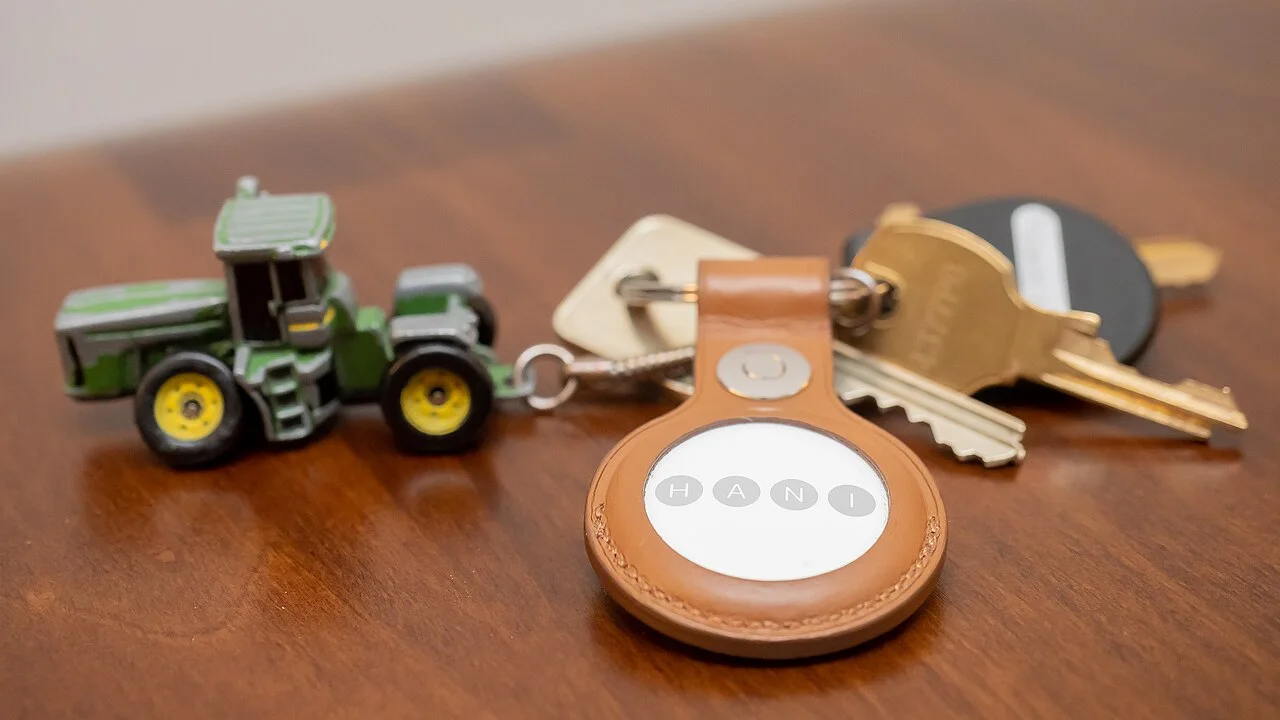
Samsung's Galaxy SmartTag3 went on sale in the United States on Nov. 6 for $29.99. For a household that uses both Galaxy phones and iPhones, the new tag can make a shared suitcase easier to follow. An iPhone owner can use supported SmartThings finding features. For an iPhone user checking a bag alone, Apple's $29 second-generation AirTag still has a particular advantage: a temporary location link that participating airlines can use when they are looking for mishandled luggage.
That difference matters more than the 99 cents between the two tags. Check which phone will be on the trip, who else needs to see the bag and what your airline will accept if it goes missing.
What each tracker does with your phone
| For your trip | Galaxy SmartTag3 | AirTag, second generation |
|---|---|---|
| U.S. list price | $29.99 each or $99.99 for four | $29 each or $99 for four |
| App and finding network | Samsung SmartThings Find and the Galaxy Find Network | Apple Find My and the Find My network |
| Nearby directions | Compass View on compatible Galaxy phones | Precision Finding on supported iPhones and Apple Watches |
| Sharing across phones | Supported Galaxy and iOS devices can use core SmartThings finding and sharing features | Shared items are managed in Find My with an Apple Account |
| Airline handoff | Check what your airline accepts | Find My can create a temporary link for participating airlines |
Samsung's SmartTag3 announcement lists the supported features and phone requirements. Apple's AirTag announcement and setup instructions cover the second-generation model.
SmartTag3 is the first in Samsung's line to support core finding and sharing on both Galaxy and iOS devices. A family member borrowing a suitcase can see its location through SmartThings on a supported phone. On an iPhone, that still leaves out Samsung's Compass View, Left Behind Alert and the tag's ring-your-phone function. Check Samsung's compatibility notes before buying for a non-Galaxy Android phone. The published cross-platform support identifies Galaxy and iOS devices.
For Compass View, Samsung lists Galaxy devices running Android 12 or later with ultra-wideband or Bluetooth Channel Sounding. The company names the Galaxy Z Fold8 Ultra, Z Fold8, S26 Ultra and S26 Plus for Channel Sounding. Its advertised range of up to 60 meters comes from unobstructed testing. Walls and nearby electronics can reduce it.
Apple requires iOS or iPadOS 26.2.1 or later to add a second-generation AirTag. Opening its map and getting an arrow to the bag are separate functions. Apple's finding guide lists supported iPhone models for nearby directions. Apple also lists Watch Series 9 or later and Ultra 2 or later for Precision Finding with the new tag.
A location pin and an airline claim do different jobs
If your bag misses the carousel, file the airline's delayed-baggage report and keep the baggage tag number. A tracker can help the airline look for the bag. The claim starts a separate record with the carrier, including where to contact you and where to deliver the bag. The U.S. Department of Transportation's baggage guide explains the reporting process and reimbursement for reasonable expenses on delayed bags.
With AirTag, open Find My, select the item and choose Share Item Location. The app generates a temporary link. Send it through your airline's instructions for mishandled bags if the carrier supports it. Apple's sharing guide says sharing ends automatically after seven days and can be stopped sooner. That link serves a different purpose from adding a family member as a regular borrower in Find My. United's delayed-bag page, for example, directs customers to the United app on an iPhone or iPad to add the link to a report.
Samsung's instructions describe sharing the tag with people through SmartThings. If you travel with SmartTag3, check the airline's reporting form or ask its baggage desk how to provide the location. A time-stamped map pin can help explain why you think a bag remained at a connecting airport. Its usefulness depends on how recently the network heard from the tag.
Both trackers rely on nearby devices for updates when they're out of your phone's range. An old pin can show the bag's last detected location after the bag has moved. At the carousel, close-range directions help only once you're close enough for your phone to pick up the tracker.
Pair the tag before you leave for the airport. Put it inside the bag, verify that it appears in the app and try sharing it with whoever will pick up the suitcase. That gives you time to catch a software or account issue while the bag is still at home.