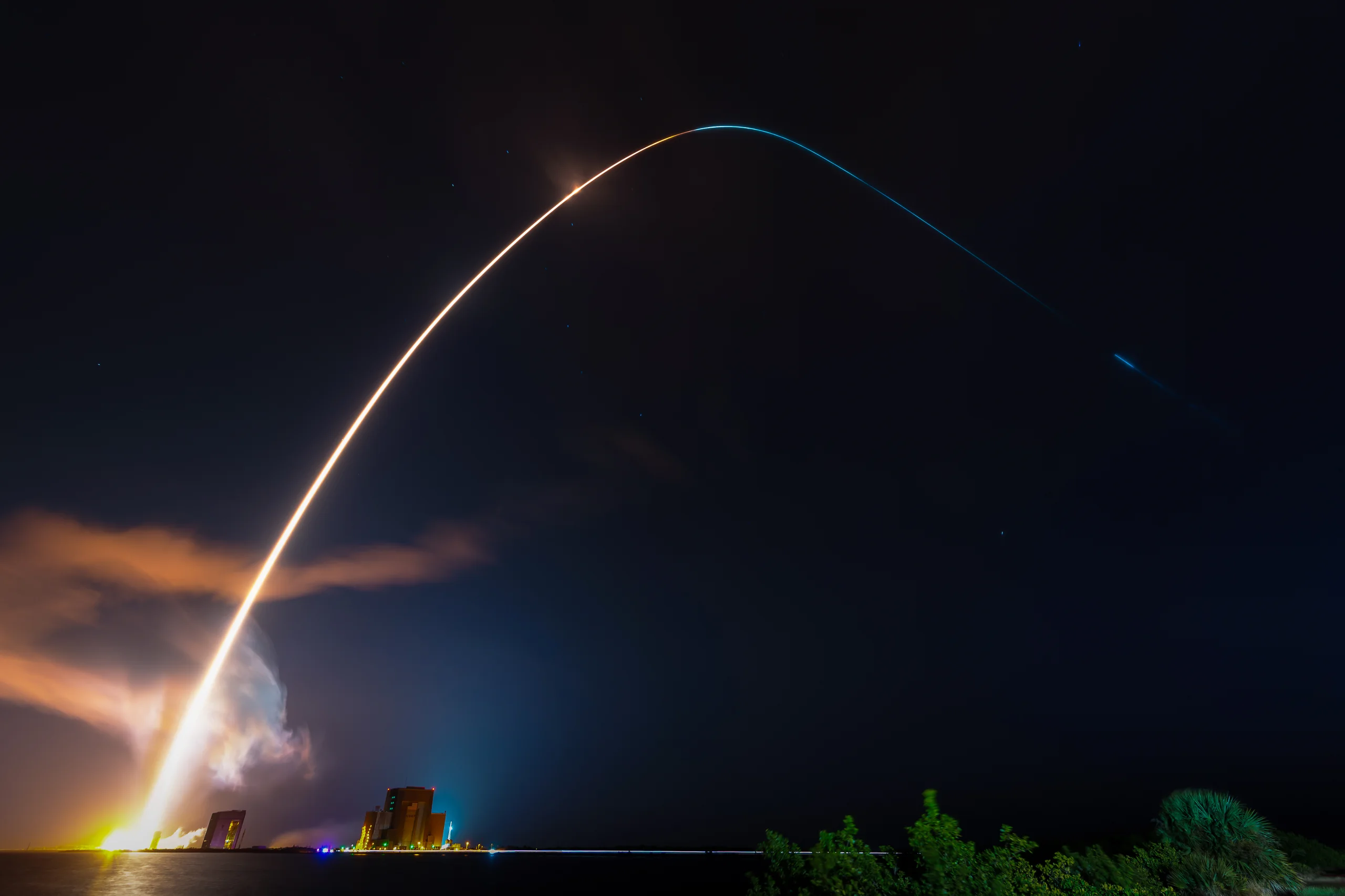
United Launch Alliance will try again Saturday to launch 40 Amazon Leo broadband satellites from Cape Canaveral Space Force Station. ULA canceled Friday’s attempt after a power interruption at an off-rocket nitrogen plant. The company now lists a Nov. 14 launch window from 12:32 to 1:01 p.m. Eastern, or 9:32 to 10:01 a.m. Pacific.
The Vulcan rocket and its payload were healthy after the delay, ULA told Spaceflight Now. A power interruption at the Air Liquide plant stopped its high-pressure pumps, and ULA moved the launch to its backup day after it could not confirm a steady supply of gaseous nitrogen. The launch team uses the gas to purge and pressurize equipment. Friday’s scheduled liftoff was 12:54 p.m. Eastern.
Where to watch Saturday’s launch
ULA will stream the launch from its Vulcan Leo 1 mission page and on its official YouTube channel. The rocket will fly from Space Launch Complex 41. Viewers planning to head out to Florida’s Space Coast can check the mission page before leaving, since Friday’s countdown ended more than four hours before the scheduled liftoff.
Why this Vulcan flight matters
This is Vulcan’s first launch attempt since a solid rocket booster nozzle problem on a U.S. Space Force mission in February. ULA says it changed the nozzle design and how it builds the nozzle after testing with booster supplier Northrop Grumman and government partners. The investigation continues, and the flight will give ULA its first in-flight data on those changes.
ULA is also flying a lighter version of its Centaur upper stage designed for low Earth orbit. It carries less fuel than the version used on Vulcan’s earlier missions. ULA says the change helps make room by weight for more satellites on one rocket. The 40 spacecraft make this Amazon’s largest Leo batch on a single launch and the first of 38 Leo flights Amazon booked on Vulcan. The company previously used ULA’s Atlas V for eight Leo launches.
ULA’s flight plan calls for the first satellites to separate from the rocket about 70 minutes after liftoff. The remaining releases are spread over about 25 minutes. If the rocket leaves at the start of the window, that puts the first release around 1:42 p.m. Eastern.
Amazon’s updated schedule lists another batch of 36 on an Ariane 6 as early as Nov. 23. Those are deployment missions. Saturday’s launch window applies to the rocket, and Amazon’s mission update does not announce a new date for home internet orders.