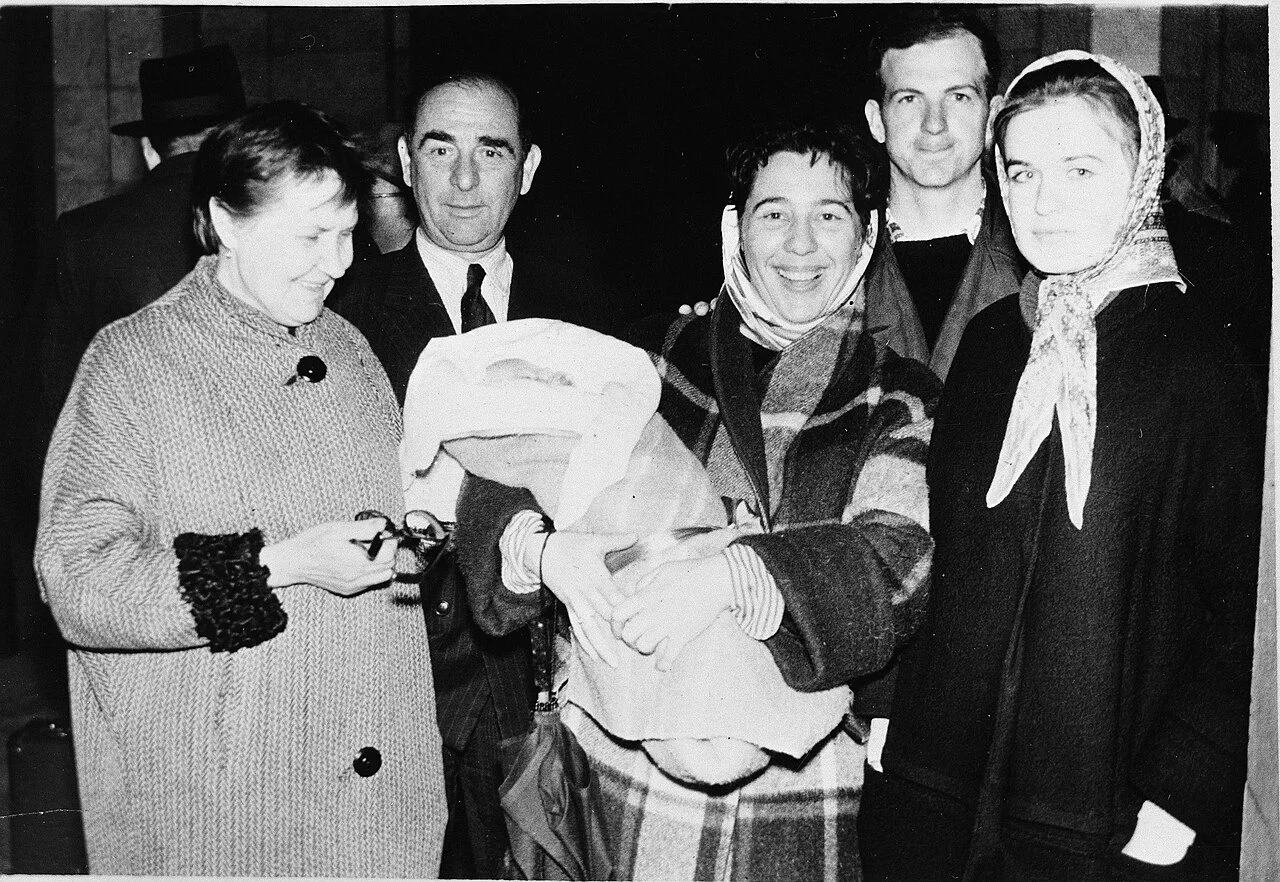
On the morning of Friday, Sept. 27, 1963, a man called the Soviet military attaché's office in Mexico City and said he was looking for a visa to Odessa. At 10:37, a man called again, asked for the consul and stressed that he needed the visa. He was told to call back at 11:30.
Neither caller gave a name. The CIA heard both calls anyway. Its Mexico City station had taps on the Soviet and Cuban diplomatic phones, read transcripts of the calls every day and received photo coverage of the embassies two or three times a week, according to a congressional staff study of the case.
Eight weeks later, a man the CIA would identify on those taps, Lee Harvey Oswald, was arrested in Dallas and charged with the assassination of President John F. Kennedy. What the CIA saw and heard in Mexico City, and what it did and did not pass along, became one of the most closely examined episodes of the investigations that followed.
The main record is the House Select Committee on Assassinations staff report "Lee Harvey Oswald, the CIA and Mexico City," often called the Lopez Report. The National Archives released it without redactions in March 2025, part of more than 80,000 pages of previously withheld JFK records that President Trump ordered made public. Earlier versions had been released with redactions. Read with the Warren Commission's chapter on the trip and the committee's final report, it lays out the week day by day.
A bus trip south
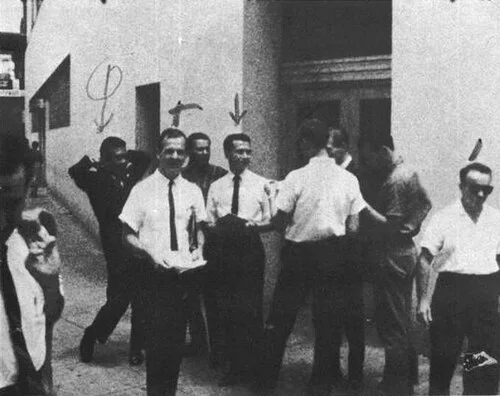
Oswald left New Orleans "probably about noon on September 25," the Warren Commission found, and reached Mexico City "at about 10 a.m. on September 27." He was in Mexico until Oct. 3.
A month earlier, on Aug. 16, he had been photographed handing out "Fair Play for Cuba" leaflets on a New Orleans street. His wife, Marina Oswald, testified that the point of the trip was to get around the U.S. ban on travel to Cuba. He asked the Cuban consulate for an "in-transit" visa, saying he would pass through Cuba on his way to the Soviet Union, where he had lived after defecting in 1959. The commission concluded it was "more likely that he intended to remain in Cuba."
The Soviets told him an answer could take months. The Cubans would not give him a transit visa until he had a Soviet one, and by Saturday, Sept. 28, he had failed at both embassies.
What the wiretaps caught
The Lopez Report follows the station's transcripts through that first Friday. At 1:25 p.m., a caller asked the Soviet consulate "when tomorrow?" and was told the consul was in on Mondays and Fridays between four and five.
At about 4:05 p.m., Silvia Duran, who worked at the Cuban consulate, called the Soviet Embassy about an American who wanted a Cuban visa. At 4:26 p.m., a Soviet official called her back. The American had shown papers from the Soviet consulate in Washington and a letter saying he belonged to an organization that favored Cuba. He wanted to go to the Soviet Union with his Russian wife and stay a long time. Washington had not answered his request, and such answers "traditionally took four to five months," the official said. The Soviets could not give him a letter of recommendation "because they did not know him."
The next morning, Saturday, at 11:51, Duran called the Soviet consulate again and put the American on the line. The station's transcript, quoted in the report, notes that he spoke "terrible, hardly recognizable Russian":
Russian: What else do you want? > American: I was just now at your Embassy and they took my address. > Russian: I know that.
The American said he had gone to the Cuban Embassy to get his address back, because they had it. The Soviet told him to come and leave it again, since the consulate was not far from the Cuban Embassy. "Well, I'll be there right away," the American said.
"Lee Oswald" on the line
On Tuesday, Oct. 1, at 10:31 a.m., a man speaking broken Russian called the military attaché. He said he had been at the consulate the previous Saturday and asked whether an answer had come from Washington.
At 10:45 a.m., the caller gave a name. He introduced himself as "Lee Oswald" to a Soviet employee named Obyedkov, according to the report. Obyedkov asked whether he had dealt with Kostikov, describing him as "dark." The caller said yes. Obyedkov told him the request had been sent but there was no answer yet, and hung up as Oswald began to say "and what."
The Kostikov in that exchange was Valeriy Vladimirovich Kostikov. The Warren Commission recorded the CIA's information that Kostikov was "a member of the consular staff" and "also one of the KGB officers stationed at the Embassy." After returning to Texas, Oswald wrote to the Soviet Embassy in Washington on Nov. 9 about "my meetings with Comrade Kostin in the Embassy of the Soviet Union, Mexico City." The commission said that was "probably" Kostikov.
Oswald left Mexico City by bus on Wednesday morning, Oct. 2.
The cable to headquarters
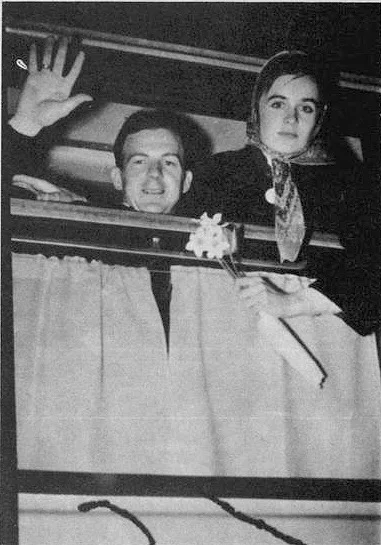
The Mexico City station reported the Oct. 1 call to CIA headquarters about a week later. The Select Committee found that headquarters learned on Oct. 9 that a man calling himself Oswald had contacted the Soviet Embassy.
The station's report also described the man in a photo it took to be the American caller: about 35 and 6 feet, athletic, balding on top, his hairline receding. The man was "clearly neither Oswald nor Ruby," the committee wrote, and the description "bore no resemblance to Oswald." It called the station's identification "the result of a careless mistake" and found the photo was not taken on any day Oswald was reported at the embassy. The CIA, the FBI and the committee all failed to identify the man.
Headquarters answered three days after the station's report with what it knew from its own files. Its cable said the visitor "may be identical to Lee Henry (sic) Oswald," born Oct. 18, 1939, in New Orleans, a "former radar operator in United States Marines who defected to USSR in Oct. 1959," five feet ten, 165 pounds, with light brown wavy hair and blue eyes.
What headquarters did not get was the rest of the picture. Two CIA sources had found that Oswald visited the Soviet Embassy or the Cuban consulate "at least 5 times" for a transit visa through Cuba. Headquarters "was not informed about Oswald's visa request nor of his visits to the Cuban consulate," the committee wrote. As a result, other federal agencies learned about his Soviet contact but "were not informed about his visa request or of his visit to the Cuban consulate."
After Dallas
Once Oswald was arrested on Nov. 22, Mexico City became evidence. Within a day, an FBI memo said agents who had listened to "a recording of his voice" thought the caller was not Oswald. The committee found the memo was wrong. The Dallas FBI office told Director J. Edgar Hoover on Nov. 23 that only a report of the conversation was available, not a recording, and on Nov. 25 that "no tapes were taken to Dallas."
The witnesses split. Eusebio Azcue, the former Cuban consul who had argued with the American, told the committee the man was not Oswald. Duran said it was, but she described a man of about 5 feet 6 and 125 pounds whose blond hair was thin. Another Cuban official, Mirabal, who saw the visitor from about 4 meters, said he was the man Jack Ruby shot. Duran picked out Oswald's photo from his visa application, and the committee's handwriting experts found that the signatures on both copies of the application were Oswald's.
Based on CIA information and on Cuban and Mexican sources, it found that "the individual who represented himself as Lee Harvey Oswald at the Cuban consulate in Mexico was not an imposter."
It was harder on the agency. The CIA's field sources tracking Oswald abroad showed "effective intelligence work," the committee said, "Nevertheless, the CIA's handling of the Oswald case prior to the assassination was deficient," because headquarters "was not apprised of all information that its field sources had gathered." Among its formal findings, the committee listed that the CIA "was deficient in its collection and sharing of information both prior to and subsequent to the assassination."
What the files still do not settle
The 2025 release made the full Lopez Report public and put every page of the staff's day-by-day reconstruction on the record. The National Archives released another 11,022 pages on Jan. 30, 2026.
The Lopez Report does not settle two questions the committee could not close. The committee "was unable to determine whether the CIA did in fact come into possession of a photograph of Oswald taken during his visits to the Soviet Embassy and Cuban consulate," or whether he had associates in the city. And the balding, athletic man in the station's photo, the one the station first took for the American caller, has never been identified.