

The Food and Drug Administration has approved revised warnings for three more estradiol patches used for menopause, extending changes that began with six hormone-therapy products in February.
The October 30 announcement also addresses a separate frustration: finding a usual patch at the pharmacy. Federal officials say production has doubled over the past year and they see no imminent nationwide shortage, while acknowledging that some patients cannot readily obtain their usual product.
Which labels have changed
The FDA's updated prescribing-information list now includes Minivelle, Vivelle and Vivelle-Dot. Their linked prescribing documents retain a boxed warning about endometrial cancer when estrogen is used without an accompanying progestogen in a woman who has a uterus.
The October action removes statements about cardiovascular disease, breast cancer and probable dementia from the most prominent warning box. A boxed warning is the FDA's strongest safety warning; its contents are only part of a medicine's prescribing information.
For example, the revised Vivelle-Dot label still lists current or past breast cancer, blood clots, stroke or heart attack among contraindications, conditions in which the medicine should not be used. It also warns about clot and stroke risks reported with systemic estrogen. Removing statements from the box does not remove those prescribing restrictions.
The label explains why a clinician may add a progestogen for someone with a uterus: it reduces the uterine cancer risk associated with estrogen alone.
A patch and vaginal estrogen serve different needs
The Menopause Society distinguishes treatment that circulates throughout the body from low-dose vaginal treatment. The symptoms being treated help determine which is appropriate.
| Treatment | Where it acts | What it is used for |
|---|---|---|
| Systemic hormone therapy, including estradiol patches, pills, gels and sprays | Hormones reach the bloodstream at levels that affect the whole body | Hot flashes and other menopause symptoms; systemic hormones also protect bone |
| Low-dose vaginal estrogen | Mainly vaginal tissue, with little entering circulation | Vaginal dryness and related genitourinary symptoms |
A skin patch is systemic even though it is applied to one spot. The society says clot risk may be lower with transdermal estrogen than with hormones taken by mouth. That comparison does not establish that patches are risk free or suitable for every patient.
The federal Office on Women's Health says benefits are more likely to outweigh risks when treatment starts before age 60 or within 10 years of menopause. Age alone does not settle the decision: health history, formulation and dose also affect risk.
Earlier warnings followed Women's Health Initiative studies that stopped early in 2002 and 2004. Participants averaged 63, and the studies tested oral conjugated equine estrogens and the progestin medroxyprogesterone acetate. The trials found increased breast cancer with combined estrogen and progestin and increased stroke with estrogen alone; separate studies in women ages 65 to 79 found more probable dementia.
Treatment also needs review over time. The Menopause Society says risks can increase with longer use and as patients age, so the decision to continue can change.
Hormone therapy should not be taken solely to prevent heart disease, the office says. Whether it prevents dementia remains uncertain.
If your usual patch is unavailable
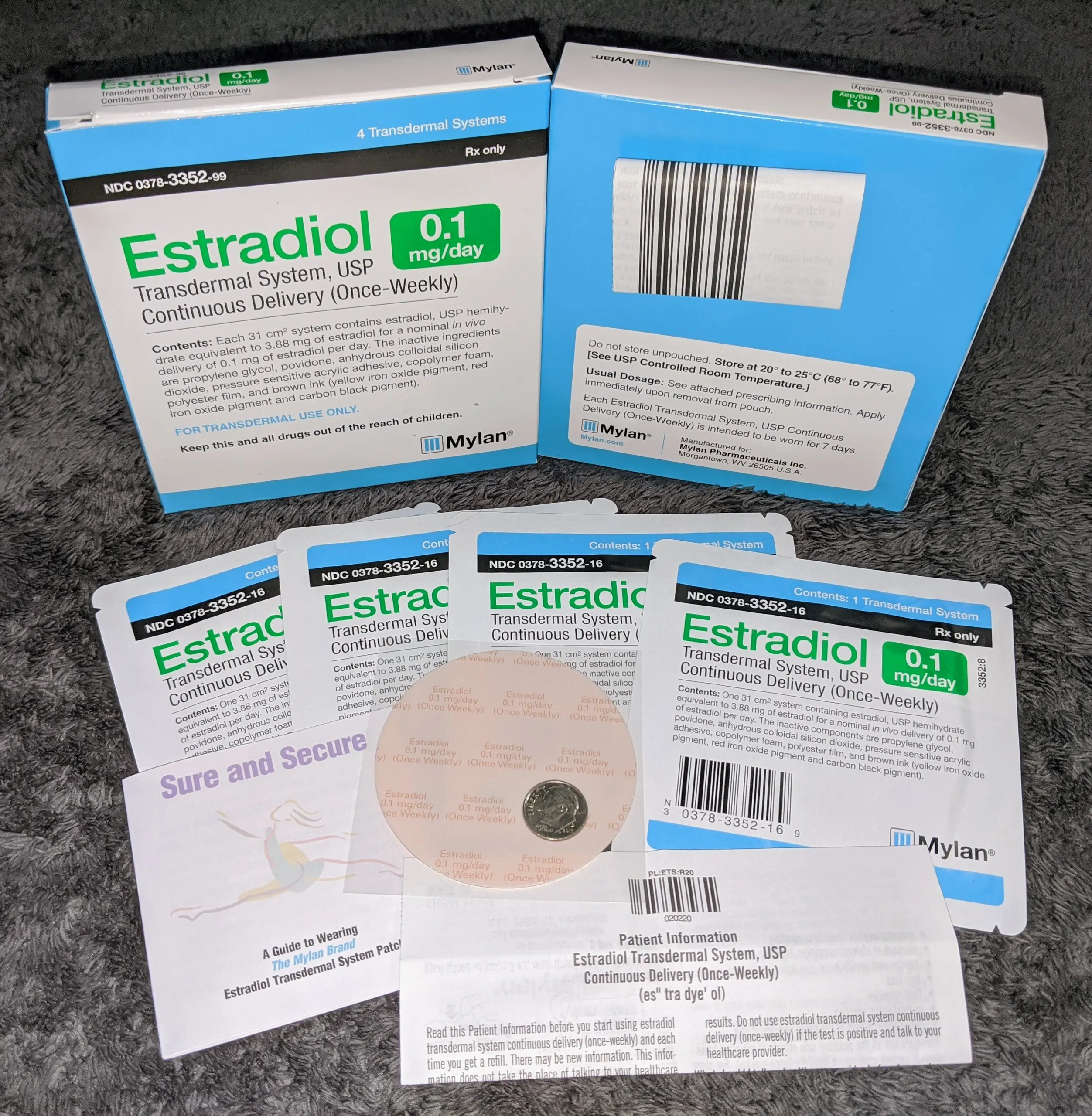
The FDA's patch availability guidance recommends asking a pharmacist to check stock and whether another FDA-approved patch can appropriately substitute for the current product. A prescriber can discuss other treatment options if the usual patch cannot be found.
Availability can differ by brand, strength, location and once-weekly versus twice-weekly formulation. Those differences are reasons to confirm a replacement and its instructions with the pharmacist or prescriber. Do not stop or change medication without speaking with the health care provider.
The October announcement also says the FDA is exploring possible nonprescription vaginal estrogen. Such a switch would still require FDA approval supported by evidence that people can select and use the product safely without professional supervision. It does not make estradiol patches available over the counter.


