A rose-colored rock found in the Sahara in 2022 is Martian crust more than 4.1 billion years old, which puts it among the oldest Martian meteorites ever found, NASA said Thursday. The meteorite weighs nearly 2 pounds (800 grams) and takes its name, Teghaza 001, from the Mali salt plain where it turned up.
A team led by Yang Liu of NASA's Jet Propulsion Laboratory described it in a paper published Thursday in the journal Science. "One of the paper's reviewers called it a Rosetta Stone for Mars," Liu said.
How old, and how scientists know
Roughly 435 meteorites from Mars have been found on Earth. Teghaza 001 is one of the three oldest. The other two are ALH84001, which is similar in age and made almost entirely of a single mineral, and a meteorite nicknamed "Black Beauty" that formed about 2.1 billion years ago.
Researchers at the University of New Mexico first matched the rock's oxygen isotopes to those of other Martian meteorites. Liu's team then found zircon crystals inside it, which geologists use to date rocks precisely. A Caltech group dated single mineral grains on a piece smaller than a fingernail, so most of the rare sample stays intact for later work. The results showed that water on Mars altered the rock around 4.1 billion years ago, so it must have formed before that.
Why this rock is different
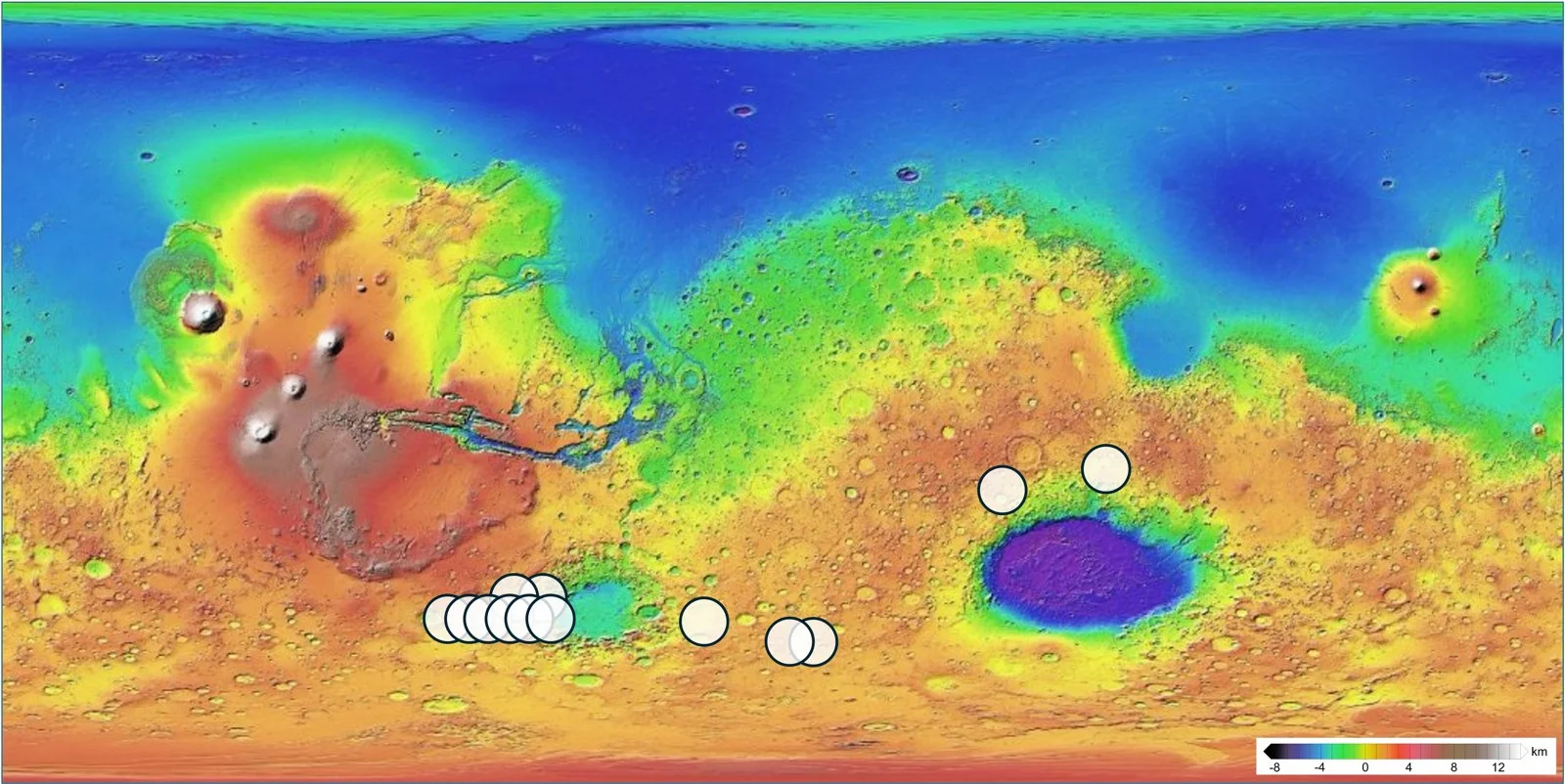
At first Teghaza 001 looked like a shergottite, the most common type of Martian meteorite. Closer study found a combination of igneous minerals recording how the planet's crust cooled from magma and was later changed by water underground. That mineral makeup matches the minerals NASA's Mars Reconnaissance Orbiter has mapped in the cratered southern highlands, and the scientists identified 13 places on Mars where the rock could have come from. Its exact origin will probably never be known.
"This is really our first piece of Martian crust from a part of Mars we've never had a sample of before," said Lee Saper, the paper's second author, now a scientist at NASA's Ames Research Center.
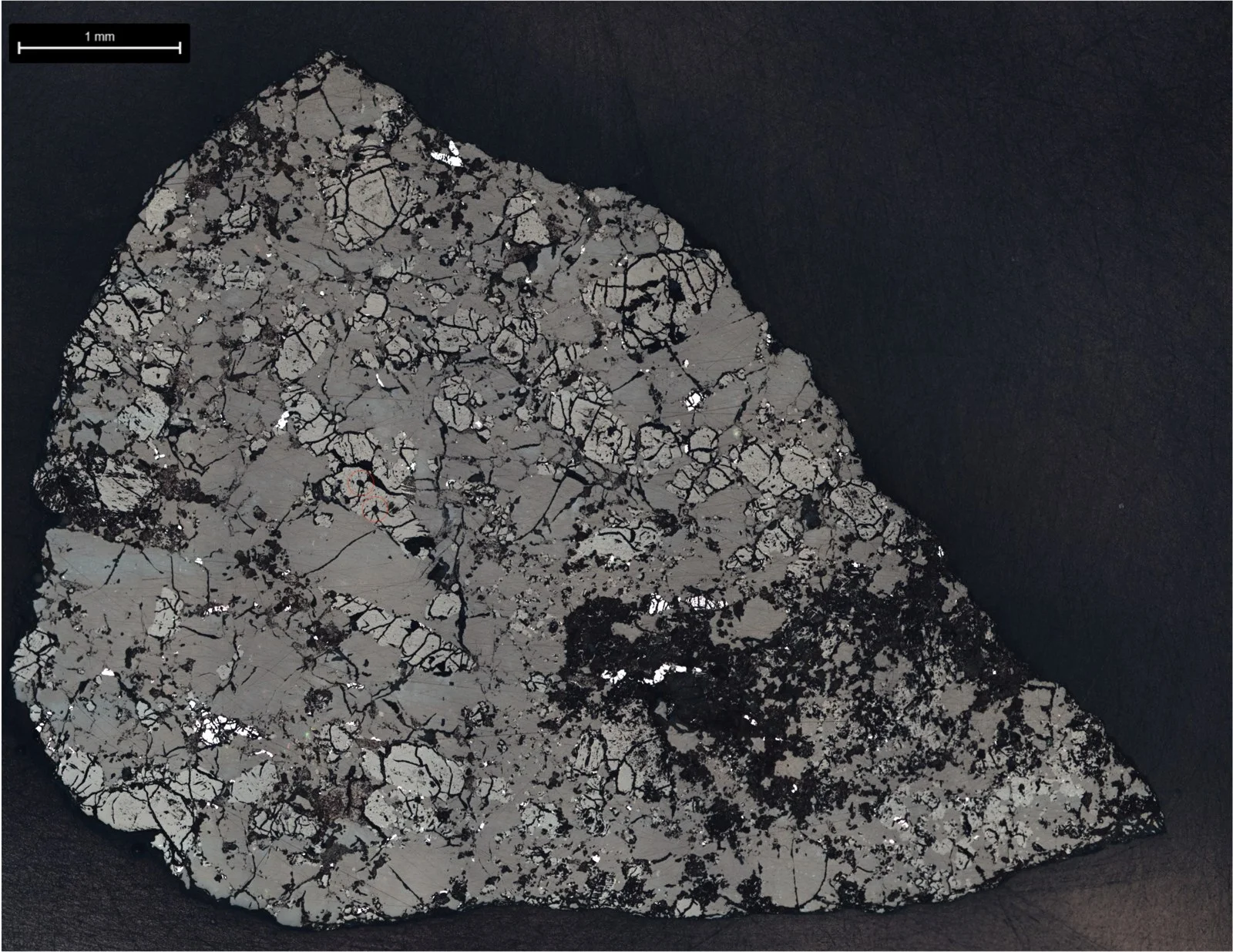
A thin slice of the meteorite, released through NASA's Photojournal, shows iron-titanium oxides as bright grains and pyroxene in medium gray. The darker patches are plagioclase, shocked by the extreme pressure of impacts. One of those impacts launched the rock on its way to Earth.
What comes next
A separate paper in Science Advances in June described the meteorite's water content. Liu's group hopes other scientists will study the rock further, and the Caltech team hopes its dating method can later be used on samples brought back from other planets, moons and asteroids.