People on Medicare can still start home health or hospice care with an approved provider. The federal government is extending a pause on new provider enrollments for six more months, but the decision applies to agencies seeking permission to bill Medicare. It leaves patient eligibility and existing provider enrollments in place.
The Centers for Medicare & Medicaid Services announced the extension on Nov. 12. There is one change from the nationwide freeze that began May 13. Home health agencies and hospices already enrolled in Medicare can add practice locations under their existing enrollments. The freeze still covers first-time provider applications and certain changes in majority ownership that require a new application.
What changes if you already receive care
An agency that was already enrolled can keep serving patients and accept new ones. A home health nurse can continue scheduled visits, and a hospice team can keep following the plan it set with the patient and family. Patients have no new application to file because of the extension. The change is separate from Social Security’s Medicare eligibility notices, which concern individual enrollment.
If an agency tells you it can no longer make visits, ask the referring clinician or discharge planner to help arrange another agency and find out when visits can start. Medicare certification establishes whether an agency participates in the program. Call the agency to confirm it serves your address, has staff for the care ordered and can take the referral on the date you need.
How to start home health care
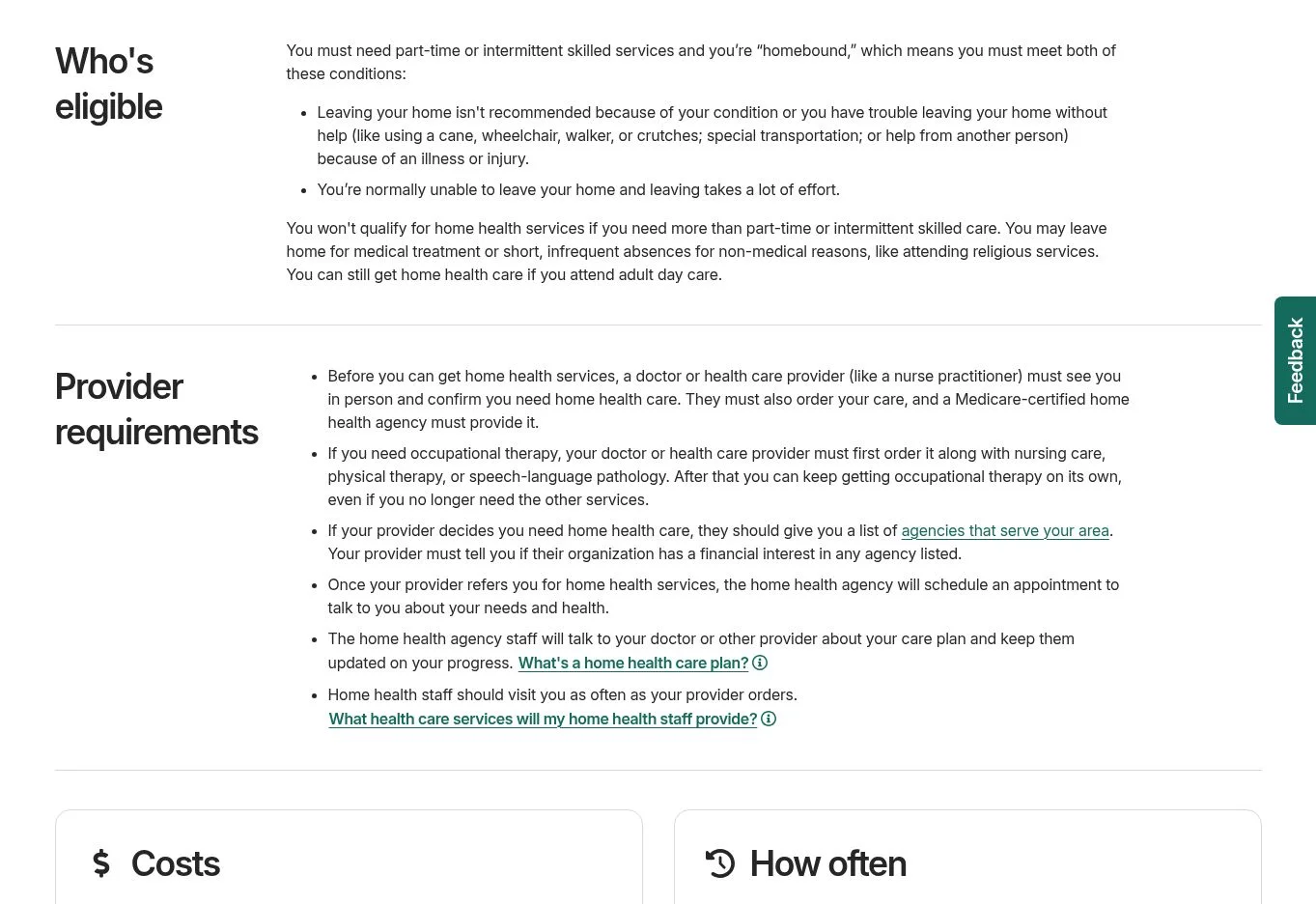
Medicare’s home health benefit is for eligible people who are homebound and need part-time or intermittent skilled care, such as wound care or physical therapy. A doctor or other qualified clinician must evaluate you in person and order the care. A Medicare-certified agency must provide it. Leaving home for medical treatment or an occasional short outing does not automatically disqualify you.
Ask the clinician who orders the care for a list of agencies that serve your area, or search Medicare’s home health directory by ZIP code. Medicare’s short Care Compare video shows how the directory helps people look up local agencies. If you use Medicare Advantage, ask your plan which agencies are in network and whether the visits need prior approval. If you are leaving the hospital, ask the discharge planner which agency accepted the referral and when the first visit is scheduled.
Original Medicare charges nothing for covered home health visits. Covered durable medical equipment, such as a walker, can carry a separate charge of 20% of the Medicare-approved amount after the Part B deductible. If an agency says Medicare will not pay for a service it plans to provide, ask for the written notice explaining why and what you would owe.
How to find a hospice provider
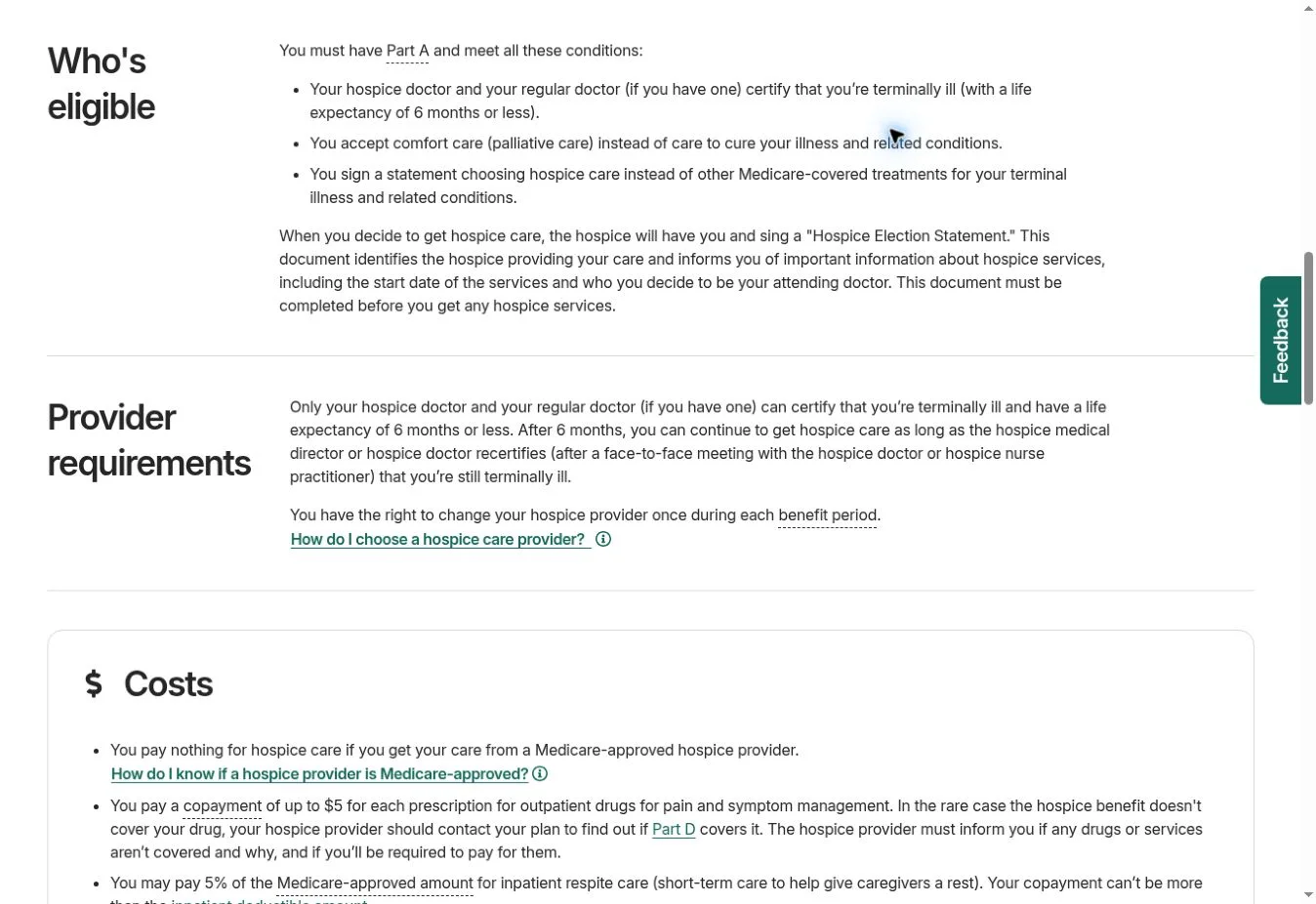
Medicare Part A covers hospice for eligible people whose doctors certify a life expectancy of six months or less. The patient chooses comfort care for the terminal illness and signs an election statement naming the hospice. Original Medicare pays for covered hospice care even if the patient stays enrolled in a Medicare Advantage plan.
Search Medicare’s hospice directory by ZIP code and call to confirm that the hospice serves the home or facility where care will be provided. Ask what the team can arrange after hours and how soon it can start. Medicare allows a patient to change hospice providers once per benefit period, and care can continue beyond six months if the hospice doctor recertifies eligibility.
Covered hospice care generally has no charge. There may be a copayment of up to $5 for each prescription for outpatient drugs used for pain or symptom control, and a separate charge for inpatient respite care. If a patient lives in a nursing home or similar facility, ask about room and board. The hospice benefit usually does not pay that bill.
The new location exception can give an already enrolled provider room to expand, but the announcement does not say which agencies will open a branch or how soon. If you are arranging care now, confirm that a provider can start before relying on a directory listing.