National School Bus Safety Week runs October 19 through 23 in 2026, as listed on the Florida Department of Transportation's campaign calendar. A useful family check starts at the waiting spot, before anyone is hurrying to catch the bus.
Walk the route together and identify the place to stand. NHTSA advises children to arrive at least five minutes early and wait at least ten feet from the curb. Use a visible landmark to make the intended spot easy to recognize.
Rehearse three moments
| Moment | What to practice |
|---|---|
| Waiting | Stand back from the curb; keep play away from the loading area |
| Boarding | Wait for the complete stop, open door and driver's permission; use the handrail |
| Dropping an object | Tell the driver rather than going after it near the bus |
NHTSA also warns children never to walk behind the bus. If crossing in front is necessary, its guidance is to move at least ten feet ahead and make eye contact with the driver before crossing. Ask the school or transport operator about the route's specific arrangements, particularly if construction has changed the usual stop.
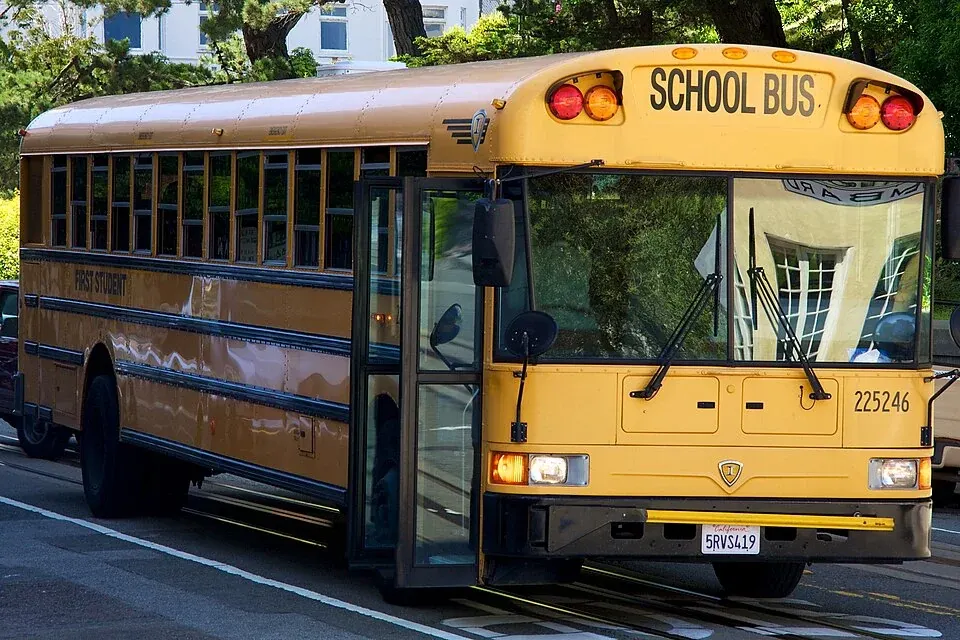
Drivers should notice the area around the bus as well as its lights. Yellow flashing lights signal preparation to stop; slow down and prepare to stop. Red flashing lights and an extended stop arm indicate that children are boarding or leaving.
Check your state's passing rules, including how they apply on divided roads. Do not infer the rule from what the driver ahead chooses to do. Allow enough time on the morning route that a stopped bus does not become a reason to rush around it.
If someone else handles pickup, share the actual waiting location and the transport operator's contact details. A short written instruction is more useful than assuming every adult already knows where the child should stand.