
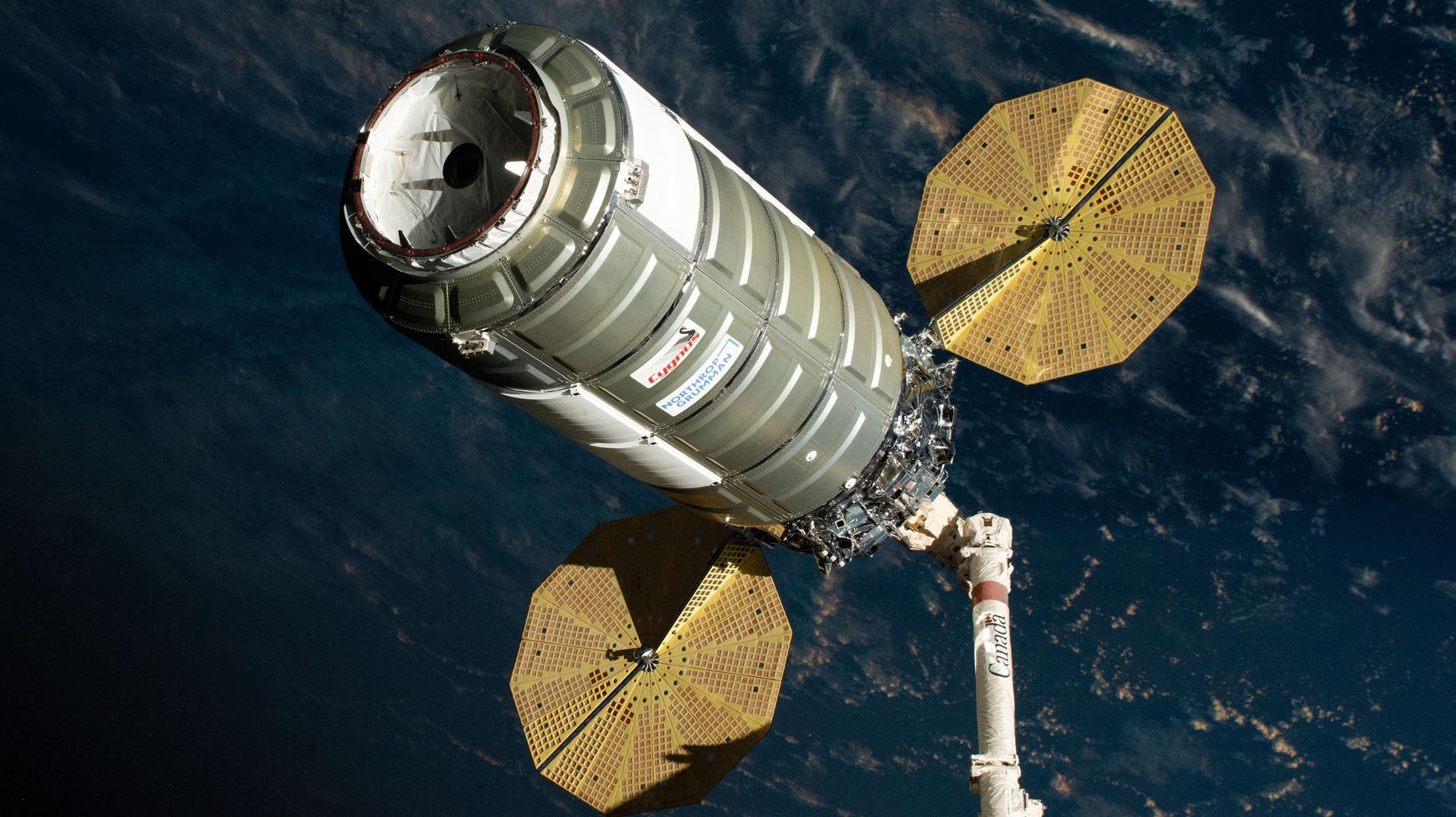
NASA's next space-station cargo flight will carry a growing chamber built to keep producing fresh vegetables through repeated harvests. Called Ohalo III, it will test whether reusable root modules and carefully controlled watering can make a space garden easier to maintain over long missions.
The chamber is part of Northrop Grumman's CRS-25 delivery, targeted for Sunday, Nov. 29. NASA said Saturday that the Cygnus XL spacecraft and its Falcon 9 rocket had reached the launch pad in Florida. The shipment will carry about 11,000 pounds of experiments, supplies and equipment.
For Ohalo III, the flight is a chance to test hardware developed on Earth in the conditions where astronauts would use it. Its water delivery, use of growing space and reliability are still research questions.
Keeping water around the roots
On Earth, a gardener can let excess water drain from a pot. A closed growing system in microgravity has to control the distribution of water, nutrients and gases around the roots. Too much water is a problem as well as too little.
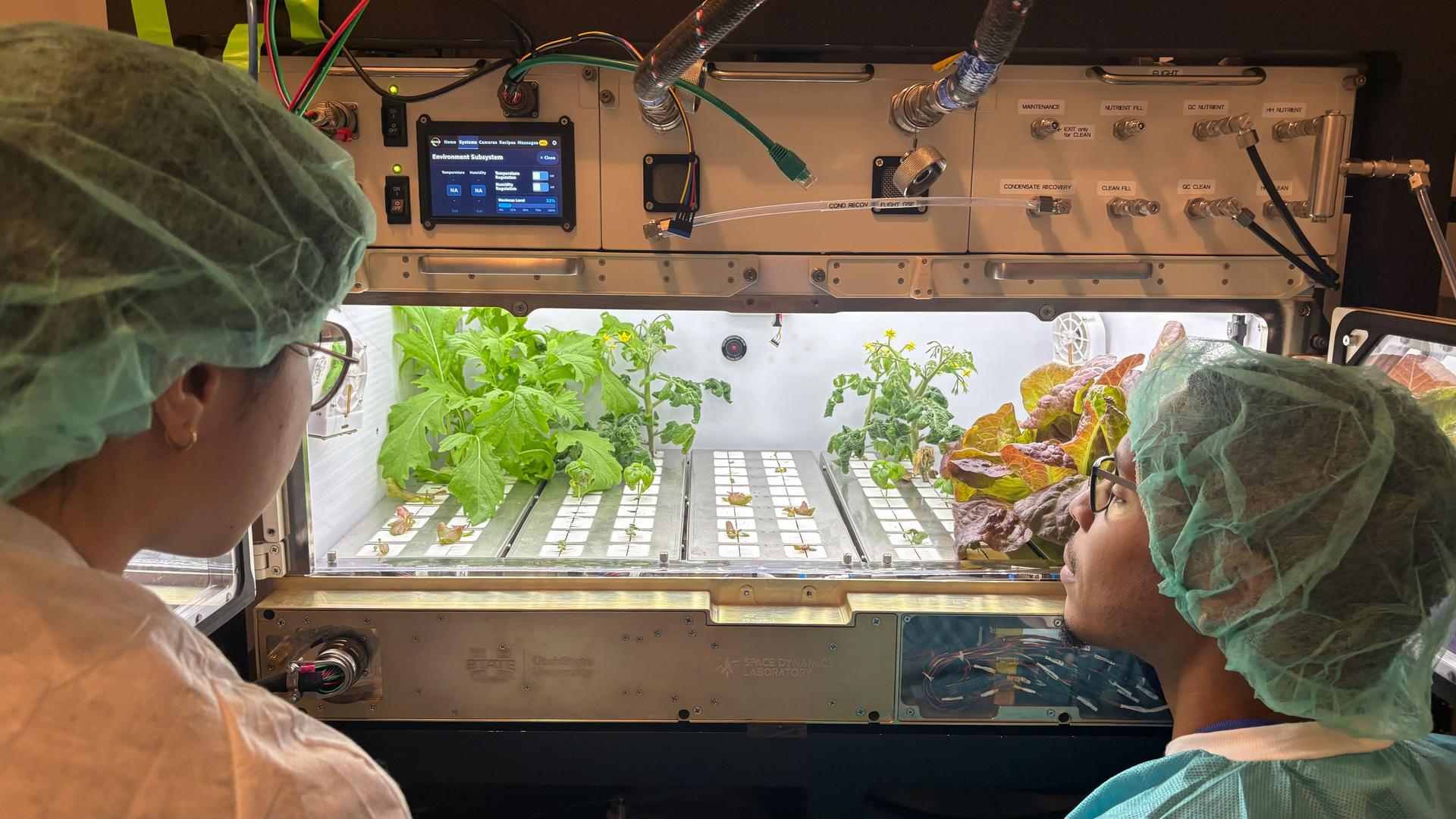
The Utah State University and Space Dynamics Laboratory team designed a stainless-steel rack that holds five planting trays. Each has moisture probes, ceramic watering tubes and electrical and data connections. A sixth tray provides a spare for the modular system.
The design also has to contain the growing material. Loose particles can float around the station, so the team enclosed the root zone while leaving room for plants to emerge and be harvested.
Reusing that root zone is part of the experiment. The researchers want to replant into the same material after harvesting, with precisely supplied fertilizer and water. That would reduce the need to replace the root environment between crops and limit the work astronauts have to do.
What the ground tests showed
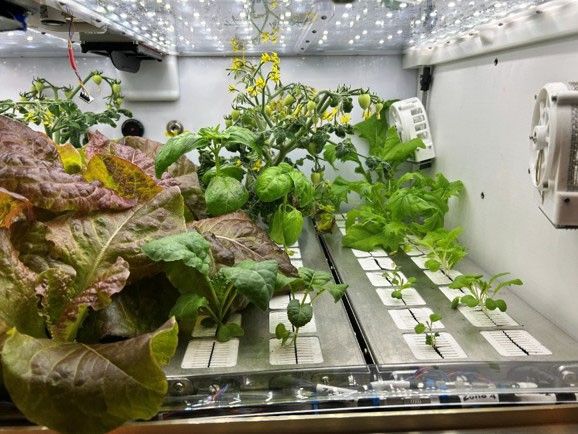
A 2025 research paper's abstract describes five root modules with automated delivery of water and fertilizer, redundant moisture sensors and materials that contain the growing medium. Preliminary Earth-based tests with mizuna, a mustard green, produced more than one kilogram of fresh biomass over 17 days.
The covers used on different modules affected plant establishment, yield and water loss. The results describe ground testing, so they do not establish how much food the system will produce in orbit. The reusable hardware still needs to perform in microgravity.
NASA's Ohalo III investigation description identifies productivity, nutrition, food safety and operational reliability among the questions ahead. Its ground-grown crop mix includes red romaine lettuce, tomatoes, basil and two kinds of mustard greens. Growing several crops together could add variety to a crew's meals.
Building on earlier space gardens
Astronauts have already grown and eaten leafy greens, radishes and peppers aboard the station. NASA's March research overview describes two existing facilities: Veggie, a relatively simple cultivation chamber, and the Advanced Plant Habitat, a more automated facility for plant research.
Those experiments have examined food safety, moisture, lighting, planting and transplanting. Ohalo III builds on that work with reusable root zones that can support growing material or soilless hydroponic approaches.
NASA's near-term aim is to supplement packaged meals with fresh produce that needs little processing. A garden that repeatedly supplies vegetables would also have to meet the crew's needs for nutrition, taste and variety. The agency lists indoor farming and water conservation as possible Earth applications of this work.
When the cargo flight is scheduled
NASA's launch coverage begins Sunday at 10:25 a.m. Eastern, or 7:25 a.m. Pacific. Liftoff is targeted for 10:47 a.m. Eastern, or 7:47 a.m. Pacific, from Cape Canaveral Space Force Station's Space Launch Complex 40. The next available opportunity is Monday at 10:24 a.m. Eastern.
If the mission proceeds on schedule, NASA astronauts Jessica Watkins and Luke Delaney will use Canadarm2 to capture Cygnus on Tuesday, Dec. 1. Ground controllers will then install the spacecraft at the Unity module so the crew can unload its cargo. NASA's published schedule puts capture at 2:35 a.m. Eastern Tuesday, or 11:35 p.m. Pacific Monday.