
Images released Wednesday show a stadium-sized crater across one face of Dimorphos, the asteroid NASA deliberately struck in 2022. The European Space Agency's Hera spacecraft also found the moonlet tumbling chaotically, with hundreds of boulders orbiting around it and its larger companion, Didymos.
The new survey shows a sharply uneven result. The impacted face is flattened, while boulder fields elsewhere show no evidence of major changes compared with DART's photographs.
The orbit changed before the crater could be seen
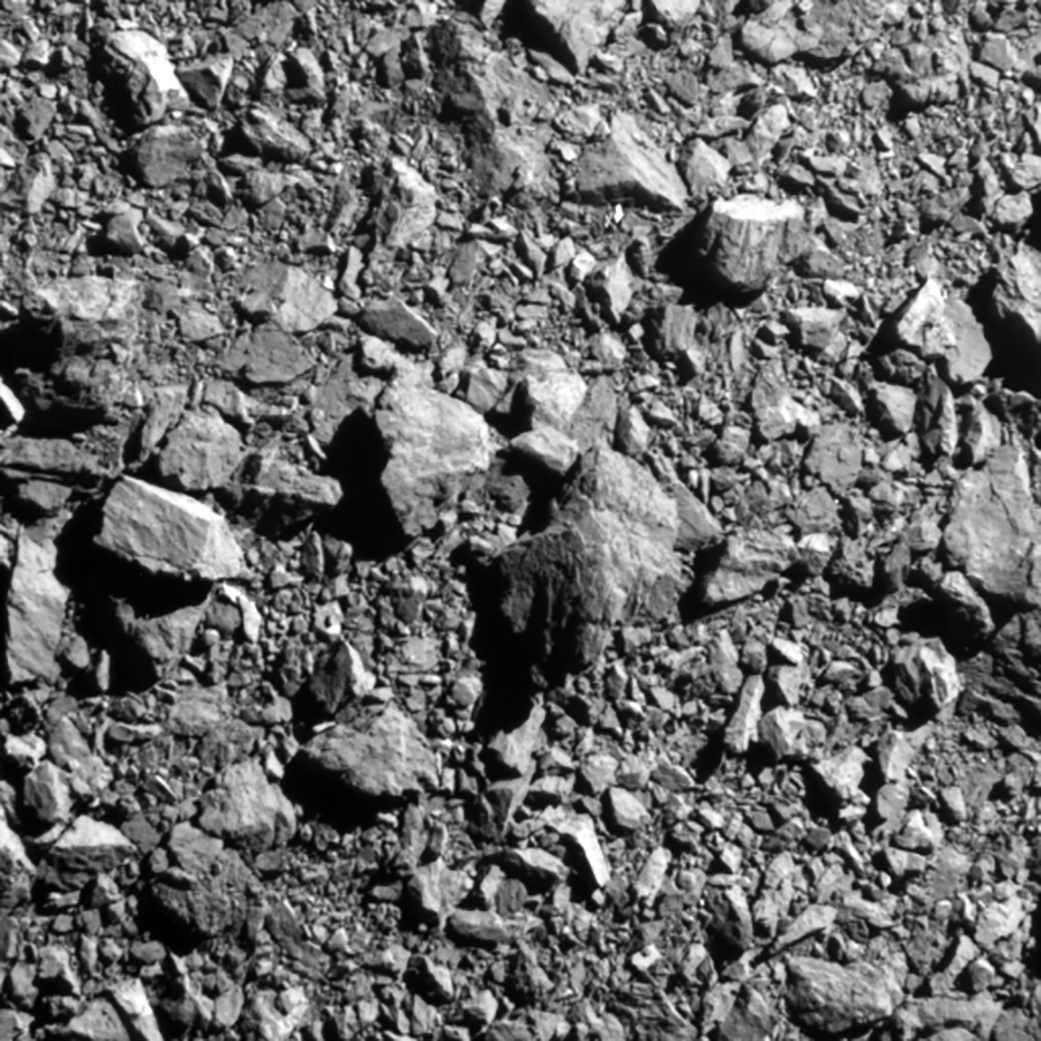
DART, short for Double Asteroid Redirection Test, hit Dimorphos on Sept. 26, 2022. Astronomers then used telescopes on Earth to measure the change in its orbit around Didymos. The collision shortened that trip by 33 minutes from roughly 12 hours, NASA's mission account explains.
The two asteroids form a binary system, orbiting a shared center of mass. Measuring the moonlet’s repeated trips around its companion gave astronomers a way to test whether the impact changed its motion.
NASA had set a minimum success threshold of 73 seconds. The measured change exceeded it by more than 25 times. DART's only onboard instrument, the DRACO camera, helped guide the spacecraft to its target and streamed images during the approach. Its last complete photograph was taken two seconds before impact, from about seven miles away.
Neither asteroid threatens Earth. The pair was selected for a test of technology that could eventually deflect a hazardous asteroid. Wednesday's images reveal the physical damage left by that experiment.
Rock thrown into space added to the push
The spacecraft's impact was only part of the force that moved Dimorphos. Rock and dust launched off its surface carried momentum away, producing recoil that added to the deflection. In its early analysis, NASA estimated that the collision displaced more than two million pounds of material.
Assuming Didymos and Dimorphos have the same density, researchers calculated that the momentum transferred was about 3.6 times what it would have been if the asteroid had absorbed the spacecraft without ejecting debris. The calculation depends on that density assumption.
Understanding that response helps scientists plan a possible future impactor mission. They would need to choose a spacecraft's size and work out how much warning time would allow a small change in course to avert a collision.
Hera is currently observing from about 16 to 19 miles away. ESA plans to move it closer in December and deploy two small spacecraft in January 2027. Juventas will probe the interior with radar, while Milani will study surface materials and surrounding dust.