
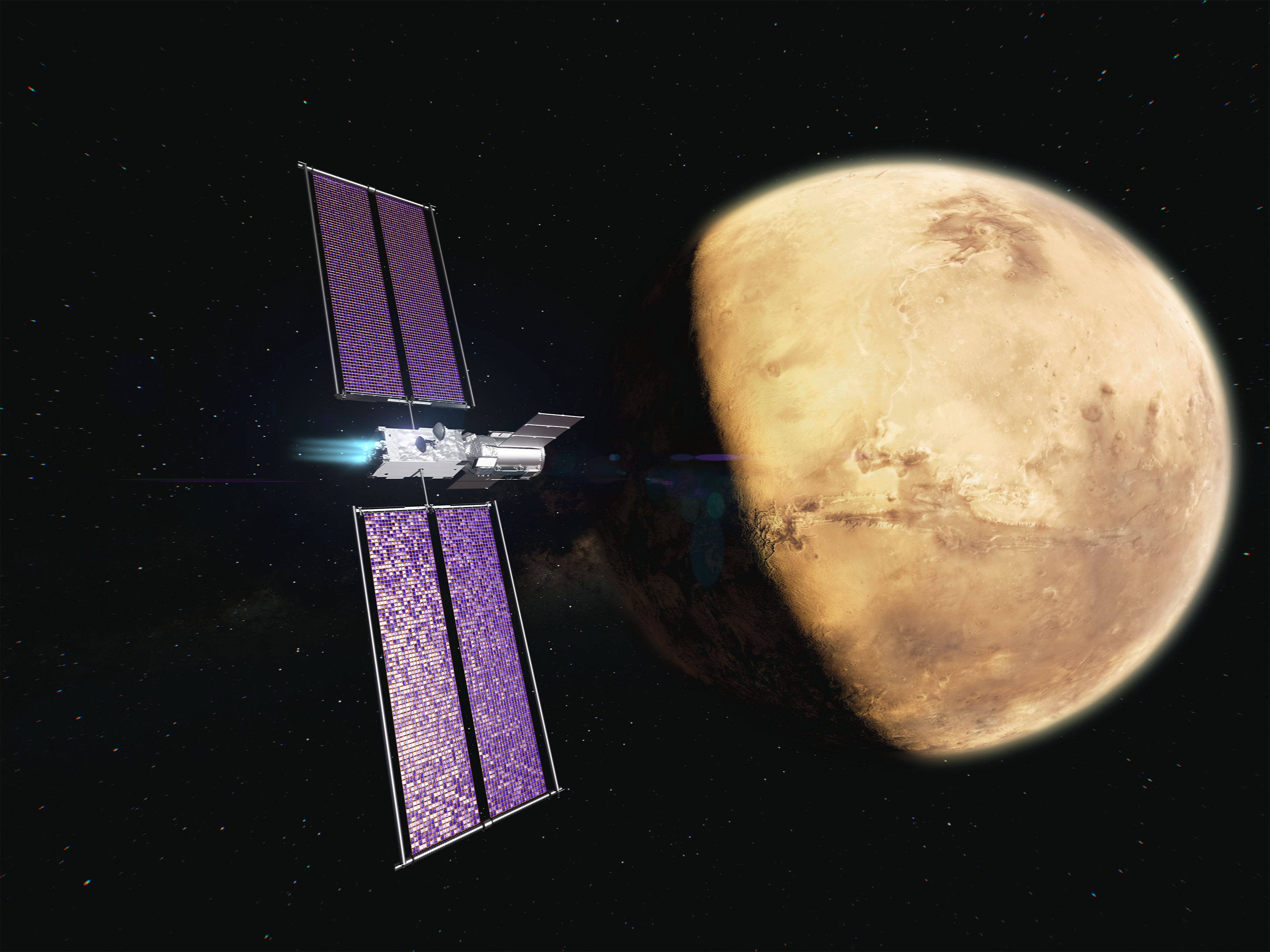
NASA has settled several design choices for Space Reactor-1 Freedom, its planned test of a fission-powered spacecraft bound for Mars. A Nov. 24 mission report describes a shorter reactor boom and larger communications antennas following an October review.
The mission targets a late 2028 launch and will carry SkyFall, a package of three Mars helicopters. Its two jobs are connected: demonstrate reactor-powered electric propulsion in deep space and transport a science payload that can scout the planet from the air.
What the new design settles
Improved shielding will let the reactor sit closer to the spacecraft's main body. NASA expects the shorter boom to reduce weight and simplify assembly. Larger X-band dishes will transmit data home from Mars.
Several consequential choices remain open. Engineers are still evaluating reactor output, radiator panel count and operating duration.
The planned sequence starts the reactor after departure from Earth orbit, shuts it down after an initial operating period, and uses solar arrays during the cruise. A reactor restart follows delivery of SkyFall to Martian orbit. That sequence will provide performance data from separate periods of operation.
How reactor power becomes thrust

The reactor supplies heat. A power conversion system turns that heat into electricity, which powers electric propulsion. NASA's October module report identifies Idaho National Laboratory as the reactor developer and Sierra Lobo as the supplier of the closed Brayton cycle conversion system.
Electric thrusters then use electricity to charge gas and accelerate it out of the spacecraft. The Australian Nuclear Science and Technology Organisation's technical explanation describes xenon and krypton as propellants for this type of engine. The thrust is low, but can continue over long periods.
Nuclear thermal propulsion uses a different path: a reactor heats propellant directly before the gas exits a nozzle. SR-1 is an electric propulsion demonstration.
NASA's vehicle overview lists Advanced Electric Propulsion System Hall thrusters and solar arrays among SR-1's components. Solar and nuclear power are both part of its design. The demonstration will test the reactor system's operation beyond Earth orbit.
What is different from Voyager
Radioactive material has supplied spacecraft electricity for decades. The twin Voyagers use radioisotope thermoelectric generators, described in NASA's spacecraft documentation. Plutonium-238 decay releases heat, which the generators convert to electricity.
SR-1 would use a fission reactor. Its proposed distinction is demonstrating reactor-powered electric propulsion beyond Earth orbit. Calling it the first spacecraft with any nuclear power would overlook earlier missions.
The Energy Department's July 23 announcement made a conditional commitment to provide high-assay low-enriched uranium for SR-1. DOE said the next step would be contracting to allocate the material.
HALEU contains more than 5% and less than 20% uranium-235, the isotope that sustains the chain reaction. Conventional U.S. power reactors generally use fuel enriched up to 5%. Higher enrichment allows advanced reactors to produce more power in a smaller volume, one reason fuel supply is part of developing compact reactor designs.
What the helicopters will investigate

SkyFall's science plan calls for three aircraft evolved from Ingenuity, carrying cameras, ground-penetrating radar and environmental instruments. Their measurements are intended to examine geology, weather and possible buried ice.
The radar is designed to investigate roughly the upper 10 feet of the surface. Combining those readings with images could help researchers distinguish subsurface layers and characterize ice if they detect it. Ice detection could also help explain the history of the Martian climate.
The helicopters are designed to separate during atmospheric descent and land independently. Each aircraft is planned to weigh about 6 pounds and stand roughly 27 inches tall. They will send findings to Mars-orbiting spacecraft independently, without requiring the rover relay that Ingenuity used. Their landing site remains undetermined. SkyFall's current schedule places the landing after a second Mars approach in fall 2030, following the initial 2029 flyby.