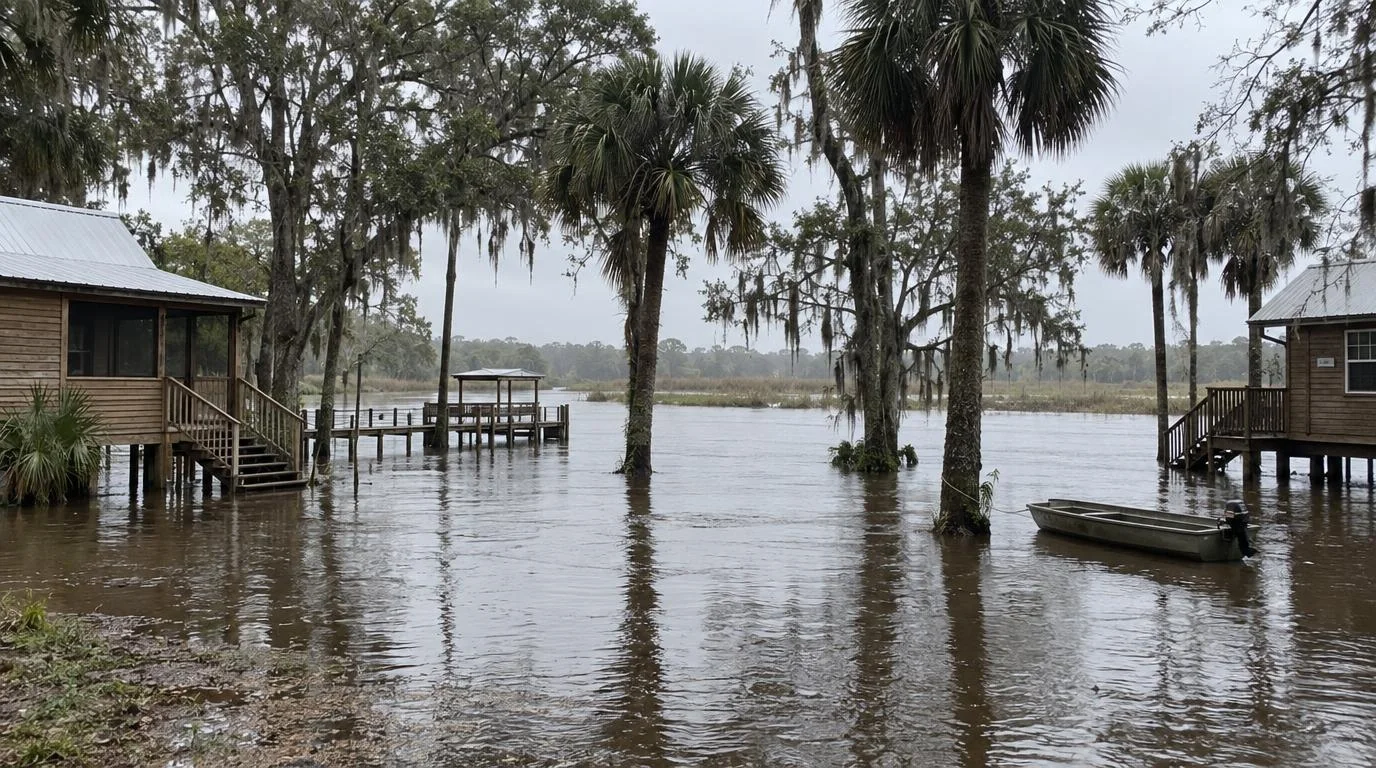
Polish prosecutors said Sunday that debris recovered at all three sites from Friday's airspace incursion came from Russian Kh-101 cruise missiles, changing an earlier account that one object was probably a jet-powered drone.
The Nov. 22 statement from prosecutors in Lublin describes preliminary findings made with military weapons specialists. It identifies Kh-101 remains at Nowy Lipowiec, Rudnik and Mołodycz. Investigators also provisionally traced all three missiles to production during the fourth quarter of 2026 at facilities in Dubna, in Russia's Moscow region.
The statement does not give a final account of how they entered Polish airspace. The recovered fragments and other forensic evidence will undergo further examination by experts.
What changed from Saturday's account
A Nov. 21 statement from Poland's presidential office identified the Nowy Lipowiec object as a Kh-101. It described the Rudnik object as another missile and the Mołodycz object as most likely a jet-powered drone.
The presidential office said President Karol Nawrocki remained in contact with NATO Secretary-General Mark Rutte after the incursion. Its account listed cooperation between Poland's National Security Bureau, Defense Ministry, armed forces' operational command, government security center and police.
Sunday's prosecutor statement replaces that provisional drone classification with a missile identification at Mołodycz. It does not announce a new U.S. deployment or a NATO collective-defense decision.
The existing U.S. role in Poland
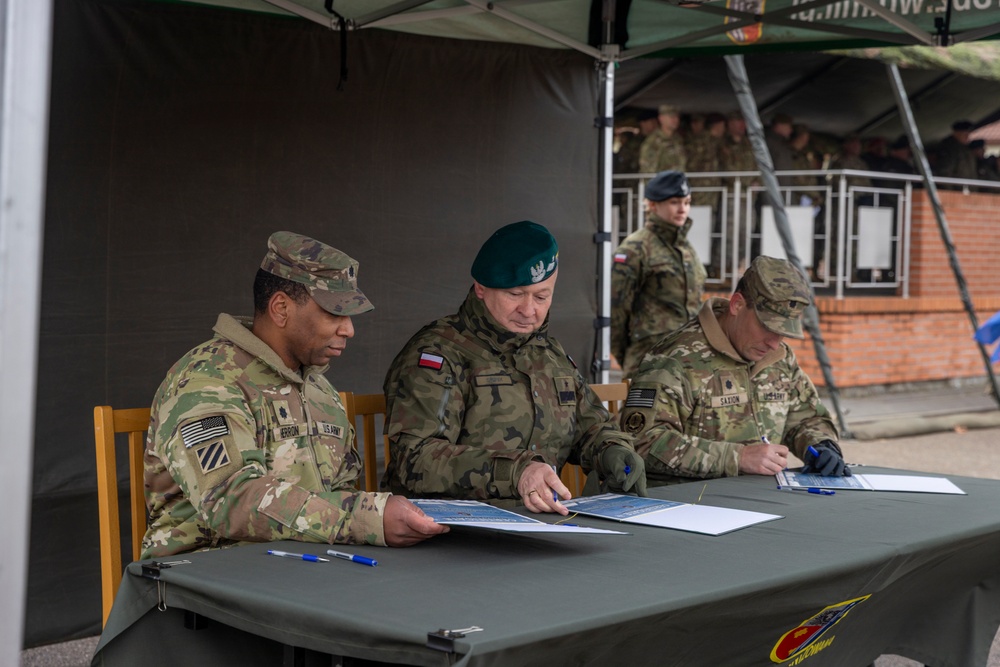
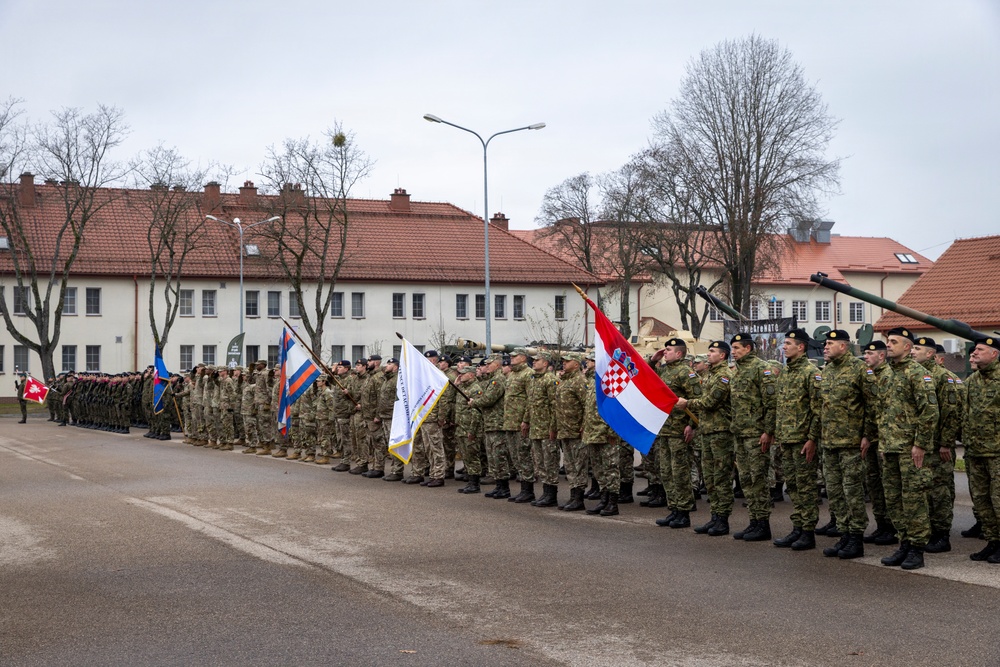
American troops already lead a multinational NATO battlegroup in Poland. A U.S. Army report published Nov. 14 documents a Nov. 12 command transfer at Bemowo Piskie Training Area, with Lt. Col. Jeremy Herron taking command.
The Army says the battlegroup has been stationed at that training area since 2017. American, British, Romanian and Croatian soldiers serve in the formation. That existing presence predates the missile incident and should not be read as a newly ordered response.
Under NATO's founding treaty, Article 4 provides for consultations when a member considers its territory or security threatened. Article 5 concerns an armed attack and commits each member to assistance through the action it considers necessary, including armed force.
NATO's Article 5 explanation says whether an incident amounts to an armed attack requires a case-by-case assessment. Collective action also requires the attacked member's request or consent. Consultations under Article 4 neither require consideration of Article 5 nor serve as a prerequisite for action under it.
Prosecutors said site work at Nowy Lipowiec and Rudnik was complete. At Mołodycz, terrain and darkness interrupted the inspection; the site will remain secured overnight, with work scheduled to resume Monday morning, Nov. 23.