Workers on H-1B and several other US work visas can still have up to 60 days to make plans after a job ends. The Department of Homeland Security wants to remove that grace period. Public comments on the proposed rule close before midnight Eastern on Tuesday, Nov. 10, which is 9 p.m. Pacific. The deadline is for public feedback. The current rule remains in effect.
The proposal covers people in E-1, E-2, E-3, H-1B, H-1B1, L-1, O-1 and TN status, as well as their dependents. For a household whose permission to stay rests on one person's job, the question is how much time the family would have to arrange new sponsorship, pursue another lawful status or prepare to leave. DHS first published the proposal on Sept. 11.
How to comment before the deadline
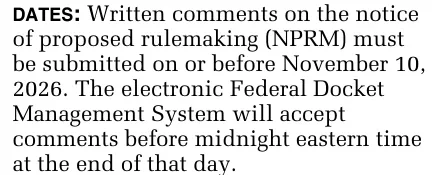
Open the proposal on Regulations.gov, look for docket USCIS-2026-0364, and follow the site's instructions to comment. DHS asks for submissions in English or with an English translation. Its notice says comments sent directly to agency staff by email or letter will not be considered part of the rulemaking.
The notice asks commenters to identify the part of the proposal they are addressing and explain what they would change. Workers and employers can describe how much time it takes to move from a last day of work to a new employer filing, or what a shorter window could mean for a spouse or child. The notice says submissions may be made public, so leave out passport numbers, immigration receipt numbers and other identifying details you would not want published.
How the grace period works today
Under the current regulation(2)), an eligible worker and dependents can be treated as maintaining status after qualifying employment ends, solely for purposes of the employment ending. The maximum is 60 consecutive calendar days or the remainder of the authorized validity period, whichever is shorter. DHS can shorten the period or decline to grant it. The provision applies once per authorized validity period.
For example, a worker with only three weeks left in an authorized validity period would not get an extra 60 days from this provision. Conversely, a longer validity period does not turn the 60-day maximum into a guarantee. A person relying on it should confirm the date their employment ended and the end date of the authorized period, especially before making travel or filing decisions.
The window itself does not grant permission to work. USCIS guidance explains that eligible H-1B workers may be able to start with a new employer when that employer properly files a qualifying petition. Other visa categories and filing routes have different requirements. The agency also lists potential paths such as applying to change status when eligible. Filing a public comment does not extend anyone's status or change an individual filing deadline.
What DHS would remove
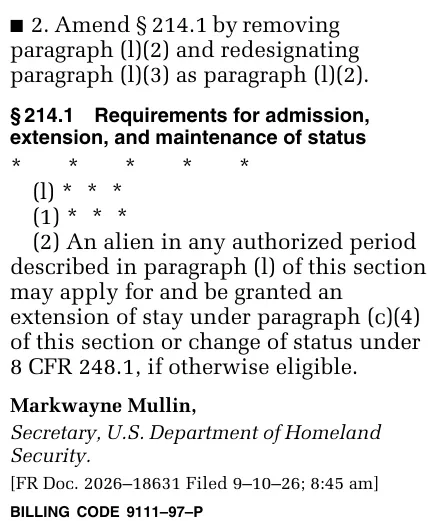
The proposal would delete the paragraph that provides the discretionary grace period after employment ends. DHS argues that a person's status in these classifications should remain tied to the work or activity on which it was granted. The American Immigration Lawyers Association and the American Immigration Council submitted a joint comment opposing the change.
For someone between jobs, the practical difference would be losing this specific period to arrange a next step after employment stops. Someone who already has a separate basis to stay would still need to assess that basis under its own rules. The text does not establish a replacement job-search window for the covered categories.
What happens after Nov. 10
Closing the docket's comment period does not change the regulation. DHS can review submissions, revise or withdraw the proposal, or publish a final rule. If it publishes one, the final text and its effective date will determine when any change applies. For someone whose job has already ended, the immediate questions are the dates and options under the rules in force now.