A Russian man who crossed into the United States illegally this summer spent months watching employees of a Palo Alto technology and defense company, photographing their laptop screens and looking up where they lived, federal prosecutors say. One day in September he followed a woman from the company for nearly 30 miles, until she called 911.
A federal grand jury in Northern California has indicted Igor D'iu on four counts, including acting as an agent of the Russian government without notifying the attorney general, the Justice Department announced Wednesday, Nov. 18. He has been in federal custody since his first court appearance on Nov. 2.
Prosecutors did not name the company. They describe it as a large technology and defense firm that has a Palo Alto office and supplies weapons used against Russian forces in Ukraine. The allegations come from the indictment and an FBI affidavit, and D'iu has not been convicted of any crime.
How prosecutors say he was recruited

According to the affidavit, handlers recruited D'iu over Telegram and kept directing him through the app. They told him the work was for "the Motherland." In June he flew from Istanbul to Mexico City, where the handlers put him in touch with someone who helped him cross the border.
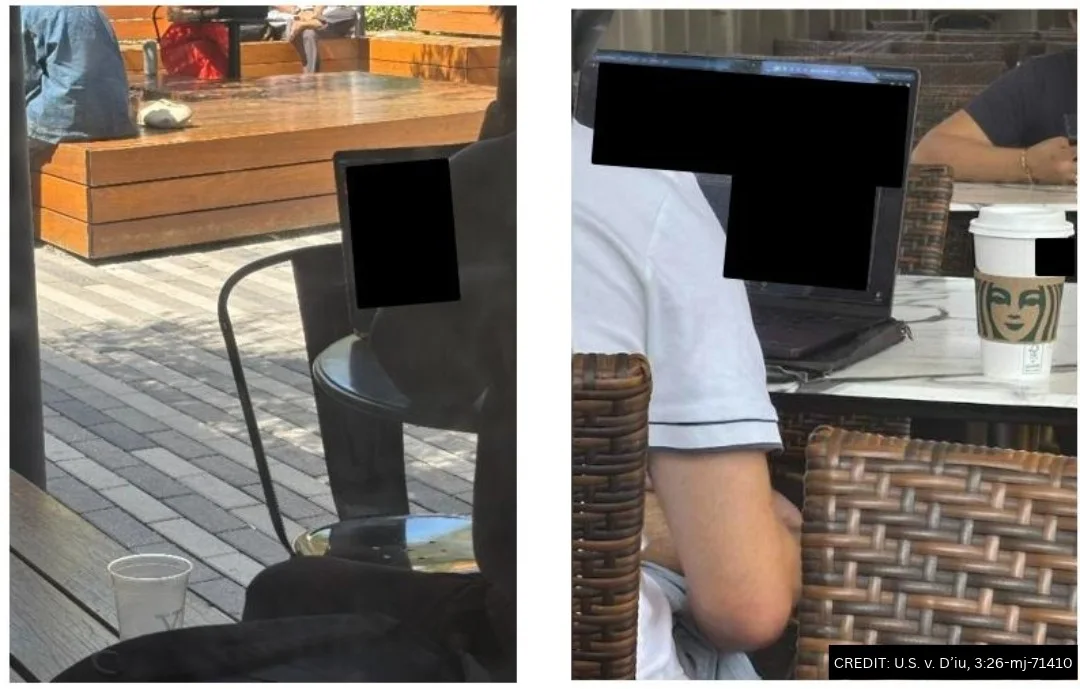
Once he was in the country, the handlers had him buy laptops, phones, wireless networking gear and remote access software. The first assignments kept him at a coffee shop by the company's office in Palo Alto, where he was told to spot employees and photograph their screens while they worked. He was also told to leave his laptop at set spots near the company so the handlers could connect to it remotely and try to pull information from employees' devices nearby.
The Sept. 3 pursuit
The assignments grew to include employees' homes. D'iu searched online for several home addresses, prosecutors say, including a senior executive's.
On or about Sept. 3, he trailed a woman who works for the company as she headed from work in Palo Alto toward San Francisco. She took back roads and made irregular turns, then pulled into a grocery store parking lot to shake him. He matched her U-turns, made illegal left turns to keep up and went through a red light, the affidavit says. She called 911 and was told to head for the Mission Station of the San Francisco Police Department. D'iu gave up after she reached a police officer. Investigators say they found evidence that he had followed other employees in the days before.
When Palo Alto police contacted him about that day, D'iu switched cars and phone numbers. His handlers then sent him to Reno, Nevada, according to the affidavit, but he later came back to the Bay Area to keep working.
A forged passport and a notebook of addresses
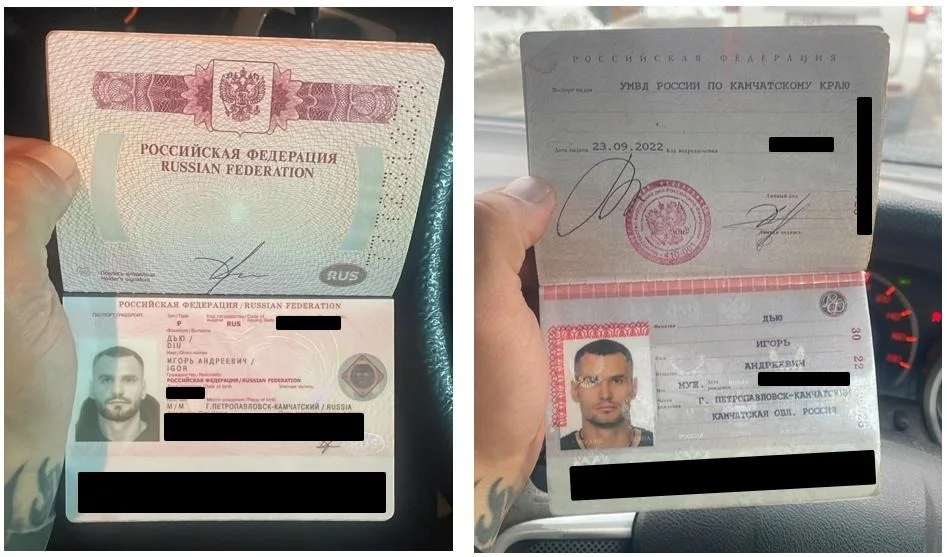
Investigators intercepted two international packages with identity documents hidden inside: a fake California ID card, a Social Security card and a U.S. passport in the name "Hugo Landry Johns." The passport was genuine, issued to someone elsewhere in the country, then altered to carry D'iu's photo and the new name, prosecutors say.
FBI agents searched D'iu and his East Palo Alto home in October. They seized two Russian passports, two iPhones, two laptops, wireless networking equipment and about $18,000 in cash. They also found a notebook with 10 handwritten addresses, several of them employees' homes, and detailed write-ups on at least three employees. Those write-ups listed relatives' names and education and work histories, along with notes on each person's strengths and weaknesses.
The charges and possible prison time
| Charge | Maximum penalty per count |
|---|---|
| Conspiracy to act as an agent of a foreign government | 5 years, $250,000 fine |
| Acting as an agent of a foreign government without notice to the attorney general | 10 years, $250,000 fine |
| Interstate stalking | 5 years, $250,000 fine |
| Fraud in connection with identification documents | 1 year, $100,000 fine |
The agent charge comes from a federal law that makes it a crime for anyone other than a diplomat or consular official to act in the United States as an agent of a foreign government without first notifying the attorney general. The statute does not mention classified information, so the charge does not depend on showing that secrets changed hands. Any sentence would be set by a judge under the federal sentencing guidelines.
"Russia may rely on covert operatives and criminal intermediaries as it attempts to gain an edge in its war against Ukraine, but those tactics do not place its government or its collaborators beyond the reach of the law," said Roman Rozhavsky, assistant director of the FBI's Counterintelligence and Espionage Division.
A busy year for counterintelligence cases
The indictment came the same day FBI Deputy Director Christopher Raia testified at the House Homeland Security Committee's worldwide threats hearing. The bureau's written testimony counts 101 counterintelligence arrests in fiscal 2026, up 26% from the year before, and says 40 of the more than 167 counterintelligence and espionage arrests under Director Kash Patel were tied to Russia. Edit USA covered that hearing earlier Wednesday.
What happens next
D'iu's next court date is Nov. 24. The Justice Department release does not name a defense lawyer or include any response from him. Edit USA will update this report if the court record adds new details.