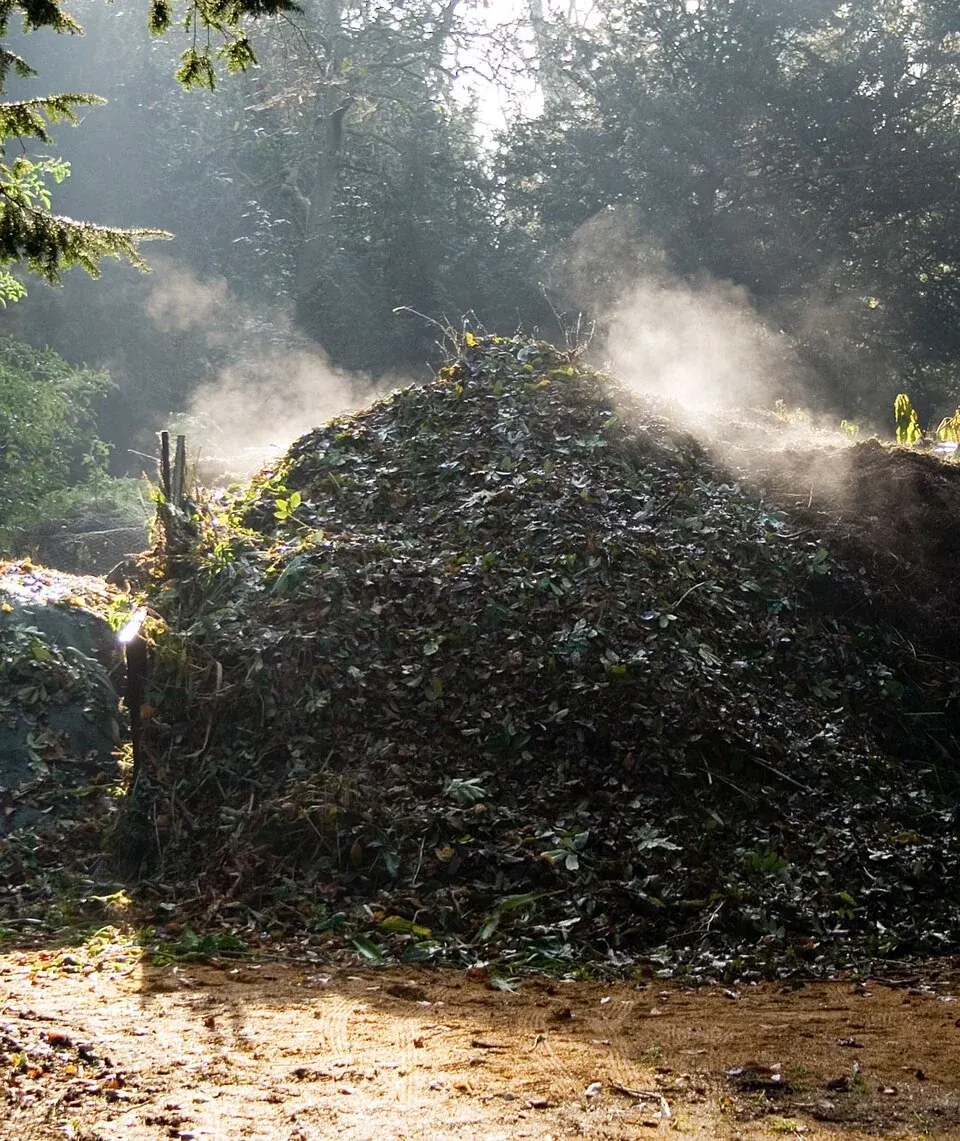
If dry leaves are accumulating where you live, save some beside the compost bin rather than putting every bag at the curb. They can supply the carbon-rich material needed when food scraps arrive long after leaf season ends.
The EPA's home-composting guide describes a mix of browns, greens, air and water. Dry leaves count as browns. Fruit and vegetable scraps and coffee grounds are greens, regardless of their actual color.
Start with the space and the local rules
Choose a location you can reach regularly and check local rules about backyard composting. If your available space cannot accommodate a pile, look for a community drop-off or municipal organics service. Read its acceptance list: a commercial collection program and a home pile may take different materials.
The New York Department of Environmental Conservation explains backyard composting alongside other home methods. Use the method that fits the space and the amount you can manage, rather than buying the largest bin first.
Keep a reserve of leaves
Put a supply of suitable dry leaves somewhere you can draw from when adding scraps. Cut or break up bulky material to make mixing easier. If the reserve gets wet and matted, loosen it before using it; a compressed layer can be difficult to mix through a small bin.
EPA recommends adding at least two to three times the volume of browns as greens. Think in containers to keep the process simple: one bucket of suitable scraps needs several comparable buckets of dry material, with adjustments for how the pile behaves. That is a starting mixture by volume, not a laboratory measurement of carbon and nitrogen.
Sort materials at the kitchen container
| Material | Ordinary backyard decision |
|---|---|
| Dry leaves | Useful brown material |
| Fruit and vegetable scraps | Add as greens and cover with browns |
| Coffee grounds | Count as greens |
| Meat, dairy, bones and fats | Keep out of an ordinary backyard pile |
| Compostable bags or dishes | Do not assume home-pile compatibility |
| Plastic or coated packaging | Keep out |
Keep a short acceptance list beside the scraps container so another household member can use the system correctly. If a packaged item has several layers, separate them rather than putting the whole thing in because one label says compostable.
Check moisture and air before adding more
Oregon Metro's guidance describes the same four ingredients and explains that the pile needs moisture and air as well as a balanced material mix. Follow the chosen method's turning instructions and avoid packing fresh scraps into one dense pocket.
If material smells unpleasant, inspect the mix, moisture and airflow before treating more food as the solution. Add suitable dry material and mix as the guidance directs. If the pile is dry, adjust the moisture rather than expecting the leaves to break down quickly without water.
Keep leaves available through the season instead of using the whole reserve at once. When the pile slows down, check its mix and moisture throughout, since the top layer alone may not show the problem.
Distinguish a finished batch from a leaf reserve
Keep the saved dry leaves separate from compost you intend to use soon. Adding fresh scraps continuously makes it harder to identify a finished portion. EPA describes finished compost as dark and crumbly, with an earthy smell and no recognizable food scraps. Use those signs together with the method's instructions; a calendar date alone does not establish that a pile is ready.
Label a container of finished material and leave unfinished pieces in the active system. That gives a small household a way to use one batch while keeping leaves available for the next.