Lake Powell rose more than 20 feet between late September and Nov. 7 as storms sent runoff into the Colorado River reservoir on the Arizona-Utah border. The increase added about 1.2 million acre-feet of water to storage, according to Bureau of Reclamation measurements. Even after that gain, the lake was about 161 feet below full pool.
The rise gives dam operators more water to work with heading into winter. How much of that cushion lasts through next summer will depend on how much water flows into the lake, how much goes downstream through Glen Canyon Dam and how much is lost to evaporation. Federal operating guidelines for this water year still call for protecting dam infrastructure at low elevations.
How much water Lake Powell gained
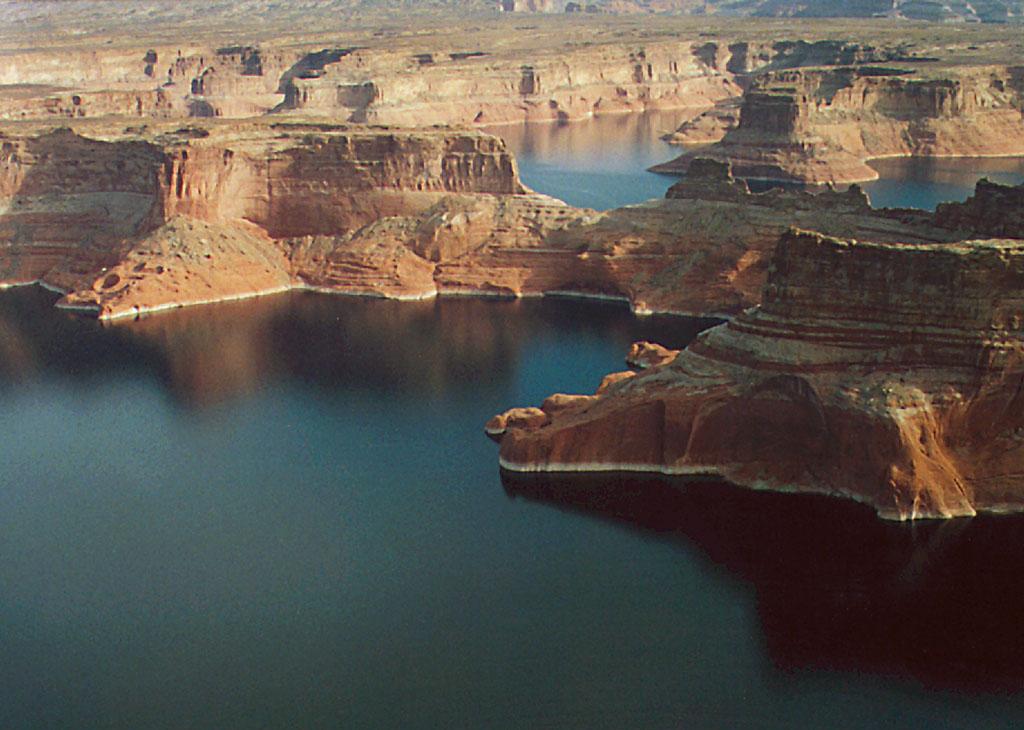
On Sept. 27, Reclamation measured the reservoir surface at 3,517.64 feet above sea level and its storage at 5.13 million acre-feet. By Nov. 7, it measured 3,538.56 feet and 6.36 million acre-feet. The difference was 20.92 feet in elevation and 1.23 million acre-feet in storage, a gain of about 24% from the September reading.
An acre-foot is enough to cover one acre with a foot of water. Lake elevation measures the height of the water surface. Storage measures how much water the reservoir holds. Those two measures do not rise in lockstep because the canyon walls spread farther apart in some places than in others. The reported storage figure captures the volume gained without assuming that every foot of rise represents the same amount of water.
The daily figures also show how unevenly the water arrived. On Oct. 22, estimated inflow was about 63,400 cubic feet per second, almost 10 times the release through the dam. By Oct. 31 inflow had slowed to about 13,700 cubic feet per second before picking up again in early November. The late-October and early-November storms also flooded communities upstream. Climatologist Martin Hoerling said the gain in lake elevation from the storms exceeded the rise from this year's snowmelt.
What the rise means for dam operations

Lake Powell sits upstream of Lake Mead. Water released through Glen Canyon Dam runs through the Grand Canyon toward Mead, where storage also matters for downstream water deliveries. The fall runoff increased the water already behind Glen Canyon Dam. The release schedule is a separate decision guided by federal operating rules and updated forecasts.
The Bureau of Reclamation’s October operating outlook put expected Glen Canyon Dam releases for water year 2027 between 6 million and 7 million acre-feet under the rules for protecting infrastructure at low lake levels. The roughly 1.2 million acre-feet gained since Sept. 27 is about one-fifth of the low end of that annual range. That comparison gives the storm runoff a scale, although the annual release also depends on water that enters the reservoir during the rest of the year.
The Interior Department’s decision documents lay out two years of operating guidelines within a 10-year framework. The department said it adopted the two-year approach after basin states and other parties did not reach consensus on long-term operations. The framework governs how the two reservoirs are operated together, so a rise at Powell does not by itself set next year's releases or establish new downstream allocations.
What to watch this winter
Reclamation's October outlook, issued before the most recent storms, showed how much the forecast can move. Its modeled end-of-water-year elevation ranged from about 3,497 feet under the dry scenario to about 3,606 feet under the wet one. The agency updates its operating studies as conditions change. The next comparison to watch is whether updated forecasts carry the fall gain through spring or show the reservoir giving up part of it before snowmelt arrives.