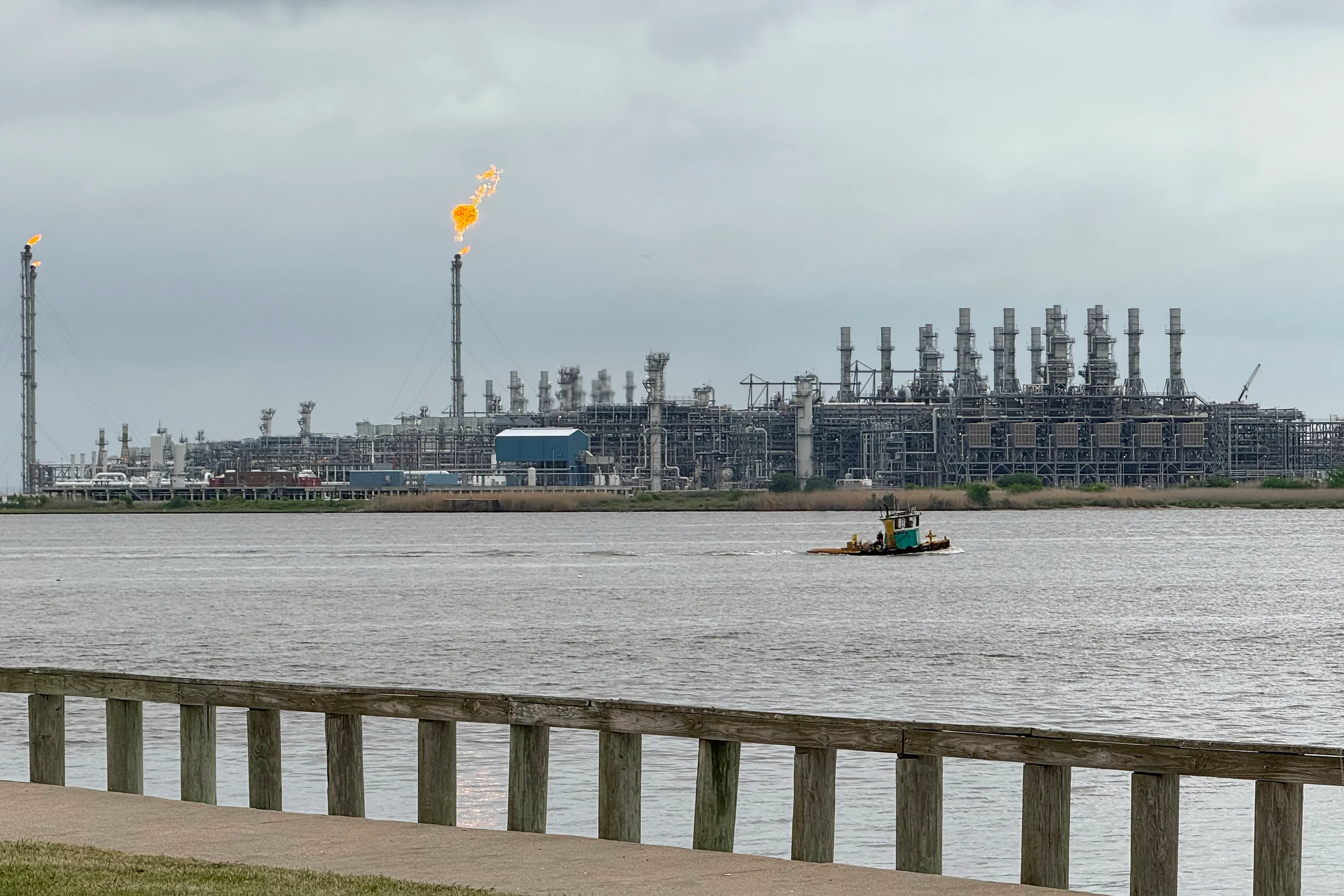
Federal regulators approved an expansion of Cheniere's Sabine Pass liquefied natural gas terminal in Louisiana on November 19, authorizing three new production units and pipelines supplying the site. The Federal Energy Regulatory Commission's order sets conditions for construction and operation, while Cheniere still has investment and financing steps to complete.
The decision affects a major U.S. export complex in Cameron Parish and new gas infrastructure across southeast Texas and southwest Louisiana. The production increase would arrive in stages. Cheniere has described the first phase as an early-2030s project. For the wider fuel-price context, see Edit USA’s guide to the new energy outlook.
What FERC approved
The order authorizes three liquefaction trains, the industrial units that turn natural gas into liquid for shipping. Each has maximum capacity of 300 billion cubic feet a year, equivalent to about 6 million metric tons. A separate unit would turn boil-off gas back into liquid, adding another 50 billion cubic feet, or about 1 million metric tons, annually.
Together, that is 950 billion cubic feet a year of additional maximum capacity, or roughly 19 million metric tons. FERC puts the terminal's resulting maximum authorized capacity at about 52.04 million metric tons annually.
Those figures need care when compared with company descriptions. Cheniere's project page lists six existing trains with about 30 million metric tons of annual nominal capacity. Its expansion plan describes peak production, and its financial disclosures include potential equipment improvements. Nominal, peak and maximum authorized capacity are different measures; adding rounded figures from those descriptions does not reproduce the order's total.
How the expansion would happen
Cheniere divides the project into two phases. The first contains Train 7, the boil-off gas unit and connections to existing infrastructure. The second contains Trains 8 and 9 and changes allowing simultaneous loading at two of the terminal's three berths.
The company awarded Bechtel the first phase's construction contract in May. A limited notice to proceed allowed early engineering and procurement. That is a narrower step than committing to the full project.
In its third-quarter report, Cheniere Partners said September loan commitments were sized to finance about half of the first phase's estimated costs. Closing and funding remained conditional, including on a positive final investment decision. The company said the first phase was expected to produce more than 6 million metric tons annually, including potential equipment improvements.
The pipelines supplying the terminal
The authorization also covers the Sabine Crossing Pipeline, approximately 55.6 miles of 48-inch pipe running from Liberty County, Texas, to the terminal. It includes a new compressor station in Jefferson County, Texas. The Creole Trail expansion would enlarge the Gillis compressor station in Beauregard Parish, Louisiana, add the Tarpon station in Cameron Parish and expand the terminal's metering facilities.
These are separate physical parts of the expansion, with construction conditions of their own. The pipeline companies must affirm that they have executed firm service agreements matching the volumes and terms of their earlier agreements before beginning construction.
The conditions before construction and service

The order gives the terminal and pipeline facilities ten years to be completed and available for service. That is an authorization deadline, not a promised opening date.
FERC also requires written staff authorization before construction, supported by documentation of applicable federal authorizations or waivers. Further written permission is required before hazardous fluids enter the terminal expansion and before the facilities enter service.
The commission, chaired by Laura Swett, acknowledged effects on nearby residents and the environment. Its approval depends on environmental conditions. These include water-quality requirements and a noise survey within 60 days after each terminal expansion phase enters service. If the terminal's operational noise exceeds the specified limit at nearby noise-sensitive locations, the company must change operations or add controls.
An export complex with a decade of history
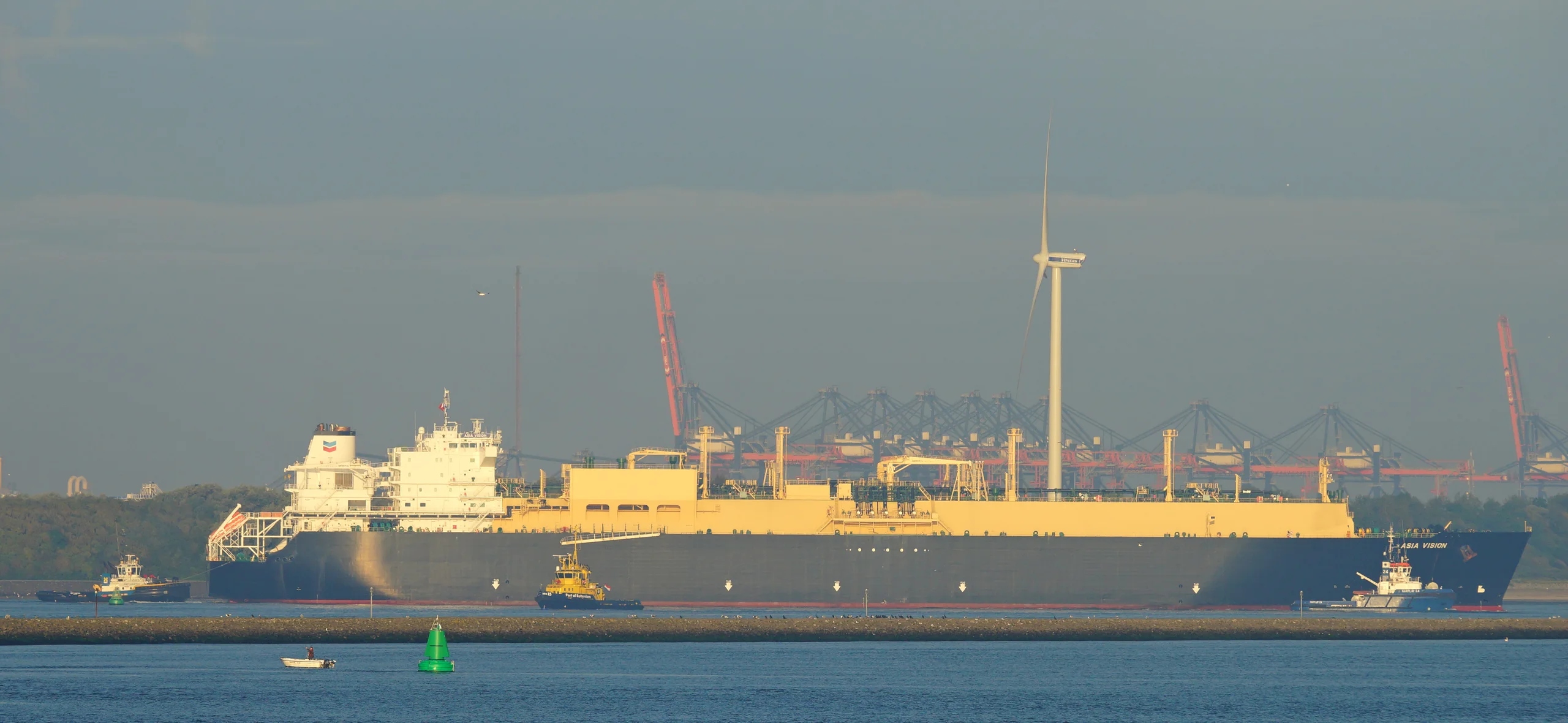
Sabine Pass began as an import terminal in 2008. The Energy Information Administration records its first export cargo of the U.S. shale era departing for Brazil aboard the Asia Vision on February 24, 2016.